Yerevan Fashion Week
Yerevan Fashion Week: Armenia's Designers Go Global
Inside Yerevan Fashion Week 2025: how Armenian designers, a booming garment industry and a ten-year-old fashion chamber are pushing for international markets.
A small market with global ambitions
Armenia is home to roughly 3.1 million people, and almost 1.15 million of them live in the capital. That simple demographic reality shapes almost everything about the country’s fashion industry: there are not enough local customers to sustain it, so the work has to travel.
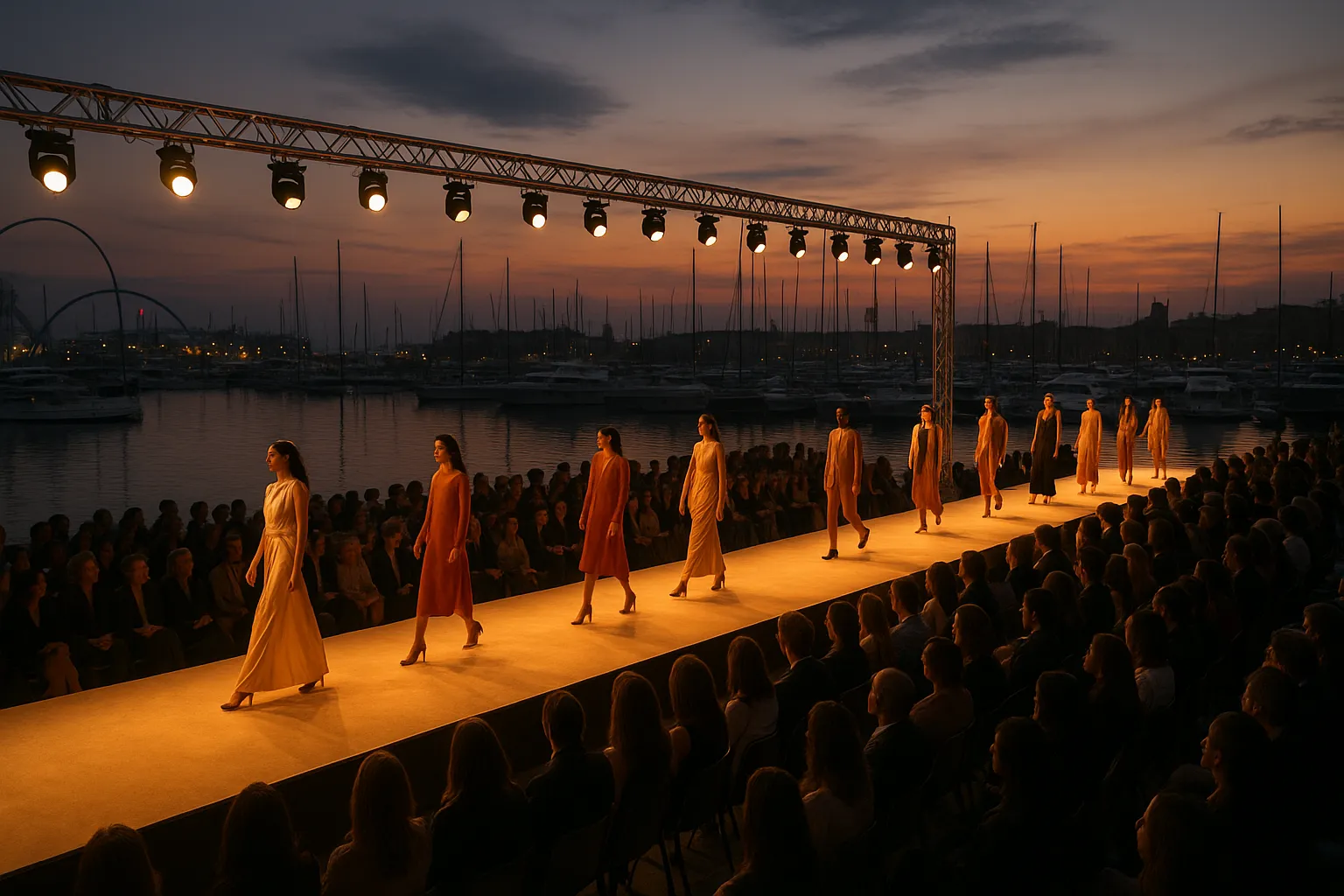
That much was clear from the fourth edition of Yerevan Fashion Week, held from 8 to 11 October. Across four days the city hosted more than 20 shows and presentations, a showroom carrying over 40 brands, more than ten talks and several exhibitions. The figure that best explains the urgency behind it all is 129 million euros — the value of textiles the European Union imported from Armenia in 2025, almost entirely clothing. It was the country’s second-largest category of European imports after mineral products.
“We are a small country with a very limited market. For our brands to grow, we need the international market,” said Elen Manukyan, co-founder and team leader of The Fashion and Design Chamber of Armenia. She launched the organisation with designer Vahan Khachatryan, now its president, and announced the project during one of the week’s talks.
The chamber turns ten this year. Its work is split between training designers and steering them towards foreign buyers, and the fashion week is its flagship project. For this edition it assembled around thirty international guests from across the supply chain: journalists, influencers, buyers, and specialists in sustainability and circular textiles. Italy, Armenia’s biggest European client, was strongly represented through the White Milano trade fair, buyers from the luxury boutique chain Tessabit, and Florence’s Polimoda. The US trade fair Coterie NYC and the talent platform Fashion Scout completed the group.
Behind the runway
Most of those guests took part in a programme of talks aimed at both emerging labels and brands already selling at scale. Massimiliano Giornetti spoke about the search for a distinctive creative voice. More commercially minded sessions covered international distribution and the practical demands of new European rules, including the digital product passport, explained by Dutch expert Chris Koeleman.
Sophia Shin, international head of Coterie and one of the speakers, argued that weeks like this one have real leverage: buyers, she noted, are actively looking for fresh perspectives from emerging markets.
One thing worth understanding is that Armenian garment production is not starting from zero. For years, local factories have worked for high-end European firms, Italian houses in particular. The designers now stepping into the spotlight are building on that manufacturing base — and the fashion week is designed to give them recognition in their own right rather than as subcontractors.
Russia nevertheless remains the main destination for Armenian clothing and footwear. Among this edition’s partners was the Russian marketplace Wildberries, which gave a talk on its platform as a sales channel for Armenian designers.
A city older than Rome
The timing of the week was deliberate. Yerevan was celebrating its 2,808th anniversary — the city dates its founding to 782 BC, when the fortress of Erebuni was built in the kingdom of Urartu, and it likes to point out that this makes it older than Rome. It was at the Erebuni Museum-Reserve, on a hill overlooking the whole city, that the exhibition The Ancient Gods brought together the work of thirty young designers. The show traced a line from that fortress to present-day Yerevan, treating heritage not as something sealed in the past but as a bridge between old and new — material to be interpreted, questioned and reworked.
Some brands took that idea quite literally. Sončess, by designer Sona Hakobyan, staged its collection on the Red Bridge, one of the city’s oldest crossings and a natural symbol of time passing. The clothes themselves were inspired by the liberation of women.
Hakobyan also co-owns Cone with Ariga Torosian, designer of the label Ariga-to. Named after the tree growing inside it, the concept store in central Yerevan has become a reference point for followers of designer fashion since opening in 2022. It mixes clothing and contemporary collections with traditional objects sourced from around the world, with a selection limited to “handmade works or pieces from small workshops that fit our concept and environment.”
The day after her presentation, the rails held pieces by the Iranian designer Reza Nadimi, an international participant in this edition, who was taking his first orders for bespoke garments. His collection, Jardin de l’absence, addresses memory, resilience and the fragile persistence of beauty through poppies — sculptural silhouettes, embroidery, hand-painted fabrics, transparent layers, traditional Iranian textiles and architectural references.
A crossroads line-up
Armenia’s position between Georgia, Iran, Turkey and Azerbaijan, halfway between Europe, Russia and the Middle East, shows up in who shows here. Highbert Studio, one of the brands in the showroom, is the work of Haibert Velanian, who lives and works in Armenia after six years developing his practice in Iran, largely out of public view. Difficulties in presenting his style openly there pushed him to look for markets elsewhere.
He specialises in hand-dyeing and deconstruction, building rich texture within a restrained, mostly dark palette. “For me, clothing is a way of embodying my worldview,” he says. Beside the garments on his stand stood a textile sculpture with an accompanying English text about a woman who refuses the roles assigned to her and keeps shaping herself from what she has been given.
The diaspora — far larger than the population of the country itself — was present too, in the couture and bridal work of Lara Manukyan, showing from her atelier in Lyon, and in Suzanna Margaryan’s Sumara, founded in Moscow in 2017, which presented Or noir. Dubai-based Dunesi, founded and directed by Finnish designer Hanne Ripsaluoma, added another international strand.
Exchange agreements with other fashion weeks brought further names. Arevik Hamar, from Kazakhstan, showed under a three-year partnership with Visa Fashion Week Almaty, an arrangement that will take the Armenian label Themis to the Kazakh runway. In Yerevan, Themis marked the city’s anniversary with Monumental, a collection built around the Yerevan Cascade, translating the monument’s geometry and travertine surfaces into sculptural silhouettes, tailoring and a stone-derived palette. The Moldovan brand Sannàt presented Held, a collection about the tension between the desire for freedom and the forces that contain it, through an agreement with Moldovan Brands Runway in Chișinău.
Heritage as a stage
Several labels took the opportunity to leave the conventional catwalk behind. Ruzanē gathered its guests among the ruins of Zvartnots Cathedral, where even the last few metres of the walk to the site, with Mount Ararat in the background, functioned as a prelude. The collection played highly structured peplum shapes against high, rigid, heavily textured collars and fluid or transparent lower garments, with a bucolic romanticism running through it.
Loom Weaving chose the Komitas Museum, dedicated to the composer who did so much to preserve Armenian folk music. Designer Inga Manukyan drew on one of his piano dances for Hyusq (“weave”), sending models down the building’s staircase to the sound of birdsong, a recurring motif in his work. Open weaves, geometric openwork, chunky crochet and fringing met tailoring with strong shoulders and structured lapels, while puffed skirts and rigid peplums explored volume.
Manuk Aleksanyan, one of the established names on the local scene, showed at the city planetarium. Built on recycled plastic, the collection was conceived as a reflection on responsibility to the planet. His work is aimed at a confident, powerful woman and often incorporates textile graffiti and other interventions that make each garment one of a kind. On the runway it read as a high-impact statement; in the showroom the same pieces revealed a more wearable, commercial side without losing their edge.
Making room for the next generation
Alongside the established names, the week reserved space for those just starting out. Among the thirty young designers exhibiting at Erebuni were the participants of Fashion Scout Armenia, a fixture since the first edition. The programme is built to help the most promising young Armenian designers train abroad and gain visibility — exactly the logic Manukyan advocates.
From around 75 applications, eight finalists presented to a jury that included Giornetti of Polimoda, Martyn Roberts of Fashion Scout, Brenda Bellei of White Milano, Vahan Khachatryan of the chamber, Irina Vanyan, artistic director of 5 Concept, and the local designer Missak Haji Avedikian. Three prizes were awarded: a place at Fashion Scout during London Fashion Week for Eva Mesropyan, a summer course at Polimoda for Hasmik Hayrapetyan, and a Yerevan City Hall prize of 1,000,000 drams for Yea Balasanyan.
For a country whose home market will never be large enough on its own, that combination — craft rooted in place, training abroad, and a week built to put both in front of the right buyers — is the strategy in miniature.