White Milano
White Milano Showcases Global Talent and Expands Reach
White Milano's latest edition drew 450 brands and over 300 buyers to Tortona, with new areas and international collaborations from Brazil and China.
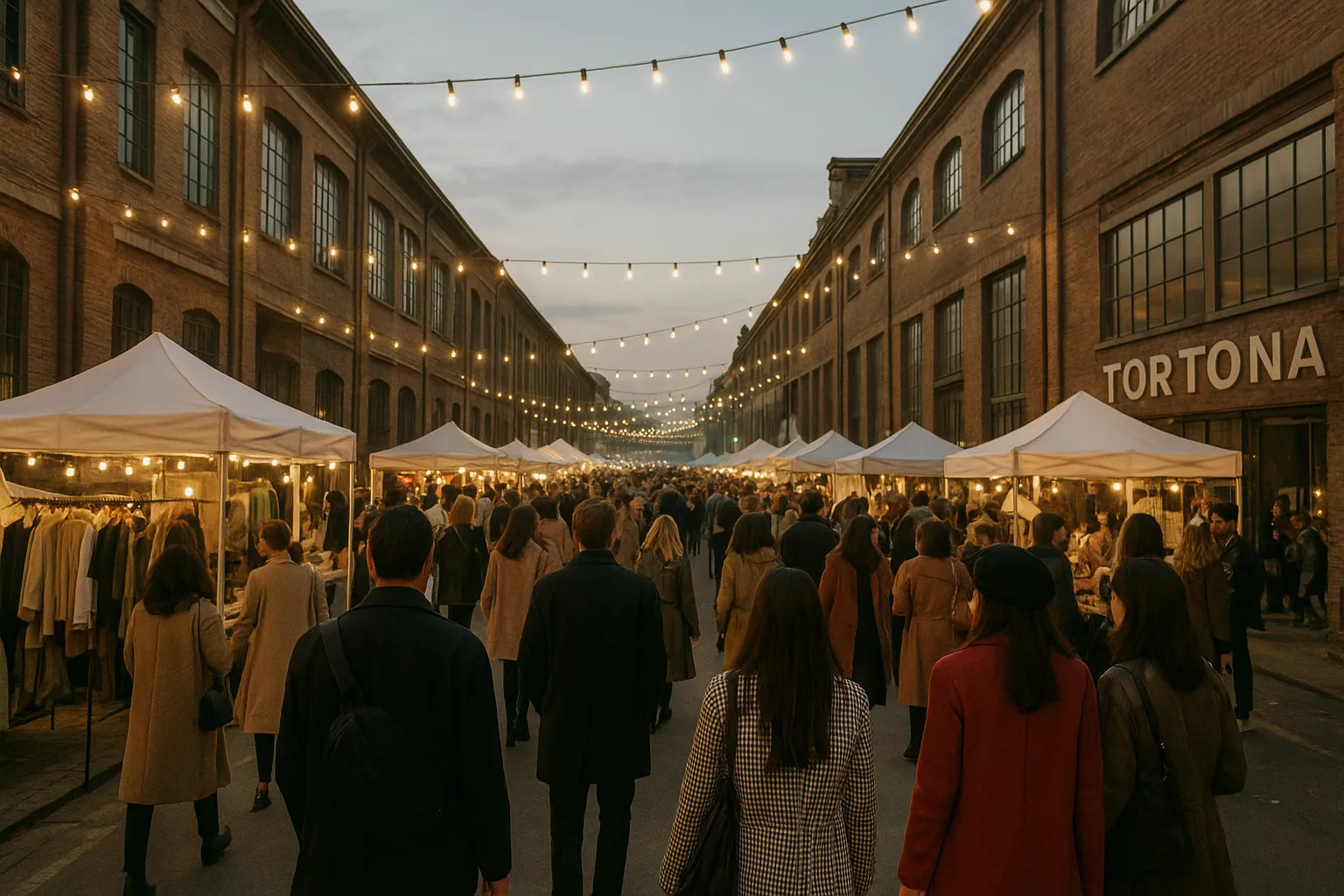
The latest edition of White Milano, the renowned fashion trade show, wrapped up its four-day run in Milan’s Tortona district from 24 to 27 September. The event, now in its 20th year, attracted 450 brands and over 300 top buyers, cementing its status as a key fixture during Milan Fashion Week. With an expanded exhibition space, the show introduced new venues and areas, reflecting the evolving landscape of contemporary fashion.
Among the highlights was the debut of a community project for the Tortona fashion district. This initiative featured a widespread programme of events open to the fashion community, with music, pop-ups, experiences, and entertainment animating the neighbourhood every day from early afternoon onwards. “A schedule designed to extend the trade fair experience beyond exhibition hours, transforming the neighbourhood into a widespread meeting, marketing and networking space for exhibitors, buyers and the entire fashion community that brings Milan Fashion Week to life,” emphasised Massimiliano Bizzi, founder of White. This move aimed to integrate the trade show more deeply into the fabric of the city, creating a dynamic hub for networking and discovery.
New sections and international partnerships
The historic venues T 27 and T 54 were joined by T 35, which hosted “On the beach”, a project dedicated to resortwear. T 31, along with T 54, became home to the new “More” area, focusing on beauty, lifestyle, and design. Additionally, T 54 hosted three new sections: Nuvola, dedicated to fashion accessories; Box, a new urban hub focused on streetwear, activewear, and denim; and More, dedicated to beauty, lifestyle, and design. These additions were designed to engage both industry professionals and trend followers, strengthening the Tortona district’s role as an international destination during Milan Fashion Week.
One of the notable projects presented was by the international textile group Keqiao, which brought a selection of 15 brands already featured on the Milan Fashion Week calendar. This confirmed the show’s role as a meeting hub for dynamic global creative scenes. Brands such as Alberto Zambelli, Angelo, Massimo Foroni, Oliva, Puremono, and Yinan Group showcased their collections. Organisers emphasised, “The meeting between Keqiao and Milan marks a decisive step in overcoming traditional supply chain roles, transforming the bilateral relationship into a genuine creative partnership. In this scenario, the excellence of Italian design and sartorial know-how merge with Chinese technological avant-garde, textile research, and industrial capacity.” This collaboration exemplified a strategic cooperation networking two extraordinary manufacturing and cultural heritages, positioning Milan as an ideal hub to project Keqiao’s brands onto international markets.
Spotlight on guest designers and special projects
The guest designer at White was Alessandro Enriquez, who presented an ironic and sophisticated lifestyle in an area entirely inspired by the brand’s mood. The collection on display was cultured and pop, cosmopolitan and universal, capable of transporting viewers through time and place without moving. In this Olympus of love, one finds Terpsichore dancing from an amphora onto a skirt; the shell of Venus becoming a graphic sign; classic summer stripes underlining the word “love” in Greek; a dreamlike vision of Santorini; and an ironic version of the home of the gods. The designs move with the body that wears them, with words as graphic signs or messages. Shapes are simple and contemporary, with every trouser cut imaginable, from capri to palazzo. Skirts are either pencil or full, very short or midi, with no references to peplum except in some one-shoulder evening dresses or those with a column line flowing from a halter neckline.
Also of interest was the collaboration with ApexBrasil, the Brazilian Trade and Investment Promotion Agency. It brought a multifaceted representation of the Brazilian fashion system to the heart of the international fashion scene, from creative and design aspects to the textile and apparel supply chain. From 24 to 27 September, 23 Brazilian brands participated in White through the Fashion label Brasil project, spanning different fashion segments. “Milan represents a strategic step in the internationalisation of Brazilian fashion. It is an opportunity to expand the presence of our companies in international markets and connect them with buyers, partners and opinion leaders,” said Maria Paula Velloso, business director of ApexBrasil. “Brazil possesses an extraordinary heritage of creativity, diversity, know-how and capacity for innovation. Our goal is to help transform this heritage into added value, new business opportunities and an increasingly competitive presence in global markets, while also promoting sustainability as one of the qualifying elements of our offering.”
Hidn-Ander presented a project that brought product, photography, and contemporary culture into dialogue. At the centre was Starless Rainbow, an expression of the brand’s creative principle: the Clash of cultures. For Hidn-Ander, this is where different cultures, generations, identities, languages, and archetypes come into relation, maintaining individuality and giving rise to something new. “It is from this cross-pollination that the brand’s language is born: codes and references from different worlds are reinterpreted and brought into dialogue to create contemporary, essential and recognisable products,” explained creative director Alessandro Viganò. “With Starless Rainbow, this vision also takes on a symbolic dimension. The rainbow becomes a metaphor for a plurality capable of coexisting: distinct colours that, together, give rise to a single sign. A reference to peace and, at the same time, a broader reflection on identity, gender, cultures and generations.” Accompanying the project was a selection of photographs by Alex Majoli, constructed from his archive and interpreted through the same idea of encounter and cross-pollination, narrating moments when seemingly distant worlds come into contact. Founded in 2019 by Viganò, Hidn-Ander is now part of Giano, an Italian company founded in 1946 and led by Enrico Paniccià, representing the third generation of the founding family.
Ibeliv also returned to White, showcasing new kaftans. Founded by Liv Ramanandraibe 13 years ago, the brand employs 4,000 artisans in Madagascar. “They are made of cotton, embroidered and available in short or long versions. They represent the new addition for next spring/summer,” said Ramanandraibe. The brand’s story is linked to raffia, a material found only in Madagascar. “Raffia is a material that grows only in Madagascar; we have very rich and unique vegetation. I, who feel like an ambassador for my country, thought that through Ibeliv I could do good for the local people, for nature and for the growth of the economy.” The brand’s headquarters is in Avignon, France.
Once Milano, present at the T27 pavilion, focused on material research. Alongside its resortwear collection, the label exhibited homeware products, the historic heart of the brand. Blankets, sheets, tablecloths, napkins, bath towels, and linen accessories tell a philosophy based on quality materials, craftsmanship, simplicity of form, and an authentic, relaxed way of living. The resort collection features easy-to-wear pieces for women and men, natural materials, essential shapes, and freedom of use for different moments of the day. Alongside iconic pieces like the Positano and Marrakech tops, new elements have been introduced to cover all areas of dressing, from skirts to pareos, dresses to trousers and shorts.
White Milano continues to evolve as a platform for innovation and international exchange, blending fashion, culture, and business in the heart of Milan.