Taipei Fashion Week
Taipei Fashion Week: Taiwan's Designers Aim for Global Reach
Taipei Fashion Week drew 29,000 visitors and international buyers, as Taiwanese designers blend denim, craft and performance to break into global retail.
Taiwan’s fashion industry is stepping out of the shadow of its manufacturing reputation. Long known for functional and synthetic fabrics, the island ranks ninth globally in textile exports but only 41st in apparel, as most garment production has moved to Southeast Asia. Yet the fabric sector is also under pressure: textile and apparel exports fell 7.6 per cent to $6.22 billion in 2025, with the decline continuing into 2026. The Taiwan Textile Federation acknowledges that local brand and design expertise still has room to grow.
That gap is precisely where Taipei Fashion Week is making its mark. The event’s first edition at the cultural site inside the former Air Force headquarters attracted over 29,000 visitors, a 43 per cent increase on the same season last year. The figures, announced by the state-backed Taiwan Design Research Institute (TDRI), which has organised the fashion week since last season, underscore a deliberate shift. Alongside a strong domestic turnout, the event courted international media and retail buyers: more than 70 buyers from nine countries attended, including European retailers Andreas Murkudis, Henrik Vibskov Boutique and Afura Store.
Taiwan’s Ministry of Culture, which sponsors the fashion week with the Ministry of Economic Affairs, sees the growth as validation of a broader strategy. The aim is to build brand profiles, encourage corporate and public procurement, and foster international exchange. The goal is to showcase Taiwan’s entire industrial chain – from design and fabrics to functional technology, manufacturing and flexible supply chains.
London calling
Few Taiwanese brands have cracked the European retail market so far. Among them is streetwear label Goopimade, which currently offers a collaboration with UK retailer End Clothing. Another is Story Wear, a denim-focused upcycling brand available on the UK marketplace Wolf & Badger and showing during New York Fashion Week. To get closer to Europe, Story Wear also participated in the 109th edition of the menswear trade fair Pitti Uomo in Florence. In Taipei, the sustainability-driven company hosted both a runway show and its own booth in the fashion week’s trade show area.
For several brands presenting in Taipei, London emerged as a common thread. Wang Tzu-Hsin, the designer behind the Claudia Wang label founded in 2019, splits her show schedule between the Taiwanese and UK capitals depending on the season. Her spring/summer 2027 collection, inspired by spring days in the UK and Virginia Woolf’s essay A Room of One’s Own, mixed floral motifs with polka dots, stripes and childlike drawings. Mint green, butter yellow and soft pink reinforced the flower meadow theme, while lightweight fabrics, pleats and bandana tops were layered with outerwear and workwear elements. Born in Paris into a family of artists, Wang navigates between the virtual and physical worlds: her paintings are digitised and transferred onto garments, while avatars simultaneously showcase the collection in the background.
Ray Chu also arrived in Taipei fresh from his London show. He presented his latest collection, “Fans Only Club”, in a dedicated space within the trade show, where more than 50 fashion, accessories, footwear and lifestyle brands exhibited. The playful looks incorporated kitsch elements such as rhinestones and oversized bows worked into traditional tailoring, contrasted with sportier pieces like muscle shirts and swimsuits reminiscent of merchandise, spotlighting local flora alongside the recurring “Taiwan Banana Club” motif. The designer also turns to plant-based materials, including shirting fabrics made from mint fibre and quick-drying jersey crafted from so-called “Icy Grass”. Several ready-to-wear pieces consist of 40 per cent cotton, 40 per cent modal and 20 per cent of this botanical material, designed to provide a cooling effect in heat and fluctuating temperatures.
Ray Chu is among the few brands already represented in international wholesale. Alongside its domestic market, neighbouring Asian markets such as China, Japan and Thailand play a key role. Its stockists include North American retailers such as arts-focused online marketplace Ap0ence, Openair Boutique in Los Angeles and 017/Shop in Vancouver. In Europe, the brand took its first steps through Storehouse, a pop-up concept for independent designers in London and Paris curated by agency Dyelog.
Tales from crypts
Infdark also presented its SS27 collection at London Fashion Week in September before designer Kuo Wei returned to Taipei a month later. Founded in 2011, the brand specialises in structure, cut and patternmaking. According to its website, its clientele is rebellious, “sociopathic” and interested in fetish aesthetics. In Taipei, the label treated its audience to a performance somewhere between Dracula and Michael Jackson’s “Thriller” music video. These influences echoed in the dark collection, punctuated by details such as lacing, ruching and eyelets. Asymmetric cuts, cut-outs, layering and a marble-veined print underscored this approach. The print was developed in collaboration with Taiwanese natural stone specialist Gaode Stone.
The eerie mood continued at Jenn Lee, who also showed in London in September. The designer merges traditional qipao craftsmanship with a gothic aesthetic. Signature elements such as mandarin collars and frog buttons on silk dresses meet radically flared shoulders, cut-outs, lacing and leather pieces. Models wore dark eye make-up. Staged in an underground club in Taipei, the collection’s colour palette moved between black and traditional red.
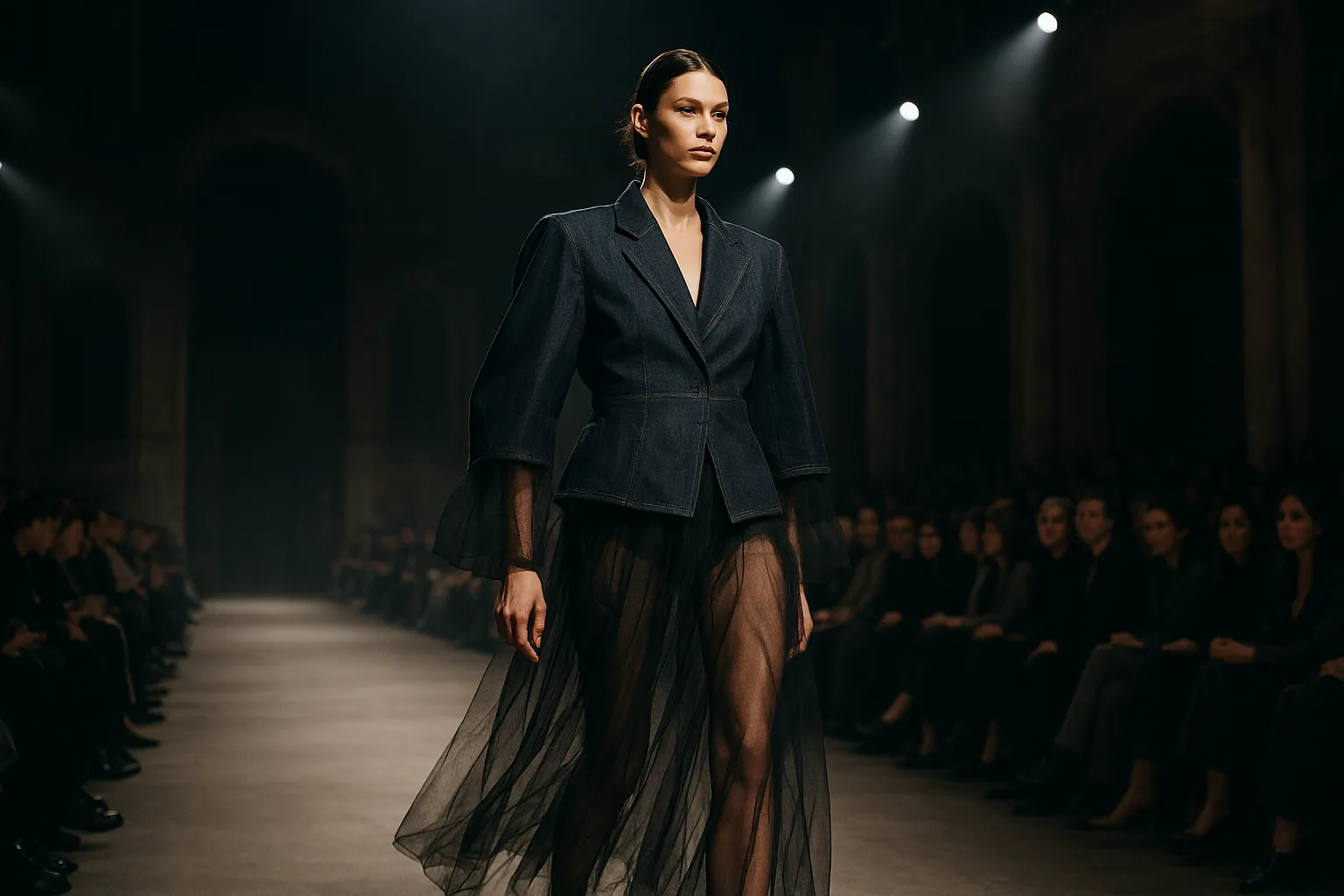
Iris Yang shares a penchant for dark romance. Her designs pair lightweight, sheer tulle with corsetry and fetish-inspired latex, united by sharp tailoring and an eye for detail. Ruching, lacing and cross motifs complete the looks. A graduate of London fashion school Central Saint Martins, Yang brought her fledgling label Nocturne Key Archive from her adopted home of London back to her roots in Taiwan for the first time. She presented her latest designs off-schedule at a pop-up inside Rec Taipei, the concept store of Taiwanese jewellery label Recovery Design.
Centre stage
Infdark’s performance also featured cheerleading squad Power Me, for whom the brand designed a new uniform. Cheerleaders made another appearance at Inmories, performing routines beneath a basketball hoop and between the rows of seated guests. According to a statement from the fashion week, the streetwear brand collaborated with the Taiwan Professional Basketball League (TPBL), translating the body dynamics and movements of professional basketball players into garment silhouettes. Alongside various sports jerseys, the presentation included outerwear pieces and relaxed two-piece sets that combined athletic elements with more classic silhouettes.
Many brands seized the opportunity to stage their collections with live entertainment. At Daniel Wong’s opening show, Taiwanese pop-rock band 831 inaugurated the runway, appearing first as models before performing a mini-concert. Under the title “Dress Code”, Wong played with the conventions of uniforms and formalwear. The line-up featured classic suits reimagined through prints, ruffles, deconstruction and playful silhouettes. Scarves bearing monogram logos, lettering of the collection’s title and equestrian prints were integrated into various looks or formed the basis for fluid dresses, skirts and tops.
Second-hand denim
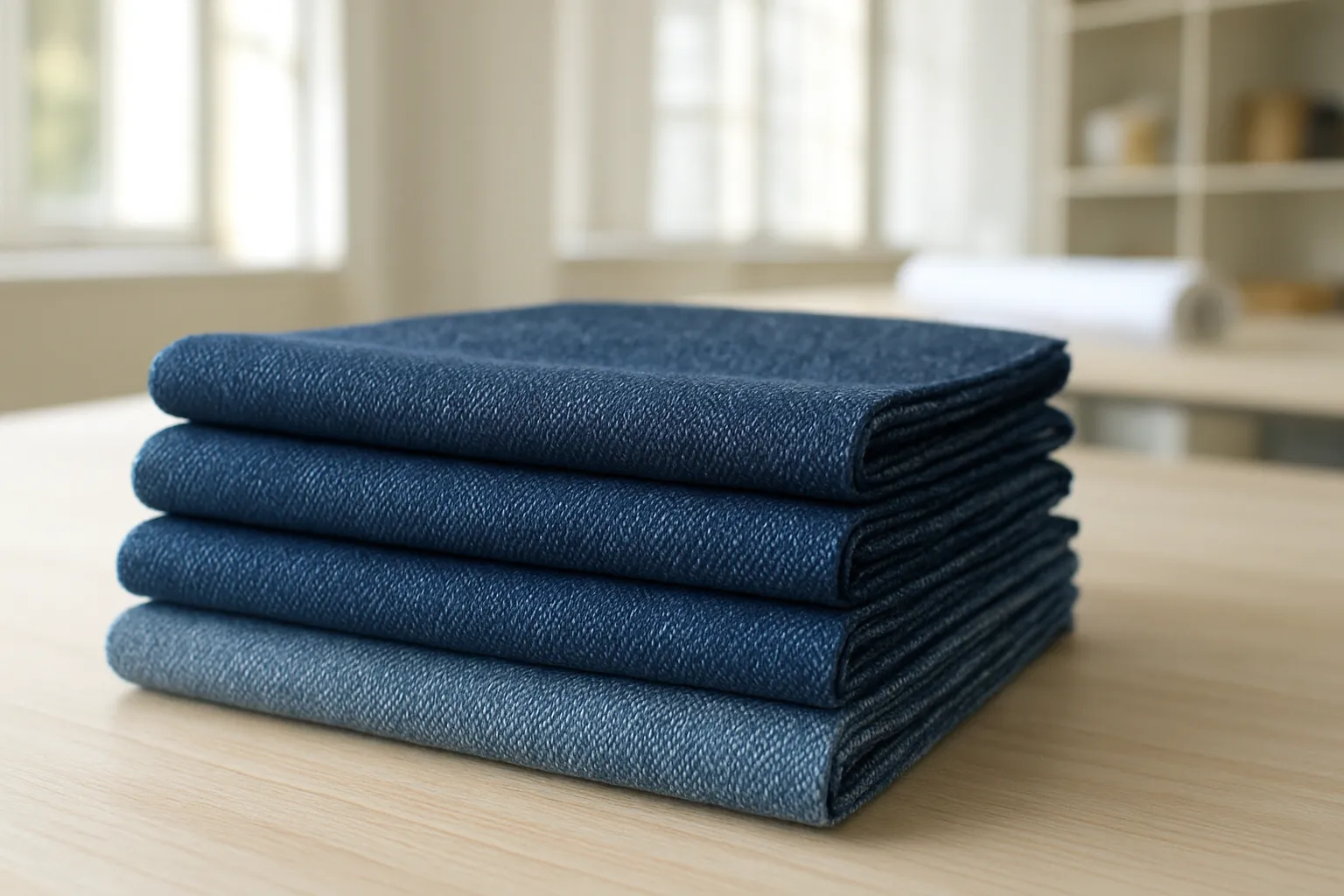
Denim played a particularly prominent role in material selection, albeit rarely as virgin fabric. Story Wear used artificial intelligence to sort jeans donated by 1,200 individuals and process them into new jacquard denim. Womenswear brand Aish, founded by Jean Hsia, assembled various denim washes into patchwork wide-leg jeans. Claudia Wang, meanwhile, integrated the fabric purely visually as a trompe-l’œil print.
New fabric was used in the collaboration between Oqliq, a performance-driven fashion label founded by Lin Chia-Hao and Chi Hung, and functional apparel brand Wisdom. The partnership paired denim with what Taiwan is best known for: technical textiles. Mannequins were displayed inside glass cases, swathed in multiple layers of dark denim that evoked a cross between a warrior and a mummy.
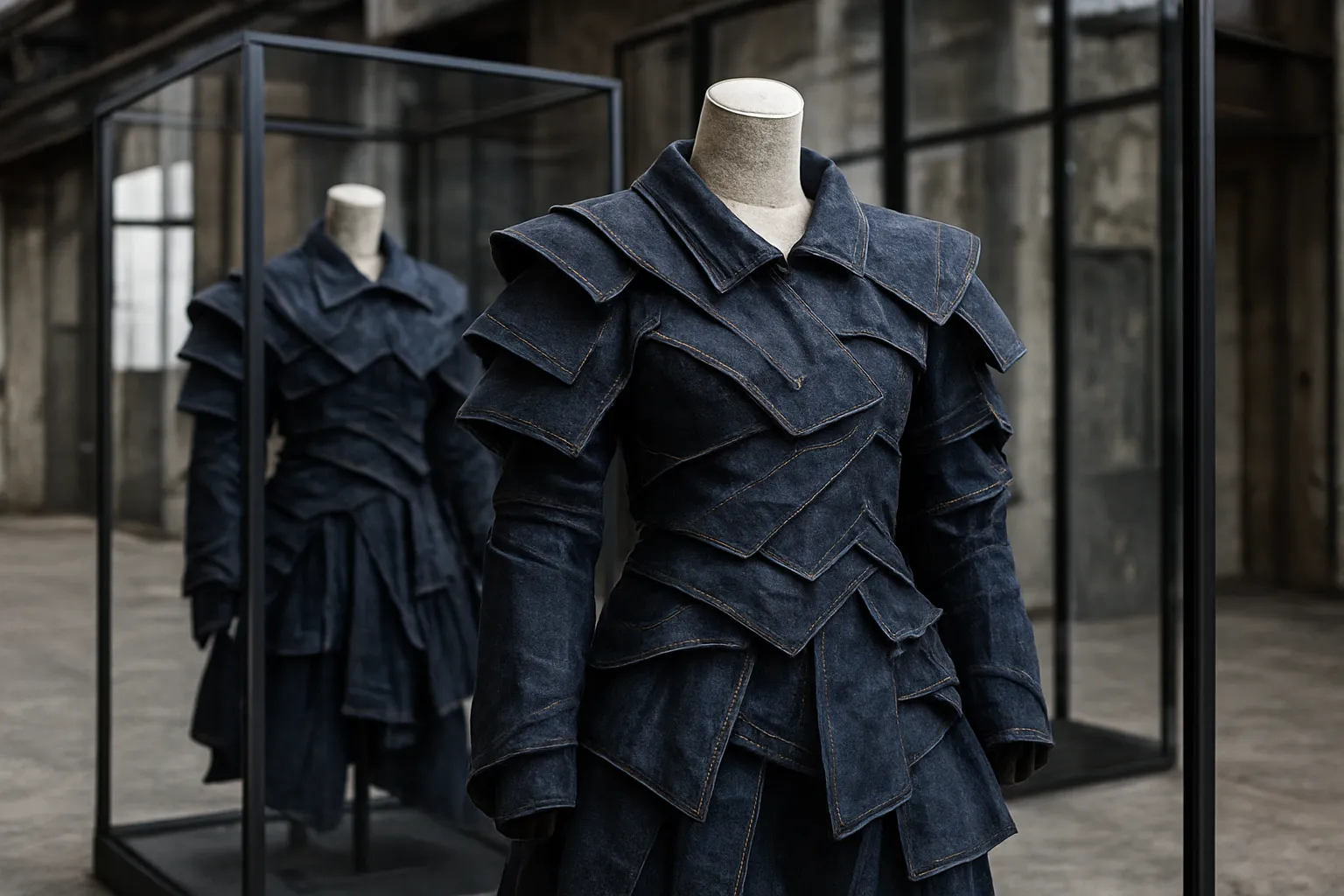
Whether the theatrical performances and denim experiments will translate into orders remains to be seen. Enthusiasm among international buyers was somewhat muted. When asked, several noted that while they had seen a number of appealing pieces, the designs did not necessarily fit their own assortments.
Nevertheless, the foundational elements are in place, from functional fabrics and manufacturing expertise to a design scene that already commutes between Taipei and London. The next opportunity to showcase local talent will come in March, when Taipei Fashion Week returns to the cultural venue for the autumn/winter 2027 season.