Hydroponic Cotton
Soilless Cotton: Hydroponic Farming Trial Turns Five Tonnes Into Clothes
A Spanish hydroponic cotton trial with H&M's Circular Innovation Lab has produced five tonnes of soil-free cotton. We look at how AI and closed-loop water work.
Cotton Without Soil: A Growing Experiment Leaves the Lab
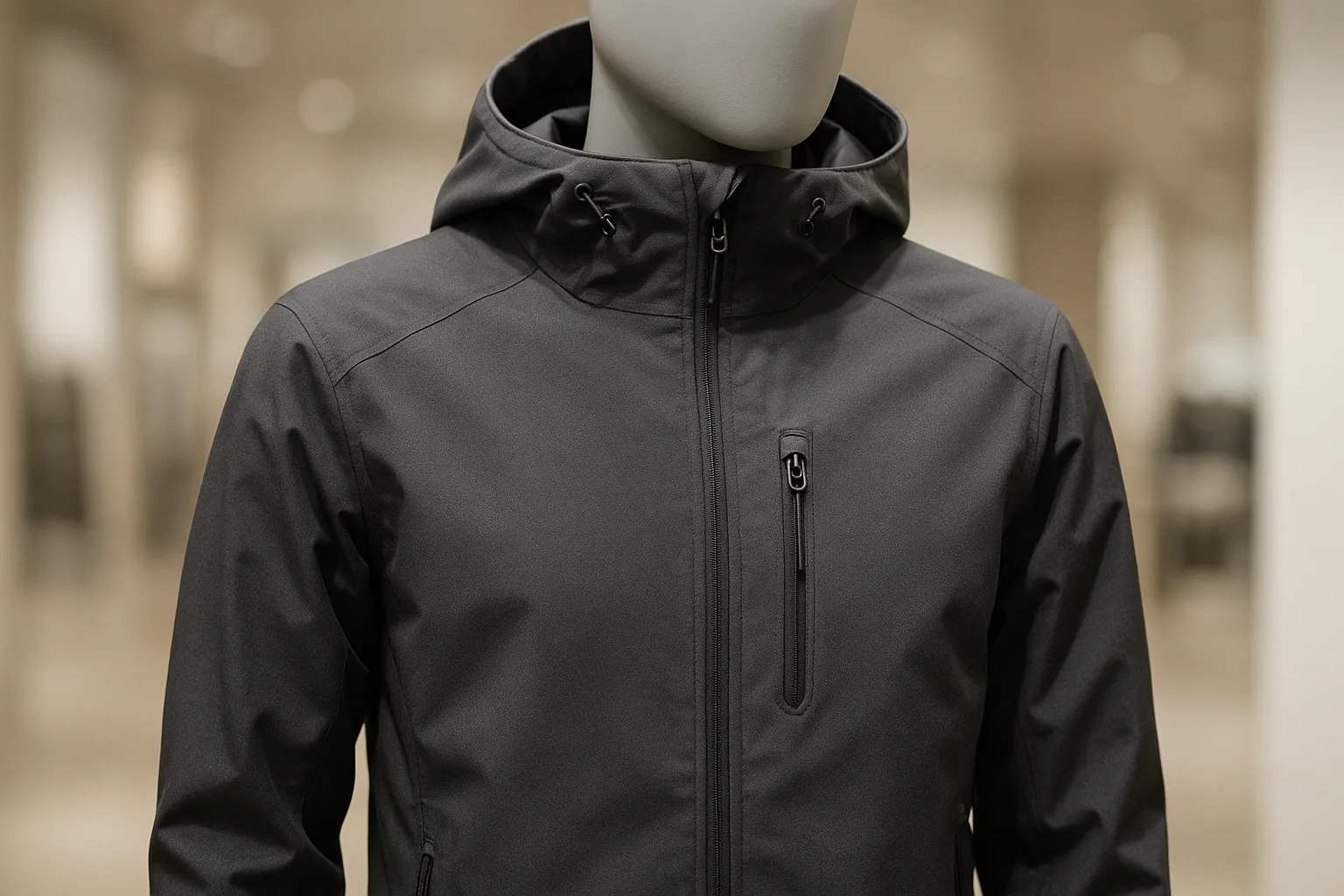
What if the shirt on your back began life not in a field of red earth, but floating in a shallow channel of moving water on a rooftop or in a repurposed car park? That question is no longer hypothetical. A collaboration between the Spanish hydroponic farming specialist Magtech and H&M Group’s Circular Innovation Lab has taken a meaningful step from theory towards production, with an initial five-tonne batch of soil-free cotton grown in Spain passing quality control and being spun into finished garments.
That figure matters. Five tonnes is small next to the global cotton harvest, but it is a different kind of milestone: proof that hydroponically grown cotton can meet real textile standards rather than merely surviving in a research bed. A second growing site is already under development in India.
How the System Works
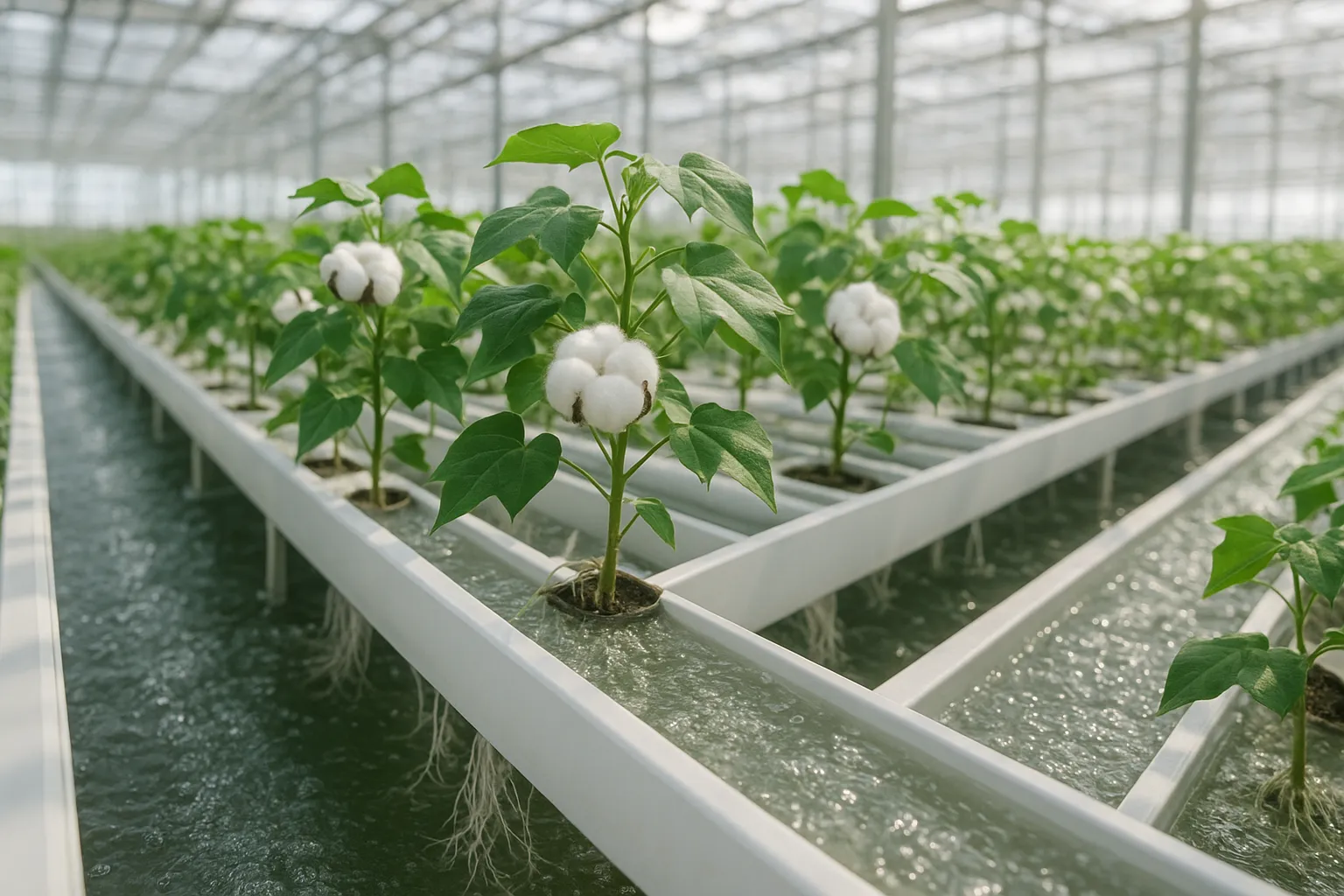
The approach abandons soil entirely. Cotton roots are suspended in circulating water rather than anchored in earth, fed by a controlled mix of nutrients that can be captured, recovered and returned to the system instead of being flushed away.
That closed loop is the heart of the concept. Conventional cotton is famously thirsty just to germinate and grow, and fertiliser runoff from fields can carry nutrients and pesticides into rivers, lakes and coastal waters. By keeping water and nutrients inside the loop, the developers aim to shrink both the water demand and the pollution risk.
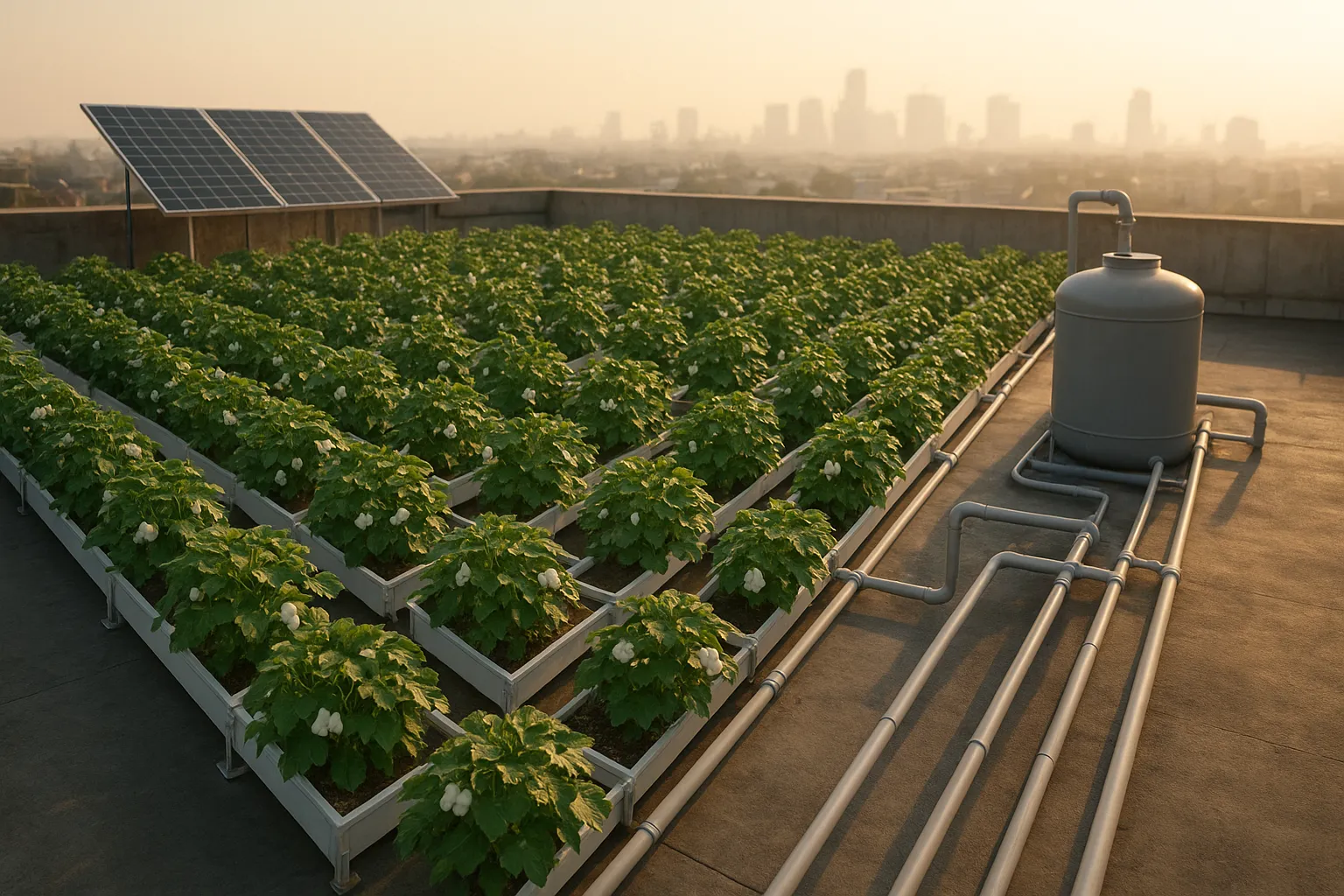
The deeper ambition is about where agriculture can happen at all. Hydroponic cotton does not need fertile farmland, so the system could in principle be installed on rooftops, in disused industrial spaces, or in regions where good soil is scarce.
Why Machines, Not Just Eyes, Do the Watching
Scaling any crop system means monitoring far more plants than any team of agronomists could inspect by hand. The hydroponic cotton project turns to artificial intelligence for that task, tracking individual plants, judging when bolls are ripe, and flagging pest problems early.
The numbers explain the logic. One hectare of the system holds approximately 30,600 plants spread across 52 growing channels, each roughly 98 metres long. Simply walking every channel once means covering more than five kilometres. A skilled technician can read a crop, but no person can watch thousands of plants continuously and with the same consistency at scale.
AI changes the economics of attention. Rather than spraying an entire crop because a problem was spotted somewhere, growers can pinpoint affected plants and treat them precisely. Fewer inputs, less waste and a lighter footprint are the intended result.
Not a Replacement, a Complement
The people behind the work are careful not to overstate it. The objective is not to displace conventional cotton farming, which supports millions of livelihoods and supplies most of the world’s textiles. Instead, the project sets out to demonstrate, quantify and independently validate a complementary route to growing the fibre.
The same caution applies to environmental claims. Life-cycle assessments that compare this cotton with conventional cultivation - covering energy use, water, land and emissions - are still ongoing, and the results will determine how the method stacks up over the long run.
There is also a human question the developers are actively considering: how existing agricultural workers could move into new roles in growing, agronomy and technical operations as this kind of farming develops.
What It Means for Clothing Brands
For fashion companies under pressure to reduce their environmental impact, soil-free cotton is attractive because it addresses several problems in one system: land, water use, and the drift of chemicals into the wider landscape. Being able to site production close to demand is another appeal - the idea that a field could sit above the factory rather than halfway across the world.
After all, if cotton can grow almost anywhere, the geography of textile supply chains could start to look very different indeed.
That promise will be tested by scale, cost and independent scrutiny. Five tonnes of garments is a convincing demonstration; global cotton supply is measured in millions of tonnes. But the trajectory is clear: a laboratory curiosity has produced wearable cloth, and a second site is underway.
The Key Points
- Five tonnes now make clothes. Hydroponically grown cotton from Spain has passed quality checks and been turned into garments.
- Roots grow in water, not soil. A recirculating nutrient solution can be recovered and reused, reducing water waste and runoff.
- AI watches every plant. Around 30,600 plants per hectare sit in 52 channels of roughly 98 metres, far too many for continuous human inspection.
- Pests are treated where they appear. Targeted intervention replaces blanket spraying across a crop.
- Location becomes flexible. Rooftops, car parks and barren regions become viable, provided there is sun and a workable water source.
- Claims are still being verified. Independent life-cycle assessment is ongoing, and the project positions itself as a complement to conventional cotton, not a replacement.