Luxury Accessories
Small Accessories Stole the Winter 2026 Luxury Shows
Long gloves, oversized sunglasses and statement belts led the autumn/winter 2026 runways. Here's why small luxury pieces make the smartest gifts this season.
The season’s boldest gestures came in miniature
Across the autumn/winter 2026 runways, from New York to Paris, the eye kept landing on the same places: the hand, the face, the waist. Long leather gloves, oversized sunglasses, statement belts, brooches and faux-fur scarves appeared in city after city, and together they amount to far more than a styling trick. They also happen to solve a practical problem for anyone building a gift list.
Something larger is behind the shift. Tailoring has sharpened, silhouettes have cleared, and the most confident statements now arrive in compact form. That combination of clean clothes and concentrated detail is what makes the season’s accessories worth a closer look.
Accessories moved from finishing touch to headline act
For years, a bag or a pair of shoes completed an outfit. This season, accessories led it. Michael Kors put oversized sunglasses and leather gloves on the New York runway, Prada has spent months developing opera-length gloves, and Copenhagen Fashion Week produced the belt-and-glove hybrid that became one of the season’s talking points. Each city approached it differently; the direction held regardless.
Retailers respond quickly to that kind of consistency. Curated luxury platforms have been building edits around sunglasses, wallets, card holders and similar small pieces, often from houses recently refreshed by new creative leadership. The cast of accessories keeps growing too: Copenhagen added cosy collars, berets and patterned socks, while editors in several cities backed statement belts and brooches. Faux-fur scarves returned as a shortcut to texture when coats and knitwear stay plain.
Stylists following the shows in Paris, London, Milan and New York keep arriving at the same shortlist: shield sunglasses, princess gloves, chunky chains and utility belts. Some of it will fade by spring, and trend lists are always generous. The consistency is the story.
There is an economy to this. When the clothes are spare, interest drifts to the edges, and a single accessory can set the tone for a season without a new coat to carry it. Shoppers counting every purchase have noticed.
Gloves, from opera length to shearling mitten
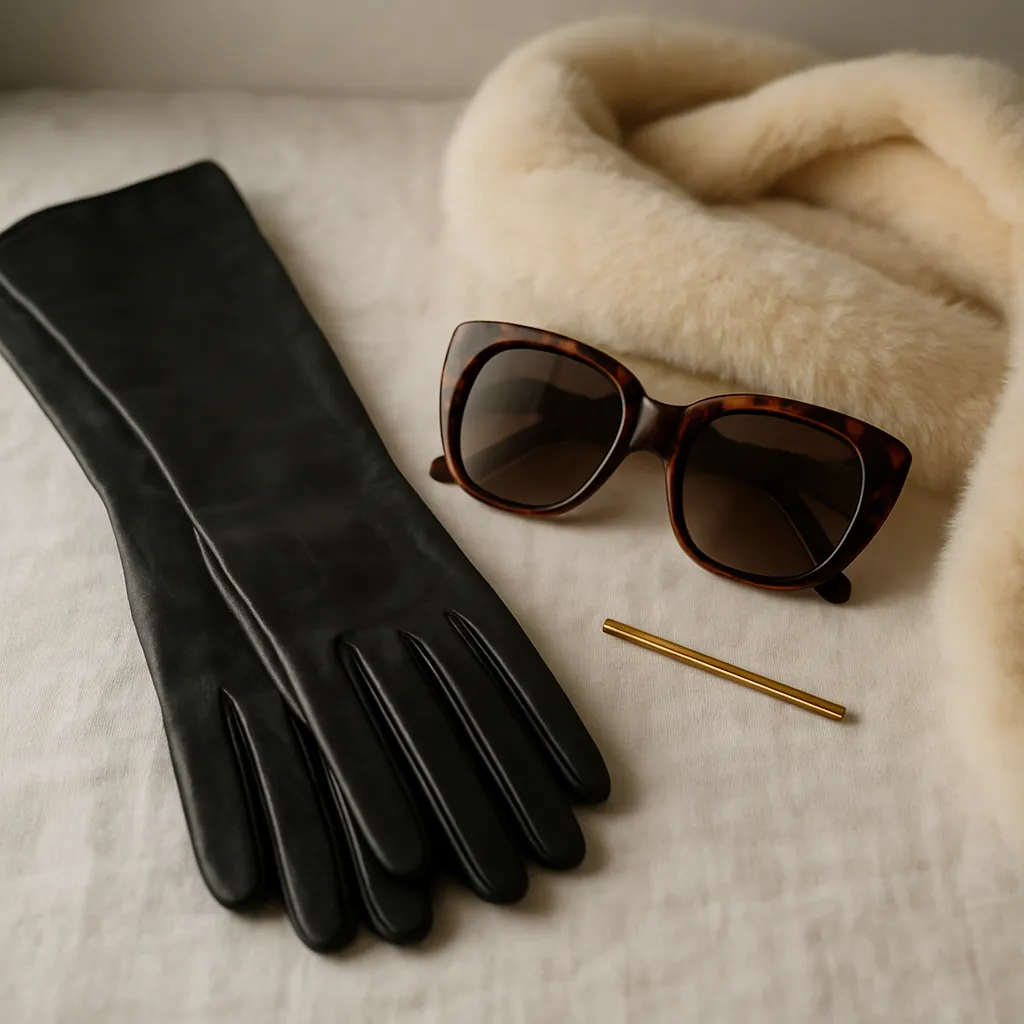
Gloves make the clearest case. The opera-length version, a fixture of evening dress for generations, has walked into daytime. Prada showed it in lambskin and satin in aquamarine, lilac and orange, and the autumn collections carried the idea forward in leather.
Not every pair wants an audience. Plain leather gloves lend an outfit some edge and ask nothing back, and stylists have been wearing them with oversized sunglasses, tweed coats and shearling. What gives the trend its legs is the spread: buy the dramatic pair or the discreet one, and both look current.
Colour stretches the range further. Prada’s pastels and brights mark one boundary; vanilla shearling at Celine marks the other. A glove can be the single bright note in a dark winter outfit, or it can disappear politely into a cream coat.
Fit matters more than people expect. A glove cut close to the hand ends a sleeve cleanly, while a longer one turns a coat cuff into a line drawn on purpose. That attention to proportion separates a considered accessory from an afterthought, and it explains why buyers will pay luxury prices for something so plainly useful. Gloves also live a visible life: they go on in a doorway, come off at a table, or get left on a chair, so a good pair has to look right in motion as well as on the hand.
Celine’s Triomphe mittens in shearling take the cosy route: lambskin shearling in vanilla, made in Italy, with the house emblem as the finishing touch. As gifts, mittens have a hidden advantage. A looser shape forgives a bad guess about hand size, which is a real hazard when buying for someone else.
Scarves do similar work. Silk has long been the way into houses such as Hermès, and this season’s faux-fur versions bring a coat’s texture up to the neck. Either way, it is a small purchase that names a house, or a mood, with no outfit required to back it up. Material carries weight too: leather reads as more serious in luxury than most knitted options, and it ages differently. A leather glove is expected to soften and settle to the hand with wear, which is partly why people hold on to them for years.
Sunglasses leave the summer behind
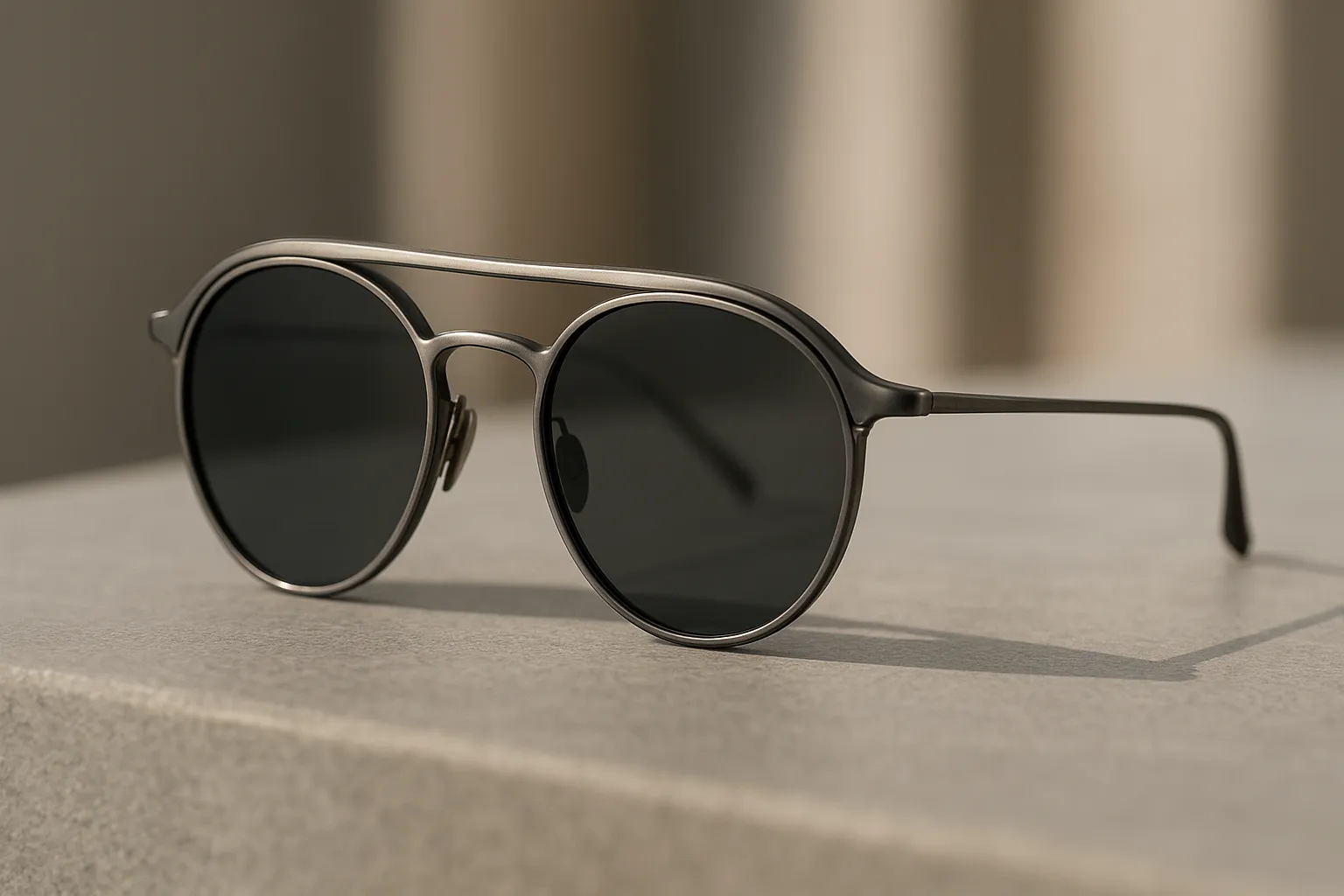
Eyewear is pulling in two directions. One goes big: oversized frames, in tortoiseshell as often as black, have joined the cold-weather uniform, and shapes have turned more architectural, built to frame a face deliberately. The other goes light, and round wire frames are picking up speed through 2026.
Shield styles and extra-large frames take the theatrical end. What links them all is a change of habit. Sunglasses are no longer bought for July alone. They show up in winter styling as readily as in summer, which fits a gifting calendar as neatly as it fits the weather. There is a practical argument too: low winter sun on a long drive, glare from snow, a bright day at altitude. All make sunglasses useful in months when shoppers rarely think of them, and a pair with a recognisable signature turns a necessity into a choice.
Major houses show how to build a varied family of frames around distinct codes. Loewe leans into sculptural, exaggerated silhouettes with bold acetate lines and prominent hardware on the temples; Prada concentrates on geometric squares and sleek minimalist angles that play with colour and thickness; Gucci offers retro-inspired oversized frames with interlocking hardware details; and Tom Ford anchors its winter eyewear with signature metallic T-bar hinges on classic shapes. Acetate, the material behind several of these frames, gives a designer room to play with thickness and colour, and it holds its shape through years of wear.
The numbers back the attention. Bain and Altagamma expected eyewear to grow between two and four per cent last year, and their latest update counts it among the categories holding up well, alongside jewellery, apparel and fragrance. Leather goods and footwear remain under strain, though they are improving. For a house, a frame is a way to stay in view when the hero handbag cannot carry the whole load.
Eyewear is also more personal than most accessories. Face shape, colouring and taste all weigh in, so frames tend to be picked by the wearer or given by someone who knows them well. A scarf or a wallet asks much less of the giver.
Brooches, belts and the jewellery question
Gloves and sunglasses lead the list, but they do not close it. Brooches are back at every size, and statement belts, some with large medallion plates, change a coat or a dress without replacing it. Such objects have a second life. A brooch travels from lapel to scarf to bag strap. Belts do structural work as well, cinching a long coat and giving a straight cut a waist.
Jewellery has the strongest commercial case of any category. Bain’s spring update has it leading personal luxury goods this year, and Altagamma’s figures put jewellery growth at four to six per cent for 2025. Fragrance, the other easy gift, has held its ground.
Scale ties these pieces together. Oversized sunglasses, long gloves and wide belts all play with proportion, which is why they read so clearly from the front row and, afterwards, on a screen. A strong silhouette travels.
None of this displaces ready-to-wear. It simply keeps a different time. A garment is bought for a season and a body; an accessory is bought for a mood and can move between outfits. That is why shops so often show a trend first in the accessories.
Celine: classics with bite
Behind the accessories sits a house partway through a reset. Michael Rider, who arrived at Celine in early 2025, presented his autumn/winter collection at the Institut de France in Paris. He described the approach as style without irony, led by feeling rather than a planned concept, and as a deliberate move away from the heavily built narratives that tend to crowd Paris Fashion Week.
Slim tailoring and outerwear formed the spine, with narrower lines taking over from the oversized proportions that ruled much of the past decade. The idea could be put as classics with bite: familiar shapes, sharpened a little. That has consequences for the small pieces. With the clothes tailored and spare, the emblem on a pair of mittens or sunglasses becomes the detail people recognise. The accessories follow the same logic, with one clear mark doing the work.
Rider’s stated interest is in clothes that leave room for the wearer, and accessories suit that brief well, since they add a personal mark without altering the cut. Spring/summer 2027 kept pulling the same thread: precise tailoring, playful accessories and a freedom in how pieces combine. For shoppers, that last part is the useful one; mixing is the method.
Menswear follows suit. Rider’s first major men’s runway show offered voluminous trousers and cape-like gabardine coats, plus sarouel trousers in turquoise, coral and white. The direction matches the women’s side: classic shapes, handled with a lighter touch. Celine is hardly alone in this. Tory Burch’s autumn/winter 2026 notes dwelt on permanence in uncertain times and the lasting strength of classics, while Michael Kors set city daywear beside evening glamour. What the houses share is a taste for pieces that outlast a season.
Why small pieces carry the season
The money explains part of the appetite. The US National Retail Federation expects holiday sales to rise 4.2 per cent this year, and Visa forecasts 4.5 per cent, the strongest festive growth since 2021. Visa also expects holiday goods to cost about 3.4 per cent more, which leaves real growth nearer 1.1 per cent. Higher-income households are likely to do much of the lifting, helped by rising financial wealth.
Even so, shoppers are choosing carefully. More than half told the NRF that the economy will shape their plans. In the luxury sphere, care has a particular outline. Bain says buyers are taking ready-to-wear at twice the pace of leather goods, and moving from status toward belonging and self-expression. The accessible end of personal luxury has been gaining ground, led by Gen Z and value-conscious customers.
Price is the first reason. Sunglasses at a few hundred euros are a serious purchase, but they fit inside a budget in a way a four-figure handbag may not. Bain has warned that years of steep price rises have worn down customer goodwill. A smaller ticket keeps a house in the conversation without asking anyone to forgive its pricing.
Recognisability is the second. A gift only works if the recipient can read it. A gold Triomphe on a temple arm, or a patch on a mitten, is legible to anyone who follows the house, and it says more about taste than about wealth, which suits the move away from rank.
Risk is the third. Scarves, wallets and mittens forgive a wrong size or colour far more readily than a jacket does. Authenticity sits on the same list: counterfeits have long dogged luxury, and a fake gift is worse than none. Some shoppers lean toward retailers with a direct link to the brands for that reason. Gifting also rewards the compact: wrapped, posted or carried onto a plane, a pair of sunglasses or a wallet survives the journey in a way a coat may not.
Then there is competition from outside the category. Bain reports that consumer sentiment toward luxury experiences is growing 1.5 times faster than sentiment toward physical goods this year. An object has to justify itself against a dinner or a trip, and a small, well-made, clearly chosen one has a better chance than a large one bought from obligation.
Where shoppers find them
Stores remain the main channel for personal luxury goods, with Altagamma expecting growth of about five per cent there this year. Online platforms need something else to offer: range, a considered edit, a calmer way to browse.
A Paris-based multi-brand platform, for instance, builds its identity on curation, mixing timeless and cutting-edge pieces, iconic houses and emerging talents, accessories and small stylistic details side by side. Whether the format suits gifting is a fair question. A curated platform can narrow a vast choice to a handful of options, which is what a hurried gift-buyer wants. The risk is sameness, when every edit begins to look like every other.
Alongside current collections, some platforms also carry rare pieces from earlier seasons. The pull there is scarcity, not novelty. For a recipient who already owns the current bestsellers, a piece from a past collection can feel more considered than the newest one. That approach suits a season when accessories do the talking: a stylish frame over a coat from a younger label is the combination the trend lists keep describing, and a single brand page can gather wallets, socks, sunglasses and bags into one edit, which helps a shopper who knows the house but not the range.
None of this makes multi-brand online luxury easy. Bain has noted that multi-brand channels face added pressure, so a curated edit has to earn its place.
What to watch after the season
First, whether gloves go mainstream. Opera length showed at Prada for spring, in New York for autumn, and in Copenhagen as a belt-mounted variant, and some stylists expect it to spread. Whether people wear the long versions or settle for shorter, cosier ones will show in how the category sells through January.
Second, how long sunglasses keep their new season. If they really have become a year-round purchase, autumn and winter should hold up better than they once did. Round wire, shield and oversized shapes will compete for the same budget, and houses with a recognisable mark on the temple may have the edge.
Third, the handbag. Bain still describes leather goods as under pressure but improving, and Altagamma’s consensus expects growth of about four per cent. If the small pieces selling now bring shoppers back to the houses, the bag could benefit next. If they replace the bag, brands that depend on it for profit face a different picture.
Returns deserve a look as well. Free returns make gifting easier for the buyer and dearer for the retailer, and January figures will show whether generous policies survive the trip back.
Bain and Altagamma usually publish their annual market study in November, so the next edition should arrive within weeks and say more about how 2026 is ending. Until then, the evidence is thin but consistent. Shoppers are still buying luxury, and they are buying it in small, recognisable pieces. Whether that proves a pause or a new habit, houses and retailers will be asking the same question when the season ends.