Shein
Shein Launches Logistics Service for Spanish Sellers
Shein's cooperative logistics service in Spain helps marketplace sellers ship across Europe. We explore what it means for Spanish SMEs and the wider supply chain.
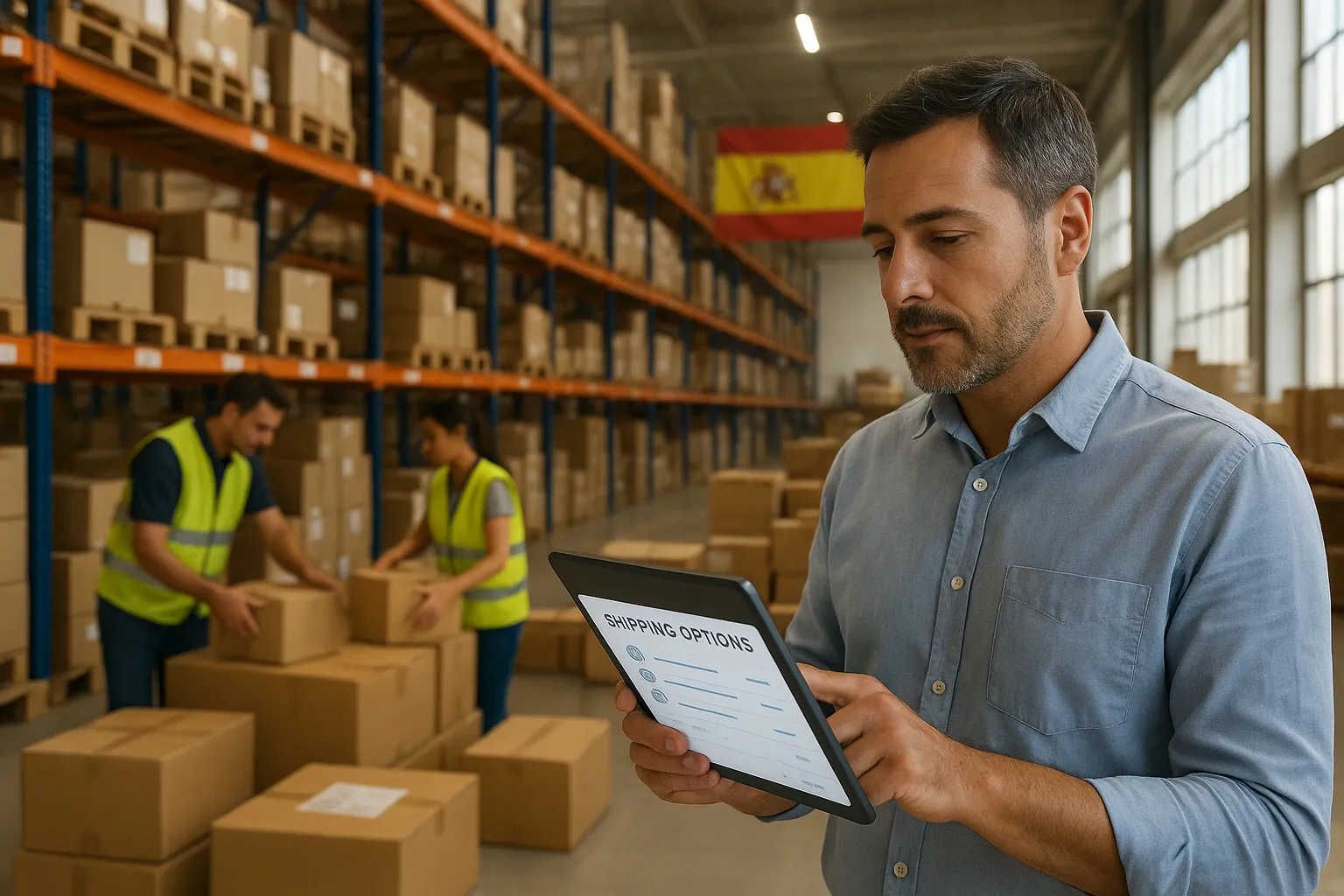
Shein has introduced a cooperative logistics service in Spain, its first European market for this offering. The service connects Marketplace sellers with established carriers such as GLS, FedEx and CTT, giving them streamlined access to key European routes. For Spanish businesses, it promises a simpler path to international expansion; for the wider e-commerce landscape, it signals a shift in how ultra-fast fashion platforms operate within the EU’s regulatory framework.
How the service works
The cooperative logistics service is designed to simplify international shipping for Shein Marketplace sellers. Through partnerships with GLS, FedEx and CTT, sellers can reach customers in Spain, Germany, France, Italy and Portugal. The GLS routes from Spain to Germany, Italy and France are particularly significant, and more than 80 percent of Shein Marketplace sellers in Spain are already using the service through this carrier alone.
Sellers can arrange shipments either online or offline, depending on the chosen carrier. This flexibility is intended to reduce the operational burden of cross-border fulfilment and allow businesses to focus on product and marketing. By providing access to a network of specialised carriers and various transport options tailored to specific destinations, Shein positions itself as an end-to-end operational partner rather than just a sales channel.
Why Spain, and why now
The timing of the launch reflects broader changes in European trade policy. The EU’s removal of the duty-free exemption for low-value packages has made the direct-to-consumer parcel model less viable. In its place, a transitional flat-rate customs handling fee per tariff classification line has led to a sharp drop in parcel volumes, while bulk inventory movement has surged. For platforms like Shein, this has meant shifting volumes from individual parcels to bulk warehouse stock. Cooperative logistics supports this model by facilitating localised fulfilment: inventory is cleared, warehoused or sourced within EU borders, bypassing the regulatory friction and added costs associated with cross-border micro-parcels.
Spain’s role as the first European country for this service is strategic. It offers a gateway to both Southern Europe and key Northern European markets, and the country’s growing e-commerce sector makes it a natural testing ground. By embedding itself in local enterprise ecosystems—through initiatives such as events with the Madrid Chamber of Commerce—Shein is working to build legitimacy among European regulators and trade associations.
A springboard for Spanish SMEs
For domestic Spanish brands and small and medium-sized enterprises (SMEs), the cooperative service significantly lowers the barriers to international trade. Local vendors can tap into Shein’s commercial traffic and marketing reach while using a pre-negotiated logistics corridor that would otherwise take years to build independently. This operational agility and broader market access across the EU are clear advantages.
However, the ecosystem brings trade-offs. Spanish sellers risk becoming deeply dependent on Shein’s platform governance, commission structures and algorithm-driven exposure. As more local businesses join the marketplace, domestic sellers will face intense intra-platform competition not just from peer European brands but also from global suppliers operating on the same network. Managing brand identity and protecting margins will require careful attention.
What it means for the European supply chain
The launch is more than a logistics upgrade; it reflects a structural change in European distribution. The end of the de minimis exemption has forced platforms to adapt to a permanent baseline of regionalised, high-density distribution. By moving inventory in bulk and relying on local fulfilment, Shein avoids the vulnerability of the cross-border micro-parcel model. This approach also reduces its exposure to customs friction and landed costs, which have become a growing concern for e-commerce operators.
For the European supply chain, the shift towards localised fulfilment is likely to accelerate. Warehouses near major consumer markets will become more important, and carriers that can offer integrated cross-border solutions will gain advantage. Shein’s partnership with GLS, FedEx and CTT positions it at the centre of this evolving network, with Spain serving as a blueprint for its broader European strategy.
For domestic sellers, the initiative offers an unprecedented logistics springboard into neighbouring EU markets. Long-term success will depend on their ability to navigate platform dynamics while maintaining their own brand identity and operational margins. For Shein, the Spanish launch is a step towards becoming a fully integrated global marketplace infrastructure—one that blends commercial reach with localised logistics and regulatory compliance.
As the e-commerce landscape continues to evolve, the cooperative logistics model may well become a template for other platforms seeking to balance growth with regulatory realities. For now, Spanish businesses have a new option for selling across Europe, and the market will watch closely to see how it performs.