Trade Show
Playtime Trade Show: 20 Years of Curating Kidswear
Playtime Paris nears its 20th anniversary with a focus on curation, digital B2B innovation, and personal relationships, as revealed by its directors.
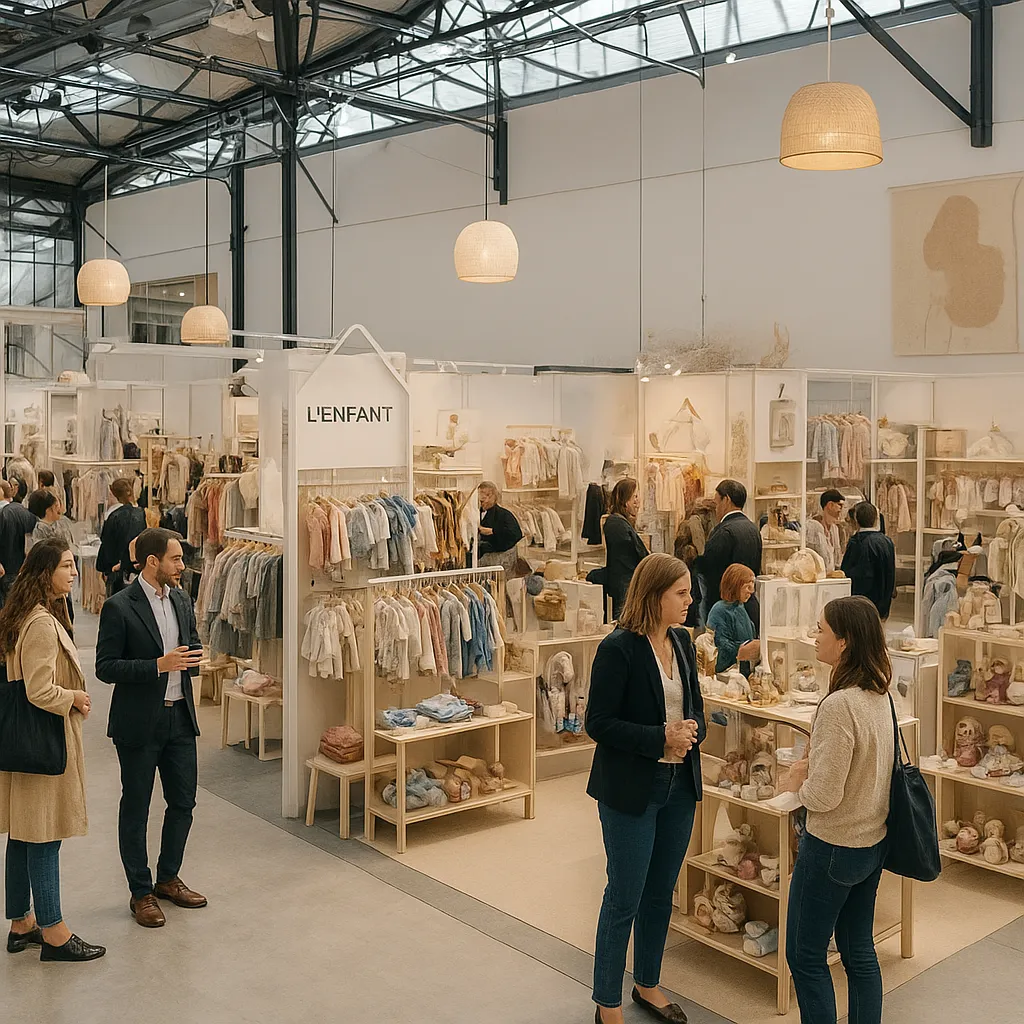
As Playtime Paris approaches its 20th anniversary in 2027, the trade show stands as a testament to the evolution of the children’s fashion and lifestyle industry. From its launch in Paris with just 45 brands, Playtime has grown into a global hub, with editions in New York and Tokyo. But rather than expanding further, its directors have chosen a path of curation, digital innovation, and deeper relationships. In a candid conversation, Sébastien de Hutten and Chantal Danguillaume share their insights on two decades of change and what lies ahead.
A Strategic Shift: Quality Over Quantity
When Playtime first launched, it was a pioneer in blending fashion, home decor, design, and childcare—a concept that was unheard of at the time. The show quickly expanded to Tokyo and then New York. However, the directors have made a deliberate decision to stop expanding the floor space. Instead, they are focusing on what they do best: curating a high-quality offering and fostering personalised relationships with brands and buyers.
This approach is a response to the current market. Buyers now have tighter budgets and are more cautious, yet they still seek novelty. Playtime has adapted by becoming a platform for discovery and networking, rather than just a place to place orders. The show has also invested in digital innovation, launching a comprehensive B2B platform that extends the trade show experience beyond the physical event.
The Evolution of the B2B Kidswear Ecosystem
Over the past two decades, Playtime has witnessed—and often driven—significant changes in the kidswear ecosystem. Chantal Danguillaume notes that while there hasn’t been a radical transformation, there has been a steady evolution. One major trend has been the proliferation of independent boutiques, which exploded in the first ten years. These boutiques have since evolved into mini concept stores, offering a broader range of products including family items, swimwear, and footwear.
On the brand side, Danguillaume observes a professionalisation in logistics, production, costing, and communication. Twenty years ago, brands had very strong DNAs and catered to young parents who bought designer fashion and wanted the same for their children. Today, boutiques and collections are more accessible, meeting the expectations of a wider range of parents. “We started with a designer offering, in the sense understood at the time, and we have moved to a creative offering, which is no longer a traditional designer offering,” says de Hutten. Handmade, one-off pieces and very small production runs have largely disappeared; instead, today’s brands are highly creative with high added value.
Buyer Behaviour: Seeking Newness with Caution
The primary market for Playtime Paris is Europe, followed by Asia and the US. Historically, the show has attracted many Asian buyers, particularly from Japan, due to its creative and niche positioning. In recent years, American buyers have also flocked to Paris, creating a two-way flow between the Paris and New York editions.
But what are buyers looking for today that they weren’t five or ten years ago? Danguillaume explains that buyers are in a riskier position, having to advance cash flow for purchases. They are forced to measure and moderate their buying. Brands have responded by offering deadstock or staggered deliveries to ease cash flow. “Flexibility in cash flow, purchasing, and delivery has become very important,” she says.
Ten years ago, a boutique might have had a portfolio of 50 or 60 brands and could afford to purchase small items with minimum order quantities. Today, the offering is more restricted. Large budgets are maintained with loyal brands, but there is still a need for novelty. Boutiques introduce newness through pop-ups, special activations, workshops, or e-commerce. “Buying is different now: more measured and considered,” Danguillaume adds. “Yet boutiques still have to take risks to find newness and evolve with the generations.”
De Hutten emphasises that buyers are acutely aware of the relationship between price, quality, and creative offering. Multi-brand buyers can only respond to the mass market through differentiation—through high creativity and environmentally conscious products. “Making basics no longer serves any purpose, unless you can produce them at a very reasonable price,” he says. Playtime’s distinction lies in its curation, which meets buyers’ needs to avoid offering basics sold for five or six euros elsewhere. “The human connection has perhaps become even more important than before.”
Selecting Brands: A Curated Approach
With around 300 brands in Paris and New York, Playtime has no plans to expand its floor space. “We are the right size for the current market,” says de Hutten. “This offering satisfies both brands and buyers, who find all the variety they need without too much repetition.”
Each season, 20 to 25 percent of the brands are new. The selection process is rigorous. Brands apply, and a committee comprising the sales team and Danguillaume evaluates them based on several criteria: the brand’s story, differentiation, development context, business stage, and objectives for joining the show. “To judge a collection, we put ourselves in a buyer’s shoes,” Danguillaume explains. “The question is not whether I like the product, but whether this collection will appeal to a buyer. Is it comprehensive enough? Attractive enough? Are the price, manufacturing, and storytelling coherent?”
The committee also considers whether the brand is ready. Some are turned away if their product type doesn’t match the buyers attending. “Some brands call us every six months; we take the time to talk, and some have joined later after realising it was previously too early,” she adds.
Danguillaume advises new brands to be prepared and to have realistic expectations. “Buyers love newness, yet they wait a little to get to know you better: you do not arrive at the trade show thinking ‘bingo, everything is working’.” Visual merchandising is crucial; at Playtime, booths can be customised, allowing brands to stand out.
Affordable Participation and Digital Innovation
Playtime has kept participation costs relatively low. “We increase our prices very little,” says de Hutten. “Our rates are already two to three times cheaper than those of adult fashion trade shows.” A starter booth costs around 1,500 euros, including visibility and dedicated online articles. “We try to maintain a fair balance for everyone,” Danguillaume adds.
Digital innovation has been a cornerstone of Playtime’s evolution. De Hutten built the first website himself in Flash, which was groundbreaking at the time. About ten years ago, Playtime launched an order-taking platform, Orderwizz, which has since grown into a comprehensive B2B platform covering product presentation, order-taking, invoicing, and emailing. “We are the only platform in the world to have launched electronic invoicing,” de Hutten notes. The platform, used by around 150 brands, is priced two to five times cheaper than competitors and also serves womenswear and menswear.
The Future: Celebrating 20 Years and Looking Ahead
As Playtime approaches its 20th anniversary, the directors are planning a celebration that will span both the winter and summer editions, culminating in a major event in summer 2027. “We are going to celebrate together, while also taking the opportunity to make some shifts,” Danguillaume says. New activations and spaces are in the works, but details remain under wraps.
The show will not expand in size, however. “We have had 500 brands in the past, but that was during a period of brand proliferation,” Danguillaume explains. “Today, we operate on a format of just over 300 brands in both Paris and New York. It works very well this way.”
De Hutten stresses that Playtime is about curation, quality, organisation, and personalised relationships. “We have our buyer specialist who looks after them all year round, while our sales representatives and all our teams are in constant contact with the brands. Maintaining this relationship and dialogue allows us to stay ahead of new trends and listen to the brands.” He adds that Playtime has always placed art and artists at the heart of its scenography because it is an inspirational event.
Advice for Young Brands
For young brands participating in Playtime for the first time in 2027, the directors offer practical advice. Danguillaume encourages them to go for it and believe in it, but to have available cash flow planned for growth over one or two years. “You must be prepared, with a very coherent collection and DNA, and state your objectives quite quickly.” She also advises brands to talk to other exhibitors and take advantage of the visibility Playtime offers. “If you have something to say and you are different from the others, there is no reason why it should not work.”
De Hutten adds three pragmatic tips: be vigilant and strict about delivery deadlines, be extremely methodical and organised, and prospect constantly. “The human connection has perhaps become even more important than before,” he says. Finally, he recommends starting with a strong digital foundation to enable buyers to restock and explore products at all times.
Danguillaume also emphasises the importance of image and PR: “We can only communicate about a brand if its photos and lookbook are up to standard. It is a budget that must be planned for; it is essential.”