Modest Fashion
Modest Fashion in Store: Styling, Training and Visual Merchandising
How retailers can turn modest-friendly separates into sales: staff training, thoughtful visual merchandising, a sensitive retail calendar and representation that matches the shop floor.
Why modest shoppers deserve a closer look at the shop floor
A walk through any large fashion destination quickly shows how much suitable clothing already exists. Longer silhouettes, relaxed fits, high necklines and pieces that layer easily are not confined to specialist labels. They sit quietly across mainstream collections, waiting to be noticed.
That is the encouraging part. The harder question comes afterwards. Once a buyer has chosen a maxi dress, a pair of wide-leg trousers or a high-necked blouse with a modest customer in mind, does the rest of the store understand that intention? Can the sales team spot the same potential on the rail? Can the shopper immediately see how those pieces would fit into the wardrobe she already owns?
A garment does not need to be designed exclusively for modest dressing to be useful to a modest customer. What matters is whether the retail environment helps her recognise that usefulness.
A wardrobe built from many labels
Most women do not dress from a single brand or a single price point. They mix and match, weighing fit, fabric, aesthetic and how a new piece will sit alongside what they already own. Modest dressing works in exactly the same way, and it is far less uniform than it often appears from the outside.
One customer may simply want longer hemlines and covered arms. Another will also look for a looser cut, a higher neckline or fabrics that do not reveal what lies beneath. Some enjoy building outfits through layering as a form of creativity rather than a necessity.
Understanding this begins with curiosity. A sales associate who asks what level of coverage a customer prefers, whether she enjoys layering, which occasion she is dressing for and what she is naturally drawn to will be far better placed to guide her than one who makes assumptions.
Turning buying decisions into product knowledge
Good advice depends on knowing how a garment actually behaves once it leaves the hanger. A maxi dress that looks thoroughly covered in the fitting room may reveal a high slit the moment its wearer strides across a room. A blouse that appears opaque under shop lighting can prove more revealing in daylight. Tailored trousers may drape elegantly while standing and sit quite differently when seated.
Layering brings its own practical questions. Which base layer works under a sheer dress without adding unnecessary heat or bulk? How does a cropped jacket sit over a longer blouse? How do you keep a flattering line when combining pieces of very different lengths?
These are the details that let a sales associate add genuine value rather than simply fetching a size. They also depend on communication between buying and selling. If a buyer has deliberately selected particular items with the modest customer in mind, that thinking needs to be passed on. Otherwise the team may never notice the styling possibilities the edit was built around.
Styling for modest customers belongs in the training room
Sales teams are routinely trained on fabrics, fits and, in some stores, colour analysis. Modest styling deserves a place alongside these as a subject in its own right, not as an afterthought bolted onto general service training.
That means approaching it as a distinct area of expertise: an understanding of silhouette, drape, layering and proportion, combined with awareness that coverage requirements vary from person to person. Buyers, merchandisers and sales staff all benefit from that grounding, because it gives them a shared language for identifying suitable pieces and presenting them well.
Once that foundation exists, a buyer can explain which customer a selection is meant to serve. The sales team can translate that edit into complete outfits and personal recommendations. Visual merchandisers can bring the combinations to life on the shop floor.
Confidence matters here. Staff need to ask the right questions without awkwardness, and they need the self-awareness to know that appearance alone tells you nothing reliable about what someone wishes to wear.
Let the fixtures do some of the work
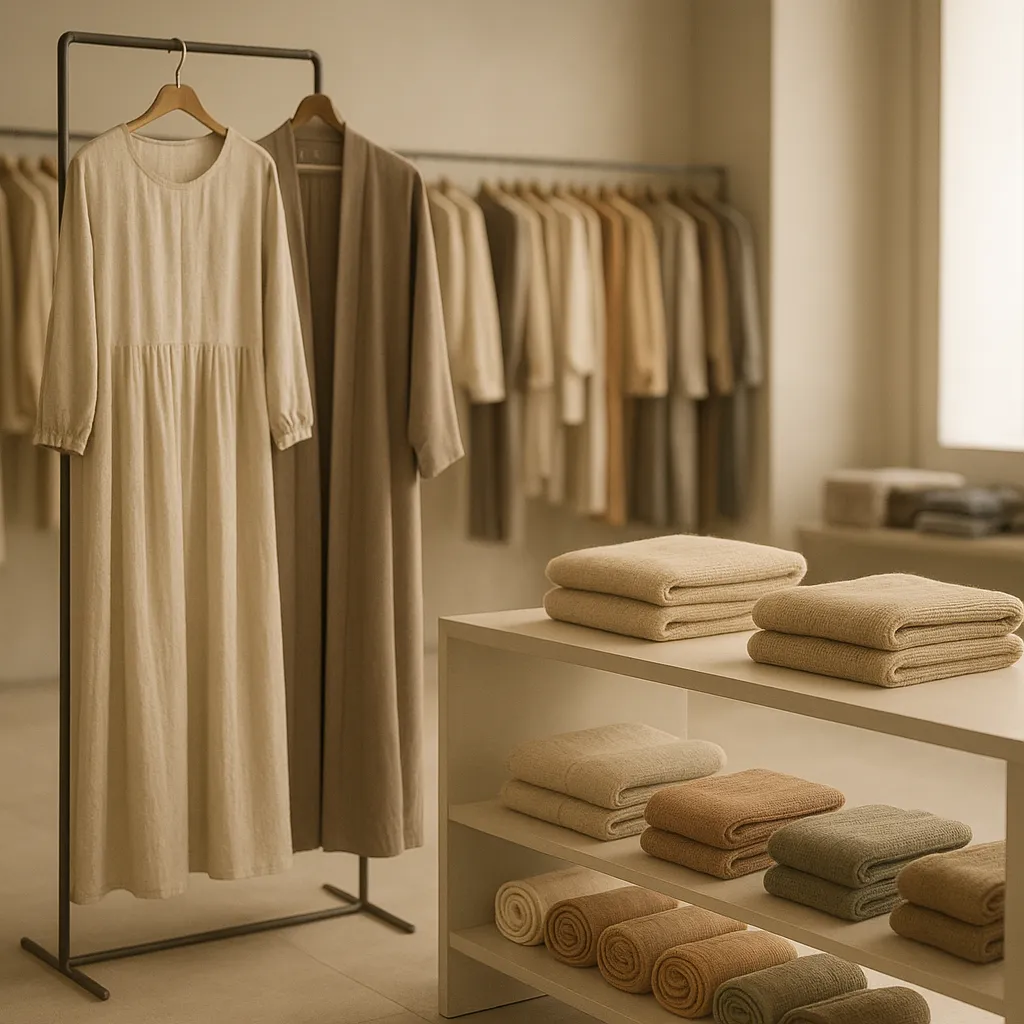
Store layout and fittings play a bigger role than they are often given credit for. Maxi dresses and abayas need rails of sufficient height so that hemlines hang clear of the floor and the full silhouette can be seen. Cramped, low or overcrowded fixtures make it almost impossible to judge how a garment will actually fall.
The same principle applies to scarves that customers may wear as hijabs. Tipped out in a jumbled bin, their colour, size and fabric are difficult to assess. A thoughtfully organised display transforms the experience of choosing. Hanging or folding techniques should also suit the material itself, especially for delicate fabrics prone to stretching or snagging.
From there, complete looks can show how separates work together: a longline blouse beneath a cropped jacket, a dress with a light outer layer, or a scarf worked into a finished outfit. The styling should stay genuinely fashion-forward. Modest customers want to be surprised by colour, texture, proportion and unexpected pairings as much as anyone else. A strong display invites her to try something new while leaving room for her own interpretation.
A retail calendar that reflects real occasions
Beyond everyday dressing, certain moments in the year carry particular weight. Ramadan, Eid al-Fitr and Eid al-Adha each call for different thinking.
Ramadan is a month of fasting, and Eid al-Fitr marks its close, while Eid al-Adha is a separate festival later in the Islamic calendar. Wardrobe needs shift accordingly, from comfortable outfits for evening gatherings to more celebratory looks when visiting family. A well-curated edit, timely communication and inspirational styling all help customers prepare.
For buyers, that means planning these dates into the calendar well ahead of time. For sales staff, it helps to understand which occasion a customer is shopping for, because preferences differ by individual, family and event. Targeting these periods works best when it sits within a broader offering that speaks to the customer all year round.
Joining up marketing and the shop floor
Campaign imagery sets expectations. If a customer sees herself reflected in what a retailer puts out into the world, she should be able to find that same connection in the store, across the range, the merchandising and the conversation with staff.
Visual representation gains real impact when it is matched by varied styling and layering techniques. Showing how an outfit works, what the options are and how a look can be adapted gives a shopper the tools to make it her own. A successful launch, after all, rarely rests on product alone; large-scale advertising, social visibility, press events and collaboration with modest influencers and models all help a brand engage a wide audience from day one.
The clothing may already be on the rail. The task is to make its potential visible and to share the styling knowledge that turns interest into a confident purchase.