Mare Di Moda
Mare di Moda 2026: Swimwear's Season of Caution
At Mare di Moda in Cannes, swimwear makers face soaring yarn costs, cautious buyers and geopolitical uncertainty. The SS28 mood was resilient but risk-averse.
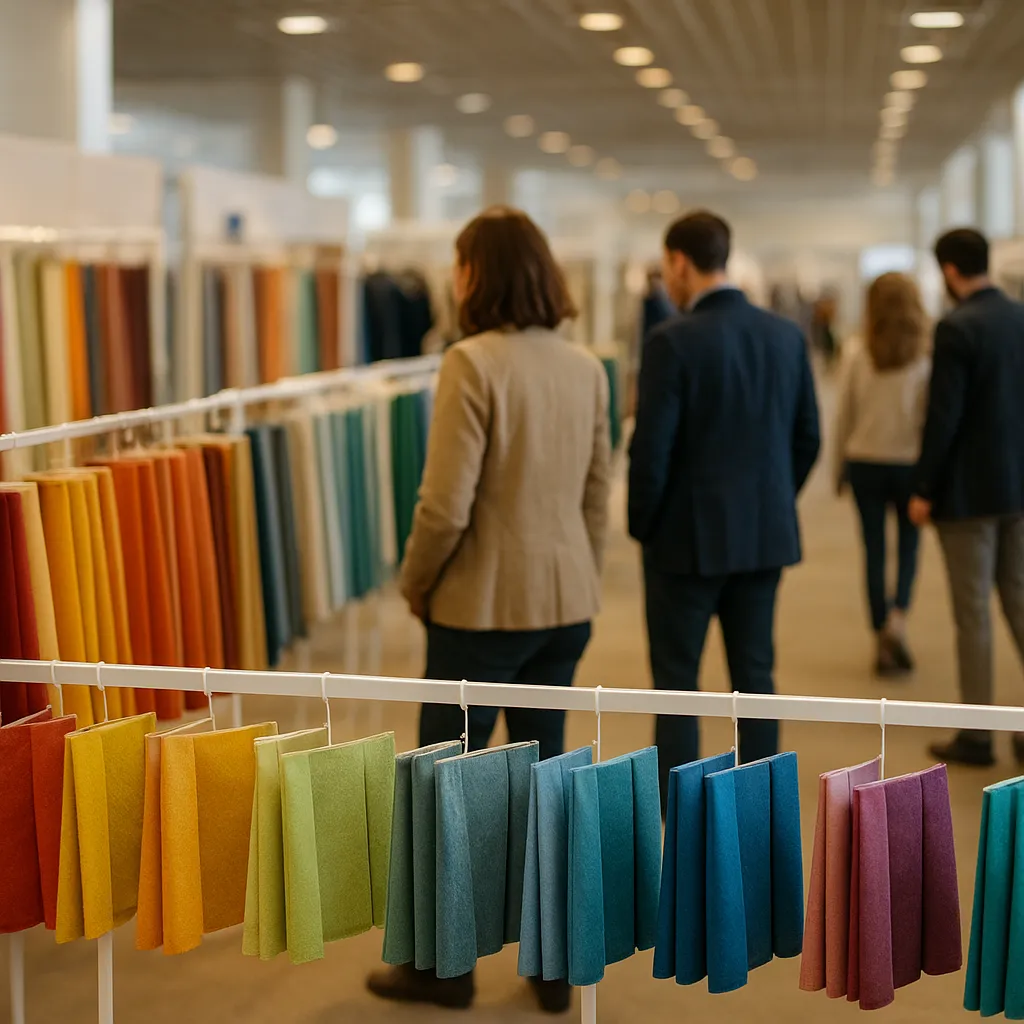
Resilience by the Mediterranean
The Palais des Festivals in Cannes may have been basking in late-October sunshine, but inside the exhibition halls the conversation was anything but sunny. From 27 to 29 October 2026, the 24th edition of Mare di Moda brought together more than a hundred spring/summer 2028 collections from European mills and manufacturers. Visitors arrived in numbers comparable with the previous year, yet the mood was tempered by a litany of pressures: yarn prices that have almost doubled, fuel costs up to 30 per cent higher than in February, and consumers who feel that now is not the moment to splurge or celebrate.
Organisers described footfall as steady, with trade visitors taking a more focused and informed approach. The atmosphere was lively, but neither the Mediterranean setting nor the upbeat demeanour could obscure the realities discussed at the stands: wars in Ukraine, Palestine and Iran are simultaneously pushing up costs and sowing uncertainty across an industry already ordering cautiously after the excess inventory of the pandemic years.
Instability: The Word of the Season
In previous years, Cannes coined its own buzzwords: logistics one season, excess stock the next, raw material prices after that. For 2026, one word dominated: instability. “Political instability is the worst enemy of our industry,” said Claudio Taiana, president of Mare di Moda. When the future is unpredictable, investment is postponed and a wait-and-see approach takes hold, with each day seeming worse than the last. In fashion, “later” almost always means next season—and for SS28 fabrics being selected now, waiting can cost a full year of business.
Officially, the organisers struck a more conciliatory note. The president expected an acceleration after a period of stagnation linked to geopolitics. The evidence, he argued, lay in more considered decisions, closer scrutiny of collections and a positive, vibrant atmosphere. Exhibitors broadly agreed: orders are being placed again, albeit with caution.
Consumer Caution Beyond the Show Floor
The uncertainty reaches consumers too. Taiana regards the direct damage of the Iran war on textiles as limited; the decisive factor is how conflict affects daily life. People want to save because they cannot predict their future—a sentiment that applies as much to clothing as to groceries or dining out. At Carvico and Jersey Lomellina, a European leader in warp-knitted and circular-knitted fabrics for over 60 years, area manager Giorgio Cavallini described the same mechanism. Oil prices are genuinely higher, with drivers paying up to 30 per cent more at the pump than in February, but public mood weighs more heavily than prices.
Younger consumers, in particular, feel it is not the right moment to shop or celebrate. Cavallini also pointed to the previous week’s protests in Italy, France and other countries. Directed against the rising cost of living and fuel prices, these demonstrations led to riots and looting across France, Italy and Belgium over the weekend of 17–18 October 2026. In his view, that prevailing mood has a greater impact on business than the war itself.
The Pandemic Bubble and the Narrow Retail Window
For swimwear, two factors intensify the reluctance. The first is memory of the pandemic years. According to Cavallini, 2021 and 2022 were the best years ever for many, but they formed a bubble. In 2023 the bill arrived with interest: warehouses were full, with yarn at Carvico and fabrics and finished garments at clients’ facilities; in activewear, clearing that stock took nearly three years. Today everyone fears ordering too much—and ordering the wrong product. Buyers want novelty but are unwilling to take risks. Demand focuses on classic fabrics, simply updated with more texture. The year began with high ambitions and could have been the first in a long time to see significant volume orders return. Instead, the global situation has made buyers cautious again.
The second factor is the narrow retail window. Activewear sells almost year-round, but the swimwear season lasts roughly two months. Purchases are made in May and June, ideally during sunny weather that is not excessively hot; otherwise consumers head straight to the beach instead of shopping beforehand. A cool early summer means missing the window entirely. Whether demand will slump as a result remains to be seen. Taiana noted that summer performed well and that swimwear is in a stronger position than the wider textile industry, partly because business is concentrated in a short period. That aligns with a theory that consumer belt-tightening could actually benefit swimwear: those who cut back in everyday life tend to spend more on holiday, much like treating oneself to a weekend drink after abstaining during the week. However, the president countered his own point, noting that one big night out cannot offset seven or 30 days of saving.
Costs, Competition and Who Absorbs the Burden
On the cost side, the crises hit manufacturers directly. The British duo of sustainable apparel manufacturer ApparelTasker and fabric developer Maxxam Textiles, which works with a crinkle fabric invented in the 1980s, reported that yarn prices have nearly doubled, while dyes are also becoming steadily more expensive. UK-specific challenges add to the pressure: dyes must undergo the UK REACH registration process and be purchased in minimum quantities that few companies have the capacity to store. With only two viable dyehouses available, both now charging double the previous UK rates, there is very little room for manoeuvre, explained Maxxam founder and textile designer Rosemary Moore.
She takes a pragmatic approach to who bears the burden. Costs cannot be passed entirely onto B2B buyers without causing a massive price hike, which would ultimately leave end consumers dissatisfied as well. Consequently, the company absorbs part of the increase itself while simultaneously raising wages. The better positioned a business is, the easier it is to manage these rising costs.
Marco Taiana, general manager of the namesake Como-based weaving mill founded in 1933 that specialises in super-stretch wovens, pointed out that swimwear requires very little fabric per garment. Material therefore accounts for a small fraction of production costs, meaning premium products suffer less than entry-level items. Sofileta, a family-owned business established in 1911 operating five plants, spreads its risk. Sport and fashion, including swimwear, account for around 40 per cent of its turnover. Protective textiles for the fire service, military and police make up roughly half, with the remainder coming from industrial textiles. This versatility proves particularly helpful when one market weakens.
The inability to pass on costs indefinitely is also tied to competition. For the coming months, Sofileta has few concerns thanks to its loyal luxury client base, though its outlook for the next five years is different. Company representatives noted that while the US protects its domestic market, Asian suppliers are attempting to capture a share of the European market, and Europe is failing to adequately protect its own industry. While Mare di Moda brings together fair competitors, larger trade shows feature an increasing number of Asian suppliers offering prices that are impossible to match. The combination of dumping prices and rising domestic costs is described as “really tough”. Furthermore, one Chinese competitor reportedly dismissed small quantities as uninteresting, even though such volumes represent solid orders for European mills. A representative from the company called it “completely crazy” that small European premium brands nevertheless continue to manufacture in Asia. If this trend continues, there will eventually be no textile industry left in Europe.
Cavallini also recognises that the era of serving clients in the discount segment may be over, as Asian suppliers can afford to offer prices that are difficult to comprehend. Conversely, European suppliers are expected to meet the highest standards of sustainability and safe production without harming the environment, yet buyers still ideally want Asian prices. Major retailers demand proof against modern slavery and child labour, even though internal and external trade unions alongside regular inspections in Italy ensure there is “no chance” of this occurring. At Carvico and Jersey Lomellina, they question whether the same documentation is demanded from suppliers in other global regions, or if buyers turn a blind eye, or perhaps two, when the price is right.
Europe as a Hub: Close and Transparent, Yet Not Cheaper
Supply chain disruptions had widely sparked expectations that European production would gain importance. Across several stands, it was evident that this concept is gaining traction. Vertically integrated manufacturer Sofileta observed that clients are increasingly requesting short supply chains and want to visit the mills in person; “and in that case, I win the client.” Its yarns are sourced almost entirely from Europe, with polyester from Spain and only elastane coming from Asia. At Tessitura Taiana, most deliveries remain within Europe, stretching from Portugal to Poland, and rarely go to Asia. Cavallini mentioned a client who no longer relies solely on recycled-content fabrics, focusing instead on manufacturing just a few kilometres from home: the short supply chain is becoming a sustainability strategy in its own right.
The British duo illustrated just how unreliable routes from Asia have become: some yarns, even from China, now arrive by rail, which is faster than sea freight. Europe, by contrast, offers transparency and control. Brands can simply drive to the factory, unlike in China, where visiting every two weeks is unfeasible. While people are beginning to see the “cracks in the system”, the industry is “not quite there yet”. This is partly driven by greed, they noted, as profit margins in Europe are lower than in Asia. There are two reasons why this argument has not yet translated into an order boom. The first is price: proximity and transparency come at a cost, yet those who demand them often still expect Asian pricing, as highlighted by the ongoing cost pressures. The second is infrastructure.
Although the trade show president sees the current climate as an incentive to invest, he noted that so much damage has already been done to European manufacturing that rebuilding a new network of producers is difficult. Nearshoring alternatives also have their limits. Cavallini views Turkey as a potentially excellent partner for European production, possessing the necessary skill, capacity and willingness. However, the country is currently in a difficult position and is no longer as competitive as it once was, with manufacturing costs there now nearly matching those in Italy.
Europe as a Destination: Is Cannes Safe Enough?
While Europe has strong arguments as a sourcing region, it is struggling with its image as a travel destination. An anecdote from Claudio Taiana illustrates just how deep this insecurity runs. This year, the trade show presented its Excellence Awards to two winners: one Italian and one American. The American recipient did not attend, even though the organisers had offered to cover travel and accommodation costs. He was unwilling to take the risk, viewing Europe, and France in particular, as too dangerous from afar. “From a distance, people form a generalised picture and say: too dangerous for me,” the president explained. In this perception, France ranks first, followed by Italy, with the northern region around Milan frequently singled out. He views this as the result of poorly managed politics, leaving people fearful for their future, their cities and their families. On the ground, the reality was much calmer: aside from the boarded-up windows of luxury boutiques along the promenade, there was no trace in Cannes of the protests from previous weeks.
The consequences were visible in the aisles. The trade show had a strongly European footprint, with overseas visitors remaining scarce. Carvico and Jersey Lomellina recorded visitors from the Netherlands, Denmark, the UK, Germany and France. At Tessitura Taiana, most clients came from France and Italy, alongside Turkey, Greece, Spain and Portugal, with only a few travelling from the US. Marco Taiana pointed out that sending staff to a trade show is already a costly and time-consuming endeavour for many companies. The organisers now plan to launch a targeted campaign to attract international buyers.
The US market itself remains a double-edged sword for European manufacturers. Sofileta has been growing there for two years with solid results, despite more challenging conditions than before. The East and West Coasts operate as entirely different markets, with the East Coast continuing to seek performance and technical fabrics—precisely the areas where European suppliers excel. Delivery reliability remains a key advantage here. The fact that Europe is sought after as a business partner in the US while simultaneously raising doubts as a travel destination is a contradiction the organisers’ upcoming campaign aims to resolve.
SS28 Outlook: Added Value, Low Risk
When buyers are risk-averse yet need compelling reasons to purchase, fabrics must work harder than before. This is unfolding in three distinct directions. Sofileta is focusing on versatility. Clients are increasingly looking for fabrics suitable for both swimming and workouts that can also be worn to a party—a trend more evident in the activewear sector than at this specific trade show. Bio-based materials are also being requested there, partly because suppliers are heavily promoting them, though this has yet to become a true trend. At Carvico, quick-drying properties take centre stage, especially for embellished garments with heavy detailing that become weighed down after swimming. Even consumers simply lounging at the pool bar want to be dry the moment they step out of the water. Tessitura Taiana, meanwhile, is banking on texture. This includes 3D effects, mostly seersucker, that blend different materials and weave structures, alongside colourful stripes and tone-on-tone jacquards. While some of these fabrics are particularly well-suited for statement bikinis, they are complex to manufacture.
The trade fair was well attended, at least on the opening day. Marco Taiana reported seeing many clients from prestigious brands alongside a solid schedule of pre-booked appointments. At Carvico, most discussions took place with existing clients; acquiring new business at such a show is difficult, partly because the company already has an extensive network. As in previous years, whether these conversations translate into confirmed orders will only become clear in the coming months.
Ultimately, Claudio Taiana drew a historical parallel. The bikini gained widespread acceptance 15 years after the Second World War had ended, at a time when society could afford a new lifestyle model and experienced a shift in mentality. The president hopes for a repeat of this phenomenon, though he noted that “something in the US needs to be resolved” first. When today’s climate of restraint will give way to something new will not be decided in Cannes, but rather in May and June, when consumers decide whether to buy a new swimsuit this summer.