Sustainable Fashion
Leather Design Prize Celebrates Slow Style in Bangkok
Emerging designers gathered in Bangkok for the Real Leather Stay Different finals, where Tal Zohar's Neo-Heritage Tennis Club took the top prize.
A Bangkok finale for a competition built on better materials
The Jim Thompson House in Bangkok played host to the climax of the Real Leather Stay Different International Student Design Competition, where a runway show and awards ceremony brought together emerging designers from institutions across the world. The event is backed by the Leather and Hide Council of America, a US trade association, alongside the UK-based platform Arts Thread, and its central purpose is to encourage sustainable practice among the next generation of designers.
Entries must be built from natural fibres, with bovine leather making up at least half of the composition. That constraint is deliberate: it pushes students to learn what a material can do when plastics are not part of the answer.
The winning collection: heritage with a tennis streak
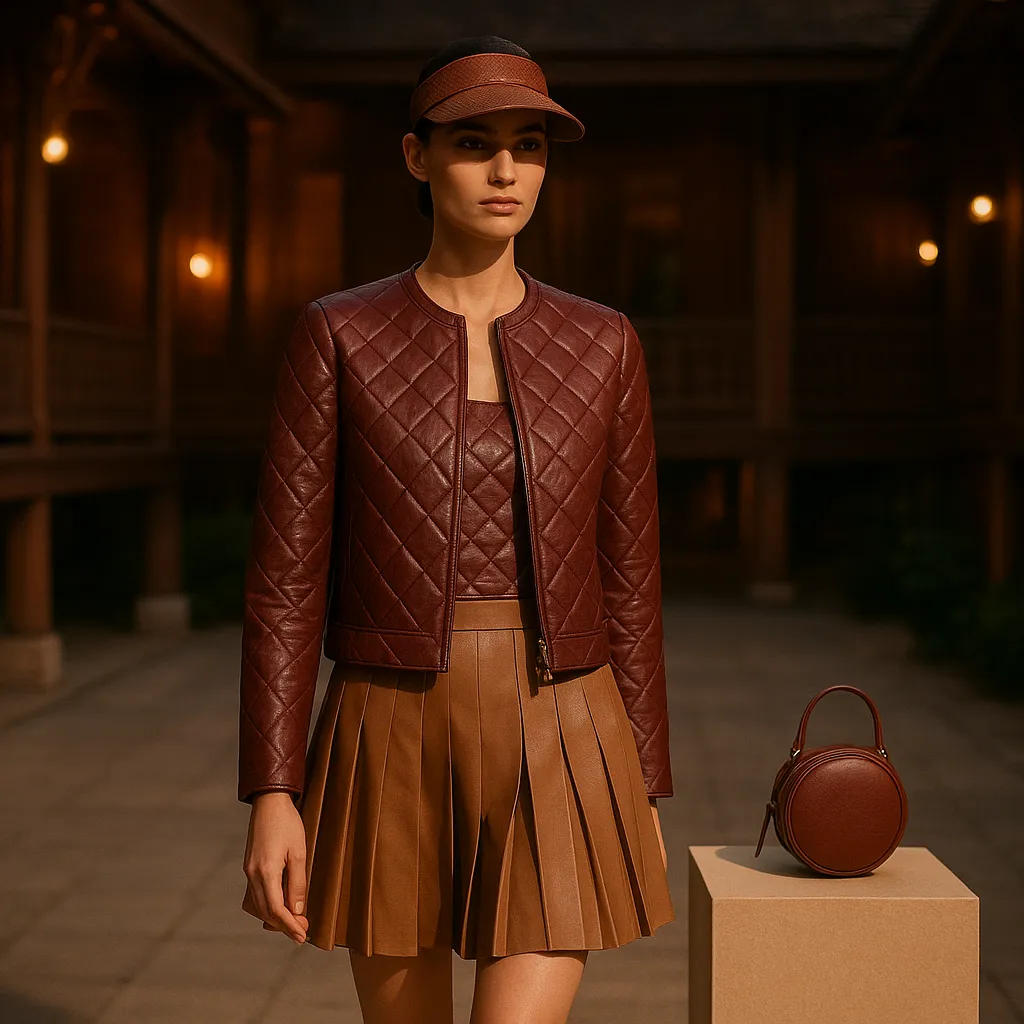
Tal Zohar, studying at Shenkar College of Engineering, Design and Art in Israel, took the overall title with a collection titled Neo-Heritage Tennis Club. The work borrows from the 1920s and the 1970s at once, translating the geometry and colour language of tennis court construction into silhouettes suited to contemporary sportswear.
A leather jacket, quilted so that its surface echoes the strings of a racquet, was shown with a pleated leather skirt made entirely from natural materials. The look was completed with accessories including a sun visor and a leather ball bag.
Zohar explained that the brief asked designers to imagine a more sustainable future for fashion while working exclusively with leather and natural materials. The strength and durability of leather, together with the rise of athleisure, gave her both a source of inspiration and an audience to design for. Her starting point was the history of women’s tennis dress — from the earliest modern skirts that granted freedom of movement on court through to today’s athleisure — and she built the collection around that journey.
What the judges were looking for
Christopher Koerber, managing director of Hugo Boss Ticino and a member of the evaluation panel, framed the task in commercial as well as ethical terms. Designers, he noted, work in a world where pieces have to stand out and sell, yet the competition also recognises that fashion must change: towards clothing with a gentler footprint on the planet and a longer life in the wardrobe. In his view Zohar’s collection embodied exactly that combination — striking design, real commercial application and a sustainable approach, using no plastics and no untried materials, a demonstration of slow style equally at home at the sports club and on the catwalk.
Kerry Brozyna, president of the Leather and Hide Council of America, turned attention to the supply chain. Most people are aware of the harm fast fashion causes, he said, and every year the leather industry diverts from landfill millions of hides that arise as a by-product of demand for meat and dairy. Those hides become leather goods built to last a lifetime. He added that giving emerging professionals hands-on experience of the material is essential to countering misinformation about natural fibres.
The panel also included Wasin Thumrongsakunvong, board director and general manager of Interhides Public Company Limited; Polpat Asavaprapha, founder and creative director of Asava Group and chairman of the Bangkok Fashion Society; Ashin Zhou, innovation designer at New Balance; and Adrien Roberts, international director of Accademia Costume & Moda and a fashion education consultant.
The category winners
Beyond the overall title, awards were handed out across four categories and two special prizes, each recognising a different way of working with the same material.
Apparel
Tal Zohar, Shenkar College of Engineering, Design and Art, Israel — Neo-Heritage Tennis Club, combining bovine leather with natural cotton.
Accessories
Siang-Ying Lu, School of the Art Institute of Chicago, US — Playscape, a bag patterned from a single circle of surplus leather with zero additional cuts, so that no offcut is created.
Footwear
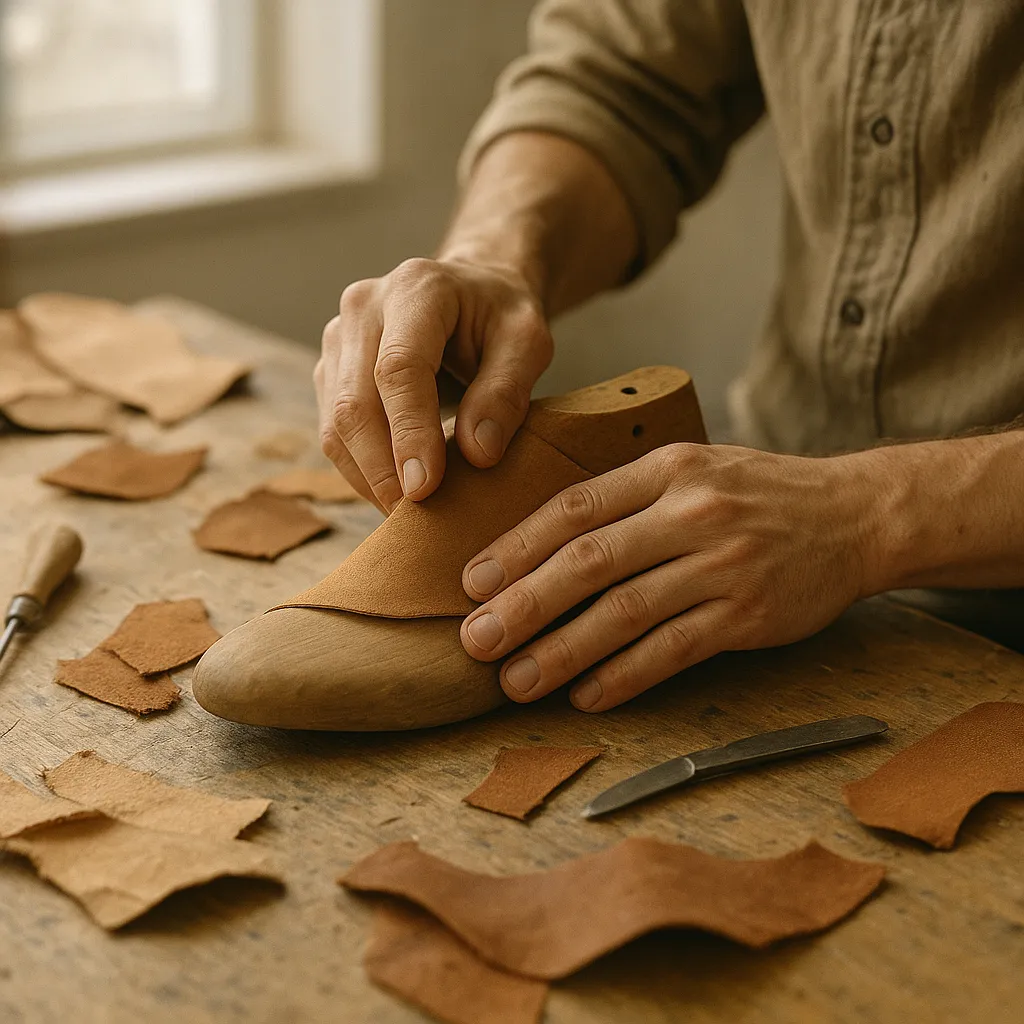
Roscha Dinler, Friedrich-Alexander-Universität Erlangen-Nürnberg, Germany — Fragmented Structure, footwear assembled from leather production scraps shaped directly on the last.
People’s Choice
Tran Trong Nghi Nguyen, Ton Duc Thang University, Vietnam — Champa – The Legacy, an evening dress that references the textures of Bàu Trúc ceramics through leather craftsmanship.
Host Nation Award
Kittidech Chankraithong, Srinakharinwirot University, Thailand — Rode-Mail, an ensemble incorporating traditional Thai gold-leaf gilding techniques applied to leather substrates.
Why the brief matters
The common thread across the winners is restraint. One bag is cut from a single circle so that nothing is wasted; one pair of shoes is built from scraps shaped on the last; one dress carries a ceramic tradition into leather. None of the students were permitted to lean on synthetic shortcuts, and all of them had to demonstrate that a natural material can carry a modern idea.
The setting suited the message. Set among traditional Thai teak buildings in the heart of Bangkok, the awards underlined a point the industry is making with increasing confidence: durability and desirability do not have to pull in opposite directions. For the designers who took part, the competition offered something more enduring than a trophy — a working knowledge of a material that, handled with care, is designed to outlast the season.