Japan Retail
Japan fashion prices cool as clothing sales slip again
Japanese clothing and footwear prices rose 1.5% year on year in August, below headline inflation, while apparel store sales fell for a twelfth month, METI data show.
Clothing prices rise, but more slowly than the headline rate
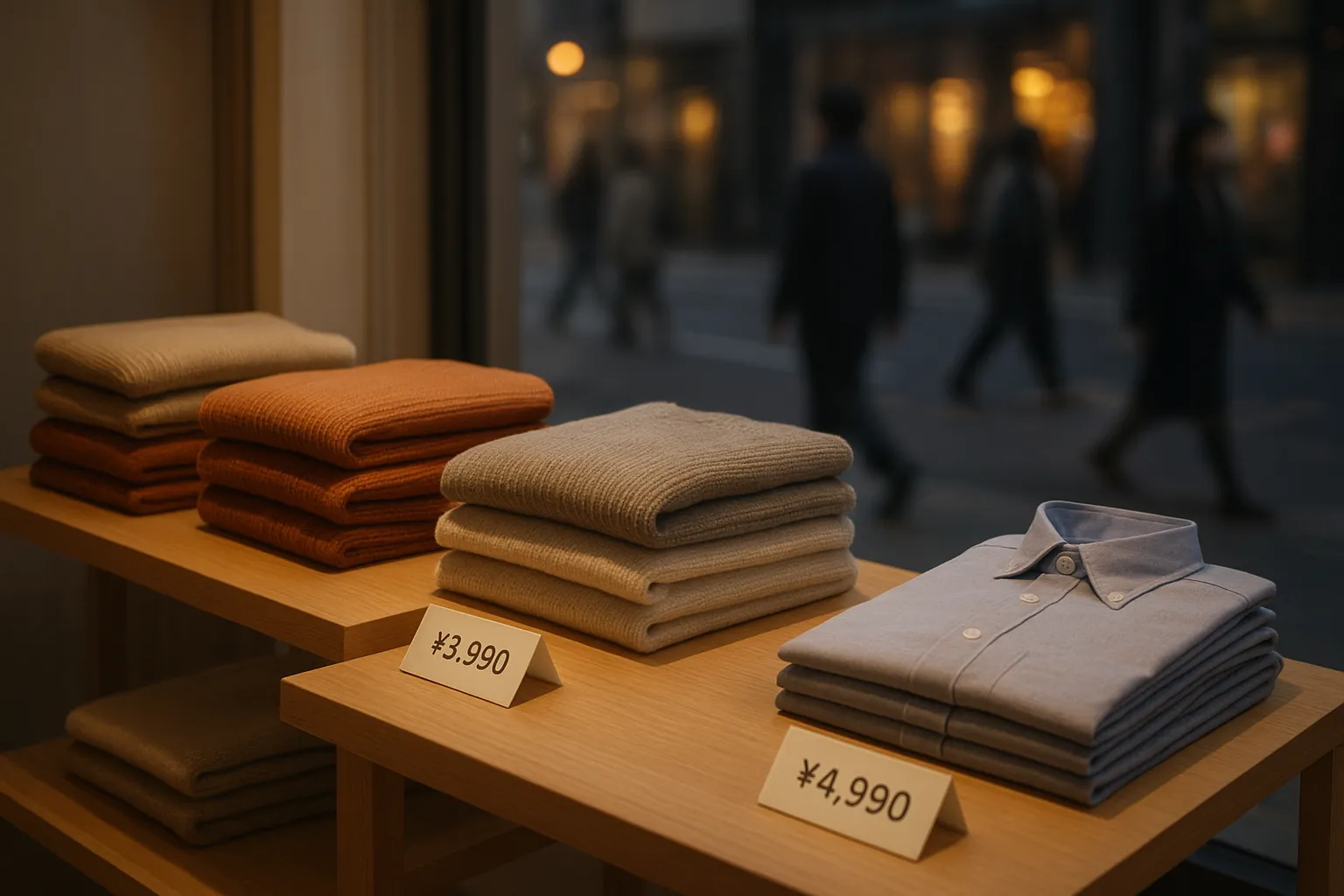
Japanese shoppers paid a little more for what they wore in August. Nationwide, clothing and footwear prices were 1.5 per cent higher than a year earlier, up from a 1.2 per cent annual rise in July, according to the Statistics Bureau. That still leaves the category below the overall cost-of-living measure: headline consumer prices rose 1.9 per cent year on year, unchanged from the previous month, while the index excluding fresh food advanced 1.7 per cent after 1.8 per cent in July.
The detail behind the clothing figure is mixed. Clothing prices as a whole climbed 2.0 per cent year on year, while footwear rose 1.1 per cent. Shirts and sweaters, a narrower grouping that shoppers tend to buy seasonally rather than all year round, were up just 0.7 per cent.
In the 23 wards of Tokyo, where price movements often foreshadow national trends, clothing and footwear inflation eased to 1.4 per cent from 1.7 per cent in July. The softer Tokyo reading suggests the pressure on apparel prices is not accelerating uniformly across the country.
A twelfth consecutive monthly fall in apparel store takings
Price rises are not translating into stronger tills. Preliminary figures from the Ministry of Economy, Trade and Industry put sales at textile, apparel and accessories stores at 520 billion yen in August, a fall of 6.1 per cent compared with a year earlier. That marks twelve straight months of year-on-year decline for the category.
The wider retail picture looks healthier. Total retail sales rose 2.7 per cent year on year to 13.05 trillion yen, and non-store retail, which covers online and catalogue selling, grew 3.0 per cent. The gap suggests spending is shifting away from physical clothing shops rather than disappearing altogether.
Department stores tell a different story
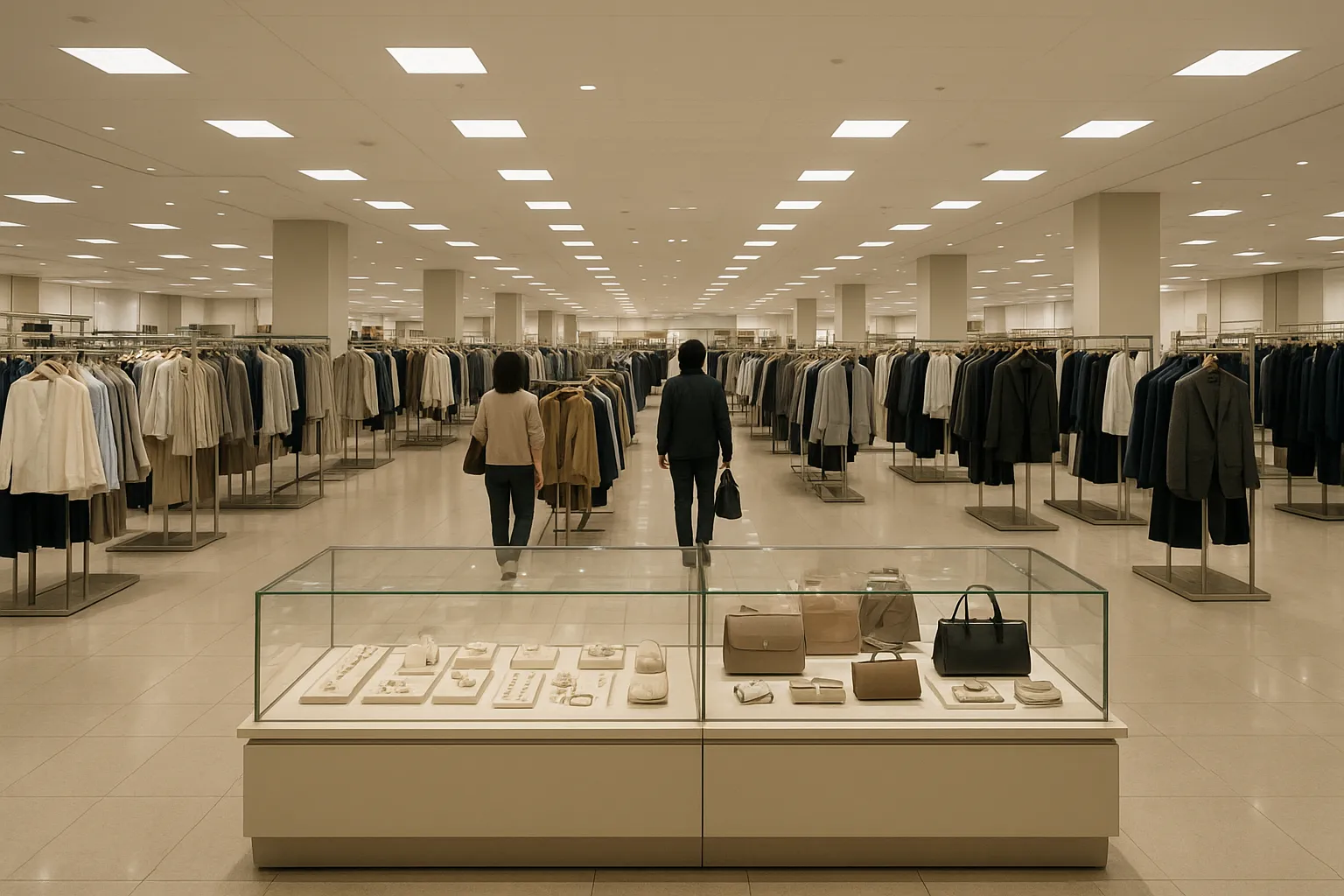
Where specialist apparel retailing has struggled, department stores have edged forward. Store-adjusted sales across the sector rose 2.6 per cent year on year in August, an eighth successive monthly increase, according to preliminary figures from the Japan Department Stores Association.
Clothing sold through department stores was worth 98.2 billion yen, up 0.8 per cent on the same store-adjusted basis. Breaking that down, menswear slipped 0.8 per cent and womenswear 0.1 per cent, while childrenswear rose 4.2 per cent.
Accessories performed better than the main apparel lines. Personal accessories rose 2.0 per cent, and the art, jewellery and precious metals category jumped 12.8 per cent. That top-end strength echoes the pattern seen in tourist spending, where expensive pieces have held up well.
Tax-free buying holds up even as visitor numbers fall
Duty-free purchases by overseas visitors reached 46.1 billion yen in August, 4.6 per cent higher than a year earlier on a store-adjusted basis. The striking part of the figure is that the number of duty-free customers fell 9.5 per cent over the same period, meaning those who did buy spent considerably more each. The association attributes continued appetite for high-priced goods to the weak yen, which makes Japanese luxury and branded items cheaper for visitors holding foreign currency.
Domestic department store sales rose 2.4 per cent. Put alongside the tax-free total, it is clear that local shoppers, not visitors, provided most of the momentum in August.
Fewer arrivals, and a sharp drop from China
Japan welcomed 3,098,900 international visitors in August, 9.6 per cent fewer than in the same month a year earlier, according to preliminary estimates from the Japan National Tourism Organization. The fall is dominated by one market: arrivals from China dropped 59.0 per cent to 418,000.
Other sources of visitors expanded. South Korean arrivals rose 28.7 per cent to 850,500, and Taiwanese arrivals increased 7.3 per cent to 666,000. For retailers with a heavy reliance on Chinese tour groups, that reshuffling of the visitor mix is likely to matter more than the headline arrival number.
Consumers are feeling a little better about their finances
The Cabinet Office’s consumer confidence index rose 0.6 points to 35.5 in August on a seasonally adjusted basis, its strongest reading since February. Households also appear less convinced that prices will keep climbing quickly: the unadjusted share expecting prices to rise over the coming year fell to 89.0 per cent from 92.8 per cent in July.
The labour market remains supportive. The seasonally adjusted unemployment rate stood at 2.5 per cent in August, according to the Statistics Bureau.
Interest rates on hold, and a yen that is still weak on the year
The Bank of Japan left its policy rate unchanged at around 1.0 per cent in August. On the currency side, the dollar averaged 158.81 yen over the month, down from 162.45 yen in July, which amounts to a 2.3 per cent appreciation of the yen against the dollar.
Look further back, though, and the picture changes. In August 2025 the dollar averaged 147.64 yen, so the Japanese currency is still 7.0 per cent weaker than a year ago. For importers paying in dollars, that means a higher yen cost for goods brought into the country, a factor that feeds into shop prices with a lag.
What the August figures add up to
For anyone selling clothes in Japan, the month produced a subtle set of signals. Apparel price inflation is present but modest at 1.5 per cent, comfortably under the 1.9 per cent headline rate. Specialist clothing stores are still losing ground, with a 6.1 per cent fall in sales and a full year of monthly declines behind them. Department stores, by contrast, are growing, helped by a buoyant jewellery and precious metals category and by overseas shoppers who are buying fewer but more expensive items. Consumer confidence is at its best level since February, and a gradually firmer yen may ease import costs in the months ahead, even if it reduces the exchange-rate advantage that has been drawing big-spending visitors.