Digital Product Passport
J.Lindeberg Maps All Suppliers for EU Digital Passport
Swedish brand J.Lindeberg has moved its full supplier base onto a traceability platform, linking certificates and audits to products as EU textile rules approach.
A quiet shift in how clothing is documented
While much of the fashion industry is still debating what European sustainability rules will eventually demand, one Swedish sportswear and lifestyle label has already done the groundwork. J.Lindeberg has placed its entire supplier base onto Trimco Group’s ProductDNA Certificate Manager, a traceability platform designed to hold the documentation behind every garment.
The two firms are not new to one another. Their relationship stretches back roughly two decades, with Trimco Group producing J.Lindeberg’s care labels, hang tags and packaging. What has changed is the scope: instead of supplying printed components, the partnership now underpins the data that sits behind them.
Beyond simply uploading files, the companies are mapping suppliers and attaching certificates and factory audits to the particular products and purchase orders they belong to. In practice, that means a jacket in a seasonal range can be traced back to the fabric mill, the certificate covering its fibre content and the audit of the site that made it.
Why the Digital Product Passport matters
The driver behind the rollout is the EU’s Ecodisign for Sustainable Products Regulation (ESPR), which introduces a mandatory Digital Product Passport for textile products. The precise requirements for textiles have not yet been finalised, but the expected scope is broad: fibre composition, recycled content, chemical compliance and traceability across the supply chain.
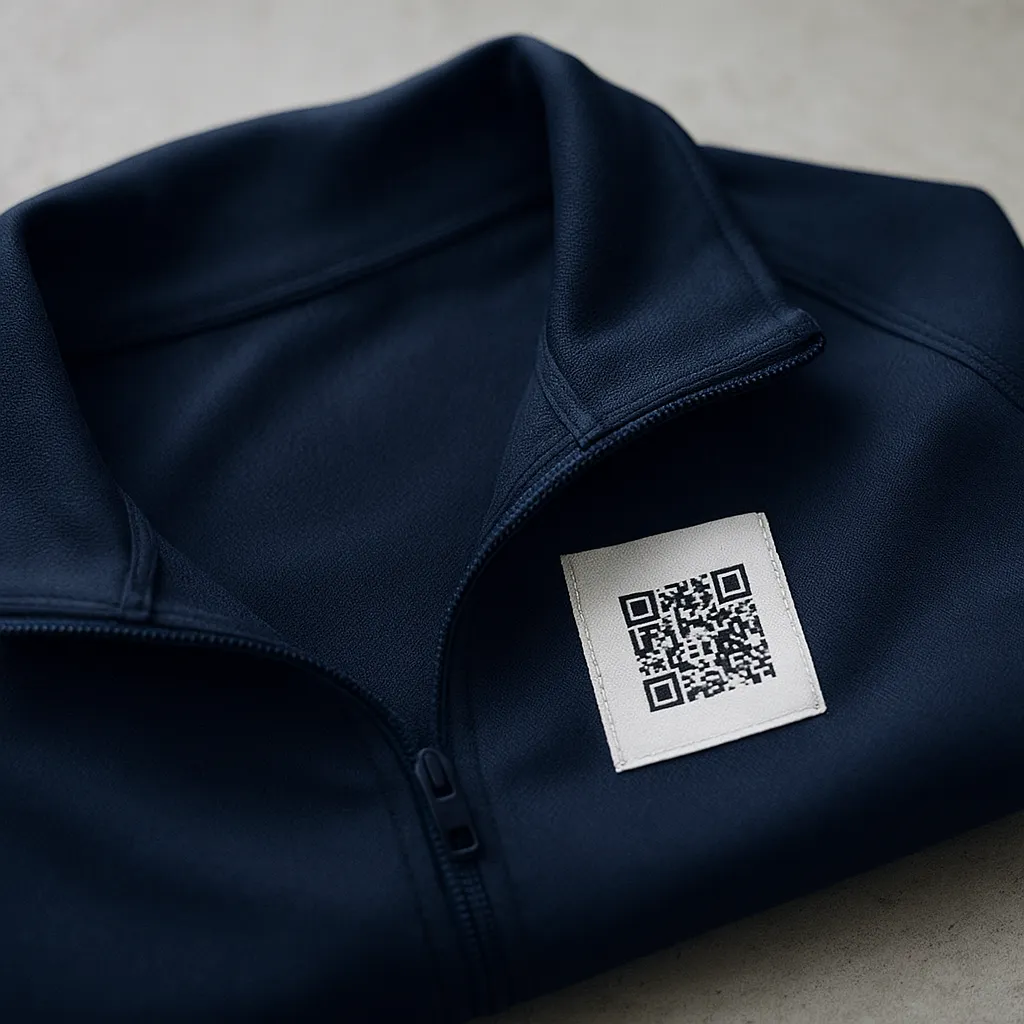
The passport is expected to be reached through a QR code printed on the garment label — a component the supplier already manufactures for the brand. That detail illustrates how closely the physical label and the digital record are becoming intertwined.
ProductDNA gathers supplier certificates alongside data on fibre composition, recycled content and chemical compliance. It flags documents that are missing or inconsistent and ties the information to the brand’s purchase orders and products, so that records correspond to actual garments rather than sitting in a disconnected archive.
Testing the ground before full onboarding
The full rollout did not happen in one step. The companies first ran a pilot, followed by a review phase, to test the quality of the data, gauge how prepared suppliers were and adjust the software as the EU rules continued to take shape.
Sofia Bothelius, chief product officer at J.Lindeberg, said the pilot allowed the brand to strengthen collaboration with its suppliers and to make sure they had the right tools in place to deliver what the system needed to work. She added that local teams from Trimco helped some suppliers get set up.
That practical support matters. Smaller mills and subcontractors often hold certificates in different formats, or in paper files that never reach a central system. Getting that material into a consistent structure is a piece of unglamorous work that sits behind any credible traceability claim.

Built from the inside out
Camilla Mjelde, sustainability and C&C director at Trimco Group, said the company originally built ProductDNA for traceability within its own supply chain. That origin story is part of its appeal: the platform was developed by a supplier that was already close to the manufacturing floor, rather than imposed from a distance.
Mjelde noted that most brands are about to face the task J.Lindeberg began early, and that the data work becomes far easier when it sits with a partner already embedded deep in the supply chain.
A project that keeps moving
Both companies describe the rollout as ongoing rather than finished. As the EU’s detailed requirements for textiles evolve, the system and the records within it will be adapted to match.
For brands watching from the sidelines, the exercise offers a practical lesson. Building a product passport is less a question of buying software than of knowing, product by product, which factory made what, which certificate covers it and whether that document is still valid. Starting that work early, while the rules are still being drafted, gives suppliers time to adapt and gives a business room to correct gaps before they become compliance problems.