Italian Leather Goods
Italian Leather Goods Summit Returns to Florence in 2026
Assopellettieri's General States of Italian Leather Goods returns to Florence's Palazzo Vecchio on 19 November 2026 to debate luxury, innovation and global growth.
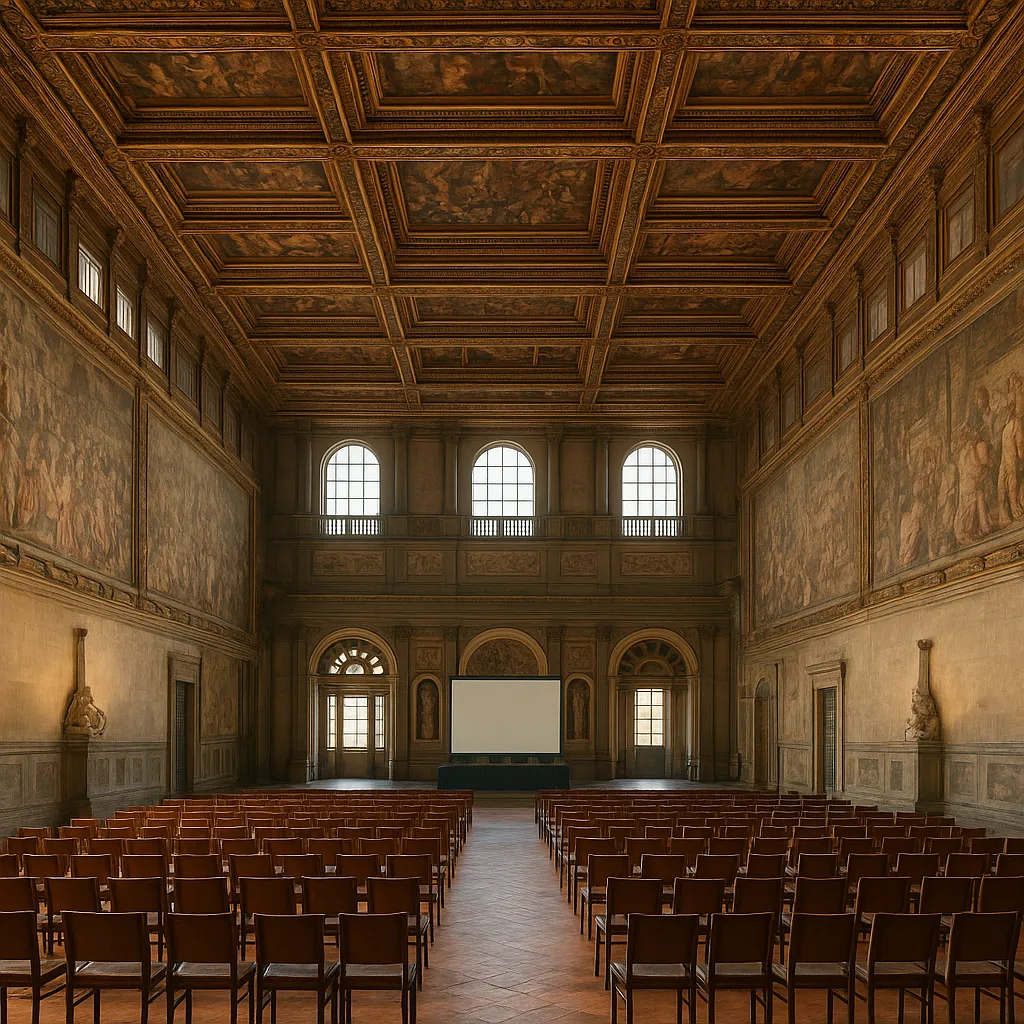
A flagship Made in Italy sector takes the stage in Florence
On Thursday 19 November 2026, the Salone dei Cinquecento at Palazzo Vecchio in Florence will host the sixth edition of the General States of Italian Leather Goods. The summit is promoted and organised by Assopellettieri, the association that has represented Italian leather goods manufacturers since 1966, a member of Confindustria and part of Confindustria Accessori Moda. The event is co-promoted with the Municipality of Florence and held under the patronage of the Tuscany Region.
The day of debate is dedicated to the prospects of one of the country’s most recognisable areas of manufacturing excellence. It brings together major brands, supply chain operators, own-brand small and medium-sized enterprises (SMEs), industry analysts and institutional representatives to examine what is reshaping the sector’s economic and competitive landscape. Discussion will range from shifts in international markets and the evolution of the luxury segment to the opportunities created by innovation and technology, with the aim of assessing the challenges businesses currently face and mapping out possible routes to growth.
Tradition, innovation and the case for a united supply chain
In a fast-changing global environment, Italian leather goods is being asked to build further on its manufacturing skill, its quality and the heritage of savoir-faire that define its tradition, while sharpening its capacity to innovate and compete internationally. That journey depends on a shared vision and a joint commitment from every stakeholder along the value chain. Working as a single system is once again highlighted as an essential lever for the industry’s future.
What the Assopellettieri strategic study will reveal
Moderated by the Mediaset journalist Stefania Cavallaro, the programme features contributions from Carlo Cottarelli, economist and director of the Observatory on Public Accounts at the Catholic University of Milan; Beatrice Lemucchi, managing director at Boston Consulting Group (BCG); Massimiliano Serati, dean of the LIUC Business School; and Alessandro De Biasio, chief executive officer of Cefriel.
The debate will draw on the Assopellettieri Strategic Study, produced in collaboration with the LIUC Business School. As well as updating the picture on industry performance, the report will assess how key macro-trends are affecting Italian leather goods and its supply chains. It will look at the evolution of demand, including the opening of new markets and changing consumer preferences, and at competitive dynamics and the evolution of value chains from a European perspective, particularly in light of regulatory and technological drivers.
Building on that analysis and on possible evolutionary scenarios up to 2035, the study will identify guidelines and development trajectories tailored to the different types of business in the sector, from supply chain players to own-brand SMEs, while setting out strategic directions for the industry as a whole.
Luxury, collaboration and competitiveness on the world stage
A closer look at the evolution of the luxury market, led by Luca Solca, managing director of luxury goods at Sanford C. Bernstein, follows the morning session. A reflection on industrial synergy and the difficulties of collaboration among sector stakeholders comes next.
The competitiveness of Italian leather goods in global markets will be the focus of a further session featuring Giovanni Bozzetti, president of Fondazione Fiera Milano; Raffaele Scalese, business development director at Il Bisonte; and Matteo Ferrando, director of technology and AI innovation at WPP Media, alongside the participation of the Italian Trade Agency (ICE).
To close proceedings, Claudia Sequi, president of Assopellettieri, will present the sector’s recommendations to the institutions, aimed at strengthening the industry’s competitiveness and reinforcing the strategic role of Italian leather goods internationally.
‘The General States of Italian Leather Goods represents an important opportunity for discussion within our industry, a moment to share analyses, experiences and proposals to address ongoing transformations and build new prospects for growth,’ Sequi said. ‘In a complex international landscape, it is essential to strengthen business competitiveness, enhance supply chain skills and promote a shared vision for the future of Italian leather goods. Assopellettieri continues to work in this direction, fostering dialogue between businesses and institutions and supporting the role of a sector that is a fundamental component of Made in Italy.’
Partners backing the 2026 edition
Fondazione Fiera Milano continues to support the initiative for 2026, helping to reinforce the value of the event as a forum for discussion, dialogue and the promotion of Italian leather goods excellence. Intesa Sanpaolo is confirmed as main sponsor. The event also counts on the backing of leading trade associations and institutions including Confindustria Accessori Moda, Confindustria Toscana Centro e Costa, Assomac, Confindustria Moda and the Italian Tanneries Association (UNIC).
Existing collaborations have been renewed with Starhotels Group, Deda Stealth and Unoglam, alongside established support from Cantini Lorano S.r.l., Gi Group, Lampo by Ditta Giovanni Lanfranchi S.p.A., Il Papillon S.r.l. and TecnoGi.
The network for 2026 is further enriched by Aon and DB Group S.p.A., which have joined the project to help strengthen the system of collaborations and synergies supporting the Italian leather goods sector.
Why the summit matters beyond the hall
For businesses across Tuscany and the wider Italian manufacturing base, the Florence gathering is a rare moment when brand owners, tanners, component makers and own-brand workshops sit in the same room as economists and policymakers. The mix of data, market outlook and institutional proposals gives smaller firms in particular a way to anticipate regulatory change and consumer shifts rather than react to them. With the strategic study projecting scenarios as far ahead as 2035, the debate is designed to serve as a working road map rather than a one-day showcase, reinforcing the sector’s message that quality manufacturing and international ambition can be pursued together.