Ispo Amsterdam
Ispo's Amsterdam Debut: A New Era for the Sports Trade Fair
Ispo's first Amsterdam edition drew 20,000 visitors as the sports trade fair adapts to smaller crowds, German reluctance and a new Sports Week vision.
A change of scene after five decades
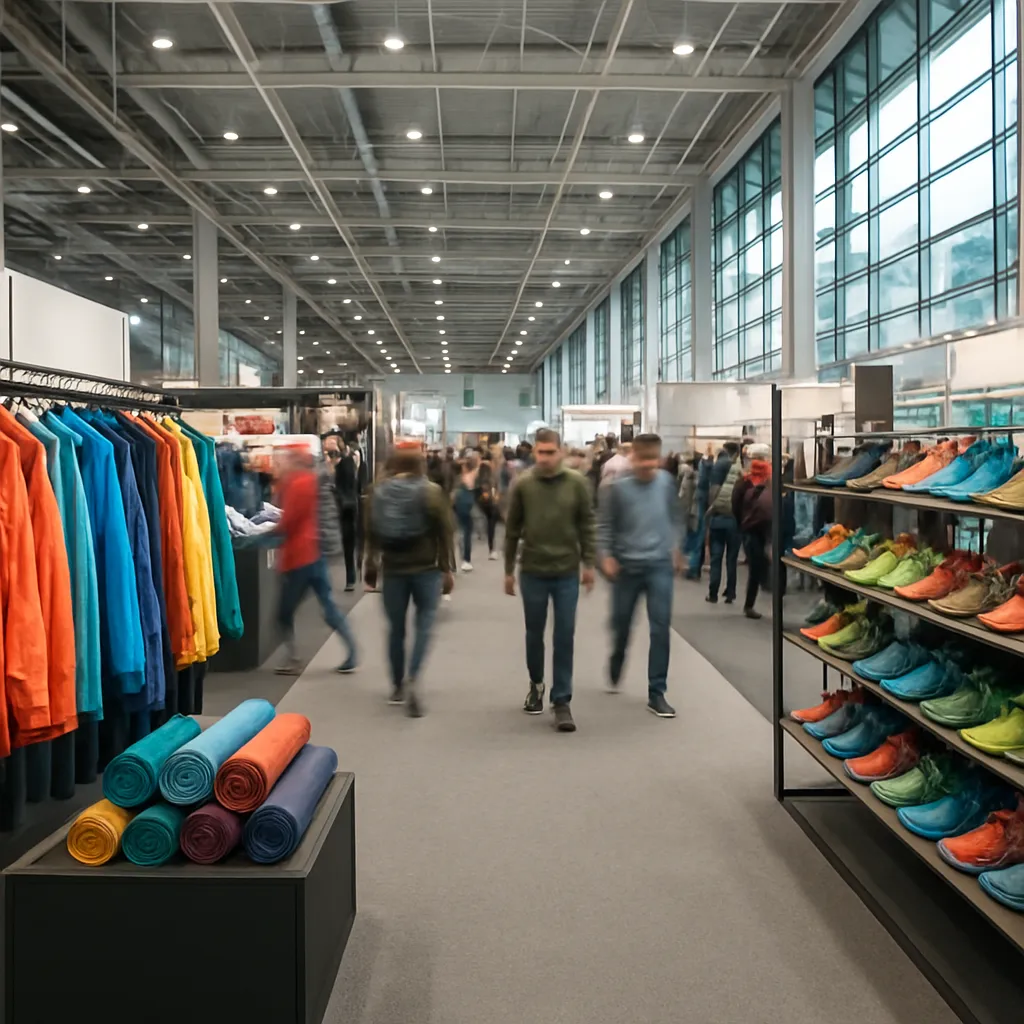
For the first time in more than 55 years, the international sports and outdoor trade fair Ispo has been staged somewhere other than Munich. Its debut edition in Amsterdam wrapped up after two trade days preceded by a dedicated summit for executives, and the organisers described the mood as cautiously upbeat. Brands, retailers and manufacturers engaged closely with the programme, and the first impressions suggest that the announced investment in hosted buyers, content formats, live activations and the fair’s charitable Impact Fund came together as intended. A definitive verdict will only emerge once feedback from participants has been gathered, and for the next edition the team intends to refine existing formats and improve both return on investment and what it calls return on engagement.
The scale is demonstrably different. The closing Munich edition in late 2025 filled nine halls with 1,750 exhibitors from 54 countries and drew around 55,000 trade visitors over three days. Ahead of Amsterdam, the organiser had floated 2,000 exhibiting companies and 25,000 visitors; an initial projection puts attendance at roughly 20,000. The fair itself was shortened to two days, moved forward by about four weeks into early November, and paired for the first time with a running show, the International Running Expo (IRX), accessible on the same ticket. Ispo now operates through a joint venture between the London-based Raccoon Media Group and Messe München.
Who came, who stayed away
German participation was noticeably muted. Sections of the German industry either sat the edition out or sent staff only to walk the floor as visitors, according to Ispo managing director Tracy Bebbington. The absence of well-known German outdoor names was felt across the brand halls, and a representative of British outdoor label Craghoppers noted that German-speaking retailers consequently declined invitations, while partners from the UK, Belgium, the Netherlands and Luxembourg responded far more warmly. Only a handful of interested parties came through from the retail group Intersport, which took part as a retail partner — enough to leave the brand questioning whether and how to return.
By contrast, brands with strong wholesale roots in northern Europe reported a productive week. Will Stanton, who leads UK and Republic of Ireland sales at Equip Outdoor Technologies, the parent of down specialist Rab, said all the key accounts from its home market were present, along with guests from North America and New Zealand. The brand generates about 90 per cent of its revenue through wholesale, almost half of it in the UK, and Stanton singled out the transport links as a clear advantage over Munich: the trip is worthwhile even for a single day on the floor. Buyers he spoke to had one recurring request — more brands, particularly smaller and lesser-known ones.
A stage for newcomers
The answer to that demand, in the organisers’ view, is the Brandnew area carried over from Munich and run in Amsterdam jointly with Japanese zip manufacturer YKK. Qualifying young companies exhibit for a fixed price and present on stage, and the buyers’ lounge was deliberately placed so that the route to it passes straight through the zone. Among the participants was Darimati, a South Korean sports shoe start-up founded only in April through a Kickstarter campaign. Its chief executive, Hyunuk Hwang, explained that the brand grew out of the surging popularity of the Hyrox fitness competition in Seoul, and focuses on hybrid training shoes with a specially engineered sole for stability and injury reduction. After direct-to-consumer launches in South Korea and the US, and with several retailers and fitness clubs already on board there, the company is now hunting for European partners. YKK also used the space to show products built around its zip innovations, including a jacket from Belgian cycling apparel maker Bioracer and a running-focused rain shell from Austrian brand Löffler.
Big stands, new ambitions
The largest presence belonged to Chinese premium down brand Tanboer, framed by a climbing scene with mannequins. Attending Ispo for the fifth time and targeting revenue of three billion Chinese yuan for 2026, the company used Amsterdam to unveil its first hybrid running and hiking shoe, launched in October, with a professional climbing shoe to follow. Around 90 per cent of its revenue currently comes from its home market, most of it through roughly 700 physical points of sale, about 55 per cent of them standalone stores. Ivan Wang, assistant to the chairman, said the aim is to establish a foothold in Europe, especially the German-speaking region, starting with visibility in ski and snowboard — including an existing partnership with the Austrian snowboard team and a collaboration with the German team from next year.
Neighbouring Tanboer was US sportswear brand Fabletics, which has a substantial German business and returned after skipping the Munich farewell. Mark Ralea, general manager for Europe, reported few conversations with German partners but good discussions with retailers from Italy, France and the UK. The stand showed no major novelties, though the brand confirmed plans to bring its denim line to Europe from the first quarter of 2027.
Running on its own track
At IRX, exhibiting for the second time in Amsterdam, the emphasis fell on accessories and nutrition, alongside apparel and footwear names including Skechers’ running category and Scott. The Swiss manufacturer, whose strongest markets are France, the US, Italy and the German-speaking region, showed running shoes and clothing, among them a collaboration with Romanian long-distance runner Mădălina Florea launching next year with two models for different distances. Peter Cable, head of running at Scott, was satisfied overall but candid that few buyers and retailers were on site — a reminder of how much the brand depends on wholesale. In his view a spring edition might suit the category better, since current spring/summer looks could then be shown, and he was ambivalent about greater participation from other sports brands: more names would energise the floor, though the biggest players would also claim more space, whereas today buyers have time for smaller brands and supplementary products.
Manufacturing, testing and materials
Away from the brand halls, several rooms were given over to Manufacturing & Ingredients, where producers of materials, components and finished goods courted brands as production partners. The offering ran from zips, table tennis bats and trophies to contract sportswear manufacturing. There was plenty to try: a dedicated padel hall and a small pool for product testing, with snowboarders and skiers throwing tricks on ramps outside. A sustainability zone gathered suppliers including the Südwolle Group, one of the largest makers of worsted yarns from wool and wool blends, and The New Zealand Merino Company, which markets New Zealand merino and administers the ZQ certification for ethically produced wool. A separate hub explored water use in jeans production, outerwear wear and tear, and recycling.
What the fabric boards say about 2028 and 2029
The Textrends displays show circularity and digitalisation moving from ambition to operational reality. For spring/summer 2029, three megatrends frame the forecast: Looping the Loop, in which circularity becomes a core business task driven by textile-to-textile recycling, new feedstocks and bio-based substitutes for fossil raw materials; Smart Shift, in which artificial intelligence, automation and data accelerate design, production, sourcing and sales; and Play On!, which tasks the industry with getting people outdoors and bringing them together. On the material side, natural fibres such as wool, hemp, linen and silk gain new performance properties, sitting alongside ultra-light packable constructions, recycled fibres with archival references, and cleaner chemistry focused on dyeing and finishing natural fibres.
Autumn/winter 2028/29 echoes those themes. Unconditional ties responsibility to regulation and compliance; Divination treats digitalisation as the backbone of the industry, from AI-assisted sewing machines to cloud-based production models designed to curb overstock; Social Spirit positions physical activity as a counterweight to screen time and prolonged political crisis. Textiles lean towards durable protective outdoor materials and irregular surfaces with new welding techniques, for instance in down jackets, alongside coexistence rather than competition between natural and synthetic fibres, plus wearables, printed sensors and app-controlled heating. Colours move from soft rose and grey to sepia with copper and gold trims, while purple joins the core palette for SS29.
An international jury of textile designers, trend experts and journalists made its selection in September. David Shah, editor-in-chief of trend forecasting publication View Magazine, saw no radical innovations, concluding that manufacturers concentrated on price and value in a market where costs matter again. Textile and sustainability expert Kutay Saritosun noted many textile-to-textile recycled polyamide and polyester fibres, often blended with wool, and found collagen as a fibre genuinely new. Consultant Louisa Smith highlighted finishes free from per- and polyfluorinated chemicals and dyes derived from food waste.
The bigger plan: a week-long celebration of sport
The organisers had set out the road map at Tuesday’s kick-off. Under the banner of Ispo Sports Week, the trade show, public events and community formats are to converge into a single event week, with Amsterdam remaining the anchor and expanding in 2027 to include new PadelXpo and OutdoorXpo formats. A first Dubai edition is planned for September 2027, the existing fairs in Shanghai and Beijing will become spin-offs of Sports Week, and the US is due to follow in 2028. “We want Ispo Sports Week to become a celebration of sport,” Bebbington says, envisaging around 50 events in the ideal week — by no means all of them run by the organiser, with third parties explicitly encouraged to schedule their own. Ispo itself will keep its one summit day and two trade days so exhibitors can control costs, though the hall plan will change: an extra hall comes next year and IRX will connect directly to Ispo. Bebbington is in no hurry. “This is our first year, and we know it is a learning process,” she says. “I always say it is a marathon and not a sprint.”