Luxury Repair
Inside Louis Vuitton's Repair Workshop: The Craft of Extending Luxury
We visit Louis Vuitton's Cergy atelier to discover how repair artisans are redefining luxury fashion through craftsmanship, longevity and sustainable design.
Paris Fashion Week and the case for repair
While the fashion world gathered in Paris to celebrate the Spring/Summer 2027 collections, a different kind of creativity was drawing attention: the art of extending the life of pieces that already exist, starting with repair. On the occasion of the LVMH Journées Particulières, held from 16 to 18 October 2026, this approach was put under the spotlight.
That weekend, we were invited to step inside the Care & Repair Workshop, Louis Vuitton’s dedicated repair facility in Cergy, on the outskirts of Paris. The visit offered a rare chance to see how this activity is organised, the skills it demands, and its broader corporate social responsibility (CSR) implications.
From boutique to workshop: the journey of a repair
Louis Vuitton operates 12 repair workshops worldwide, handling nearly 600,000 items each year. Repair is not a sporadic after-sales gesture; it is a structured operation with its own intake channels and specialised ateliers. This organisation highlights the special place of repair in the luxury sector, where the value of items can justify complex interventions, sometimes several decades after they were made.
“Our goal is to extend the life of our products for as long as possible,” said Hélène Valade, environmental development director for the LVMH group, during the visit.
The Cergy workshop was established in 1991 on a 700 square metre site and employs around 30 artisans. It has three main areas of activity: leather goods care (known as Bag Spa); repairs; and the restoration of antique trunks.
A customer can drop off their item at a Louis Vuitton boutique. An initial assessment determines the type of work required, and some repairs can be carried out in-store. Operations that require special skills or equipment are sent to the repair workshop. When original parts are no longer available, the artisans can look for alternative solutions or create custom-made components.
Repair as a dedicated craft with skills to pass on
“For us, no is not an option. We find solutions or, at the very least, alternatives to offer our clients,” noted Xavier Barret, who is in charge of item flow management and expertise.
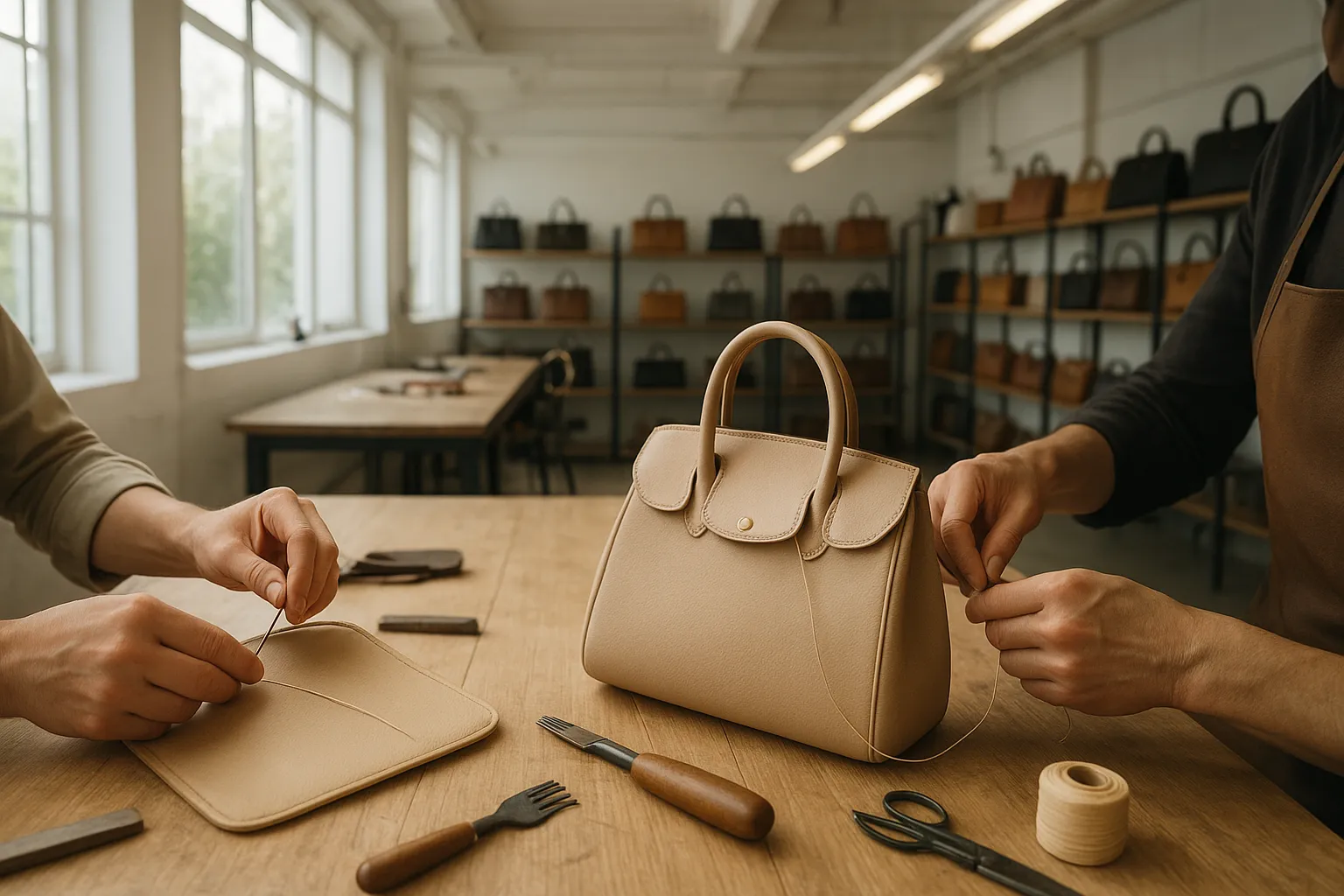
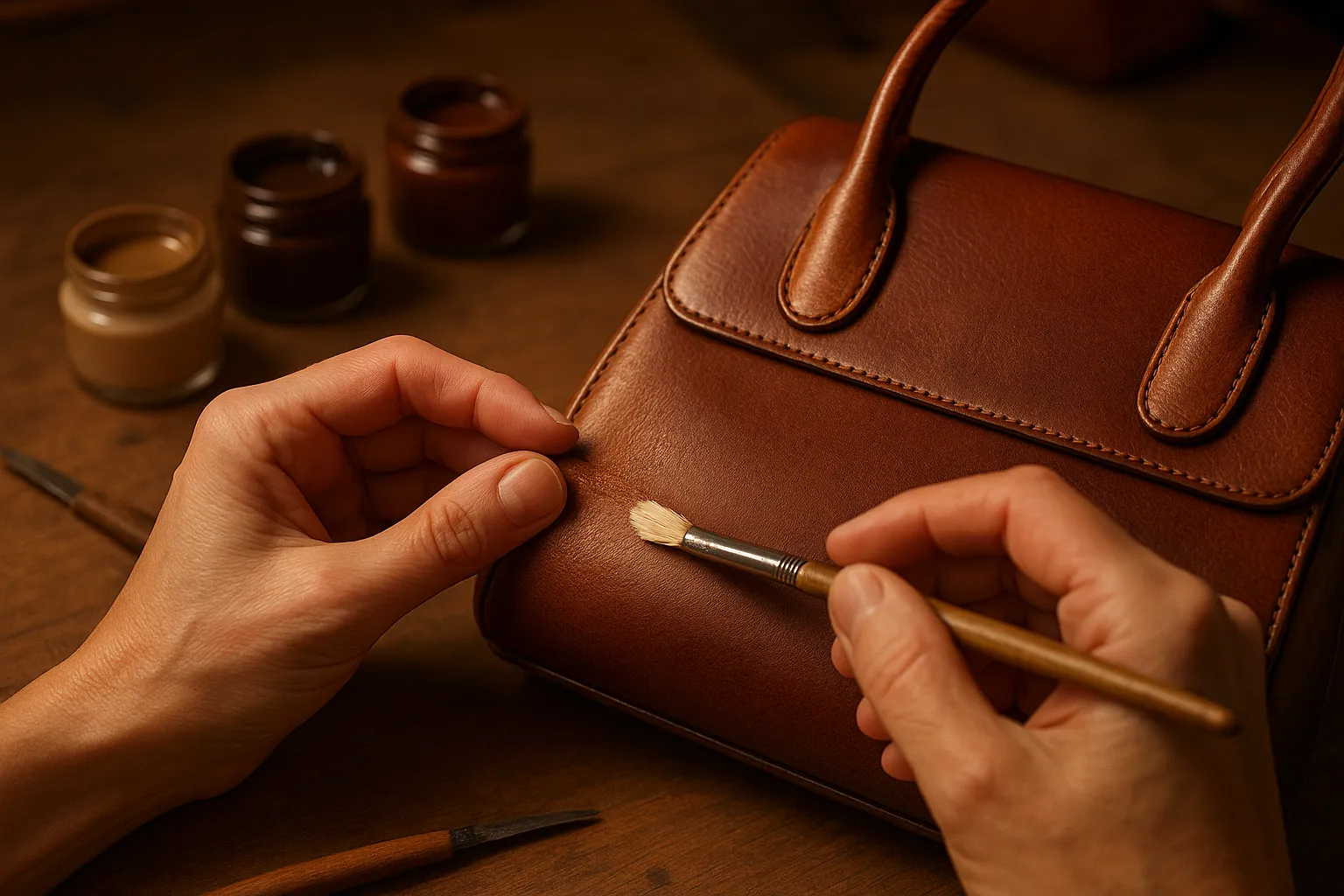
“Every day, we adapt to the bag’s history. It generally takes one to two hours to clean and refurbish the bags,” explained the head of the Bag Spa. In this area, artisans clean coated canvases, condition the leather and carry out recolouring work. “We are constantly searching for the right colour. We use these small renovating creams, mixing them together to match the bag’s original shade.”
“We sometimes have to custom-make certain parts to restore the item’s functionality,” emphasised Damien, a repair artisan.
The journey to acquire the necessary skills for this trade is estimated to take about two years, and up to five years to master the most diverse types of repairs. Consequently, the transfer of knowledge between experienced artisans and new recruits plays a crucial role throughout the repair process.
“The repair trade is a profession in its own right,” explained Valade. “We will need an increasing number of people capable of doing this work. It is part of our houses’ role to encourage education and the transmission of these skills through such partnerships.” She mentioned a partnership with the repair school in Roubaix and Louis Vuitton’s intake of apprentices. This transmission is part of a long-standing tradition within the house, which even has a repair invoice from 1871 in its archives.
Designing for repairability from the start
Repair is also a key component of LVMH’s LIFE 360 environmental programme. The programme aims to extend product lifespan and integrate repairability from the design stage.
The Dauphine bag, shown during the visit, is a case in point. In an earlier version, the clasp’s fastening system required access to the bag’s interior. The design was modified to make this metal part accessible from the outside. The clasp can now be replaced more easily in-store, as it no longer requires work on the lining.
Repair does not necessarily challenge the production of new collections. It does, however, open up another perspective: a fashion industry driven not only by novelty but also by product longevity as an economic, social and environmental priority.
Can repair become a profitable activity and be scaled up across the fashion industry, beyond the luxury sector? The question remains open, but the work at Cergy suggests that the answer may lie in the hands of skilled artisans and forward-thinking design.