Hugo Boss
Hugo Boss Turns to Frasers' Epstein as New Chief
David Epstein leaves Frasers Group to lead Hugo Boss from January 1, taking over a global fashion business mid-reset as sales and profits slip.
A retailer takes the helm at a fashion house
From 1 January, David Epstein takes over as chief executive of Hugo Boss, moving from the buying side of the industry to the brand side. He joins from Frasers Group, where he has spent the past decade building relationships with the labels the group sells, most recently as chief brand partnerships officer. He succeeds Daniel Grieder, who has led the German fashion company since June 2021 and leaves at his own request on 31 December.
The appointment tightens the bonds between Hugo Boss and its largest shareholder. Frasers chief executive Michael Murray became chairman of the supervisory board in September, and the group then raised its stake to 50.08 per cent in late October, giving it majority control after an earlier takeover offer failed to gain sufficient support.
Epstein’s CV is mostly that of a multibrand retailer rather than a brand builder: supplier negotiations, department store turnarounds and the expansion of Frasers’ premium and luxury division. Murray described him as someone who “knows what it takes to build strong brands, elevate the consumer experience, and drive a business forward”.
From Sports Direct to House of Fraser
Epstein arrived at Sports Direct in 2015 as head of business development. By December 2019 he was managing director of House of Fraser, and in 2022 he took charge of Frasers Group’s premium and luxury division. His promotion to chief brand partnerships officer came at the end of 2024, adding responsibility for brand relationships across sport, premium and luxury.
That path put him at the centre of the group’s push to shed its discount-sportswear image. Under Murray’s “elevation strategy”, Frasers has poured money into larger stores, more elaborate fit-outs and closer ties with the brands it stocks.
House of Fraser was the hardest assignment. The department store model the group inherited was losing money and customers, and the response was to rebuild rather than preserve it. Stores were closed, others converted, and the Frasers format was rolled out, often on former Debenhams sites. The new stores lean on third-party labels such as Boss, Ralph Lauren and Barbour alongside footwear, beauty and homeware, and several combine the department store offer with Sports Direct under one roof. By September 2024 the format had reached its thirteenth site, at Meadowhall in Sheffield.
Flannels and the regional shopper
Flannels offers the clearest picture of how Epstein thinks about luxury. He has argued that brands have consistently underestimated customers outside London, treating the capital as the whole of the UK market. “Too often, brands always felt the UK was London, but there’s a whole country outside of [the capital] and we’ve obsessed over that regional consumer,” he said in late 2024.
By then Flannels had more than 70 smaller-format stores plus a handful of flagships, and accounted for the bulk of the group’s €1.2 billion in premium lifestyle sales. Its expansion rested on backing from labels including Gucci, Prada, Miu Miu, Balenciaga, Valentino and Bottega Veneta.
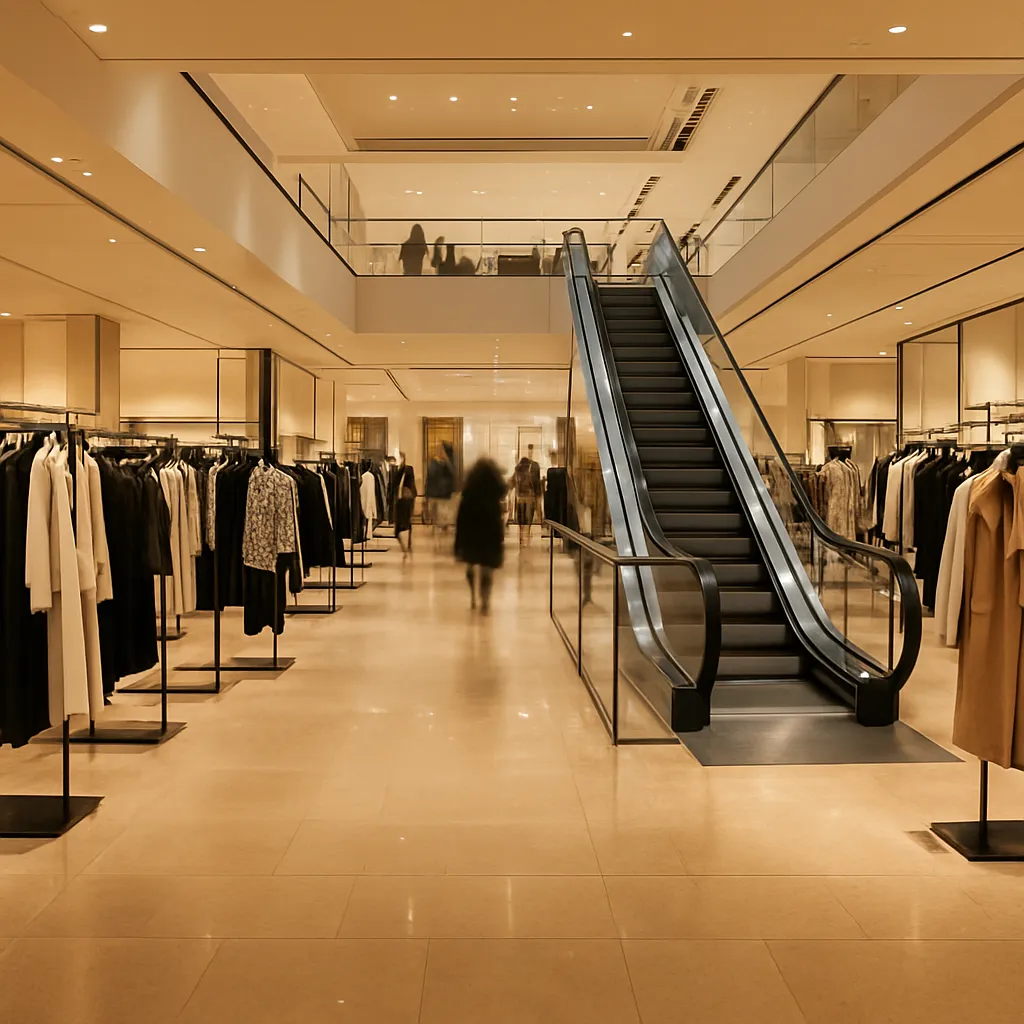
The Leeds flagship, in a former Debenhams, shows the approach in practice: six floors and 70,000 square feet mixing designer fashion with beauty, activewear and a concession run by resale specialist Sellier. Epstein has used such stores as testing grounds. When colleagues debated whether to add lingerie in Leeds, his instinct was to try it and learn how customers wanted to shop and which brands fitted. Beauty grew the same way, expanding from fragrance into seven beauty halls by late 2024.
A hard moment to take over
At Hugo Boss, Epstein swaps managing a retailer’s relationships with many labels for running a global fashion business built on two brands, Boss and Hugo. He arrives during a strategic reset aimed at sharpening brand appeal and improving the quality of distribution.
The numbers are unforgiving. Third-quarter sales fell 4 per cent on a reported basis to €946 million, or 5 per cent at constant currency. Operating profit slipped to €81 million from €95 million a year earlier. Hugo’s currency-adjusted sales dropped 17 per cent, against a 3 per cent decline at Boss.
The company now expects group sales at constant currency to fall by a high single-digit percentage in 2026, with operating profit of between €250 million and €300 million. The downgrade reflects weaker assumptions for fourth-quarter demand and higher non-cash depreciation and amortisation charges on IT assets.
He also steps into a management reshuffle. Yves Müller’s exit as chief financial and operating officer was announced in September, with Ivica Maric succeeding him from 1 October. Chief sales officer and deputy chief executive Oliver Timm leaves on 30 November. Employee representatives have pressed for assurances about the German base; announcing Epstein’s appointment, deputy supervisory board chairman Sinan Piskin said Murray had repeatedly shown commitment to the headquarters and other sites in and around Metzingen.
Owner, retailer and now employer
Frasers’ position cuts both ways. It is both Hugo Boss’s controlling shareholder and a major seller of its products: Boss was already a fixture at Flannels and Frasers before the takeover. That dual role has drawn scrutiny in the past, with concerns raised among independent retailers and suppliers about the group’s discounting and buying practices, including a period in 2023 when thousands of Boss items appeared on Flannels’ online outlet.
For Epstein, the move puts brand positioning, distribution and pricing on the other side of the desk. The negotiation skills built over years of dealing with suppliers will now shape how Hugo Boss works with its own retail partners, including the one he has just left.
Neither the appointment announcement nor Frasers has set out his plans for the company. His earlier comments point to a preference for testing new categories, investing in bricks-and-mortar stores and holding brand relationships steady through a downturn. “Everything we build is medium to long term,” he has said. At Hugo Boss, the immediate job is to steady falling sales while completing a reset that is already under way.
This article was partly written with the support of an artificial intelligence tool before being fact-checked, completed and edited by a journalist.