British Manufacturing
How Lanx Is Reviving Lancashire's Shoemaking Industry
Lanx founder Marco Vaghetti on rebuilding British shoemaking in Lancashire, overcoming machinery and skills shortages, and the growth of UK-made footwear.
The Lancashire shoe revival
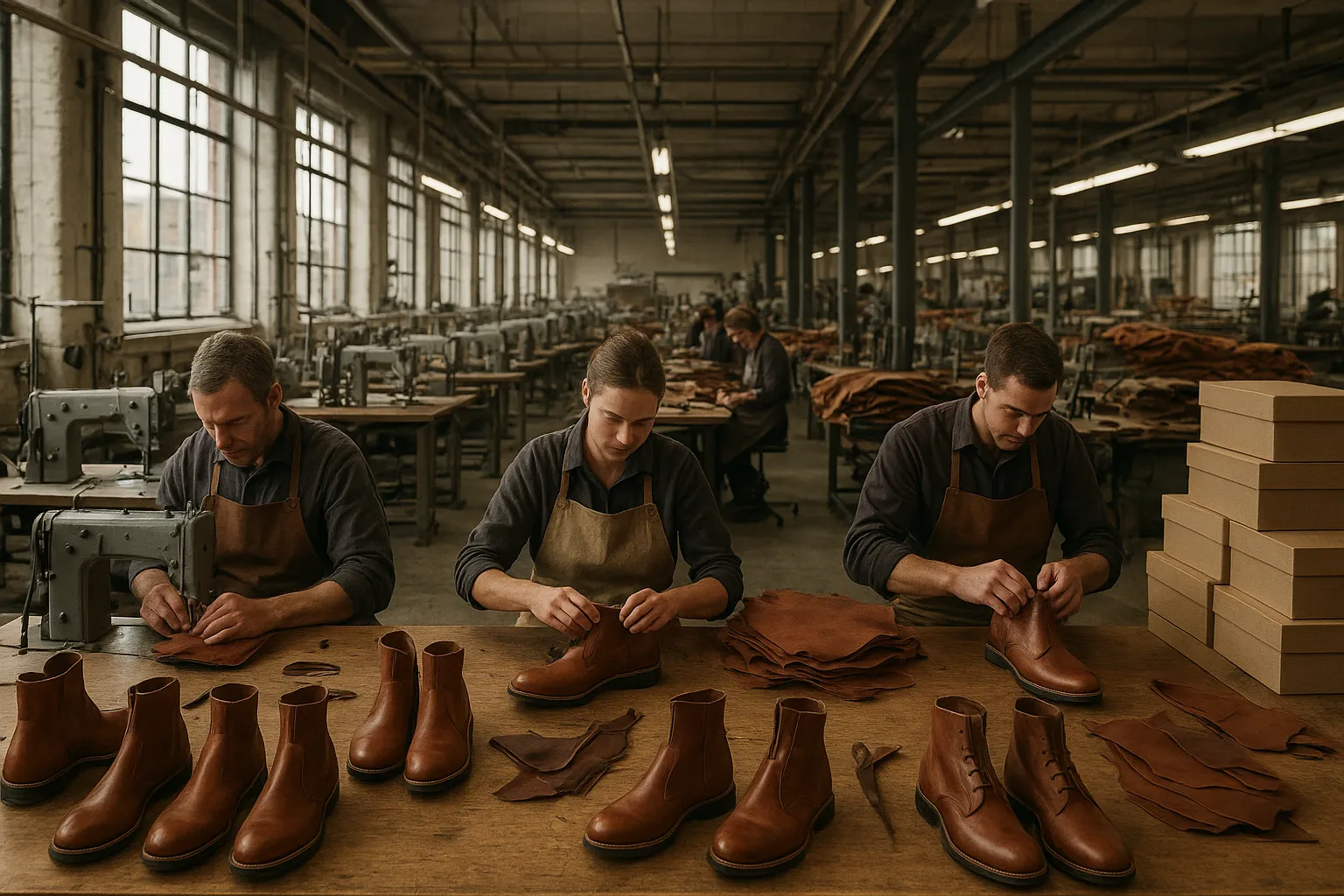
Lancashire was once a powerhouse of British shoemaking, with around 200 factories producing footwear for the nation. Today, only a handful remain. One of them, Lanx, is proving that the industry can be rebuilt, not just remembered.
Founder Marco Vaghetti began exploring the county’s shoemaking heritage nearly a decade ago, at a time when the local industry was already in steep decline. “I started to fall in love with footwear and the idea that someone could potentially turn the tide and bring shoemaking back to Lancashire,” he says. “When I set out to create Lanx eight or nine years ago, there were five or six manufacturers in the area. Now there’s only Lanx.”
The business, founded in 2018, now employs 60 people and operates its own factory and repairs workshop in Lancashire. While Vaghetti is quick to acknowledge that one brand cannot reverse the wider decline alone, he hopes Lanx’s presence will encourage other companies to invest in domestic production.
A blend of contemporary design and British heritage
Lanx’s model combines modern footwear design with a commitment to British manufacturing. Four of its six footwear collections are made in the UK, along with its accessories. The Artisan collection, for example, is manufactured in England using leather from Charles F. Stead, a tannery based in Leeds. For the AW26 season, the brand is introducing the Axis boot collection, developed with the Lancashire community in mind.
This approach is paying off commercially. Lanx currently turns over between £11 million and £12 million, with annual growth of around 20 to 30 per cent in recent years, and some years reaching 40 per cent. Vaghetti notes that UK-made products are seeing the strongest growth, supported by the stories the company can tell about its suppliers, materials and manufacturing processes.
Structural challenges for British manufacturing
Lanx’s progress comes as UK manufacturing experiences renewed interest. Brands are reassessing their sourcing strategies in response to geopolitical uncertainty and supply chain disruption. Initiatives such as Leicester Made & Regions and the return of Make it British Live! reflect efforts to reconnect brands with domestic production capabilities.
Yet, as Vaghetti’s experience shows, rebuilding manufacturing capacity involves more than generating demand. Machinery, skilled labour and factory space all present practical challenges for businesses seeking to keep production local.
“There isn’t a second-hand market in the UK for shoe machinery, so we’ve had to beg, steal and borrow machinery from other UK manufacturers,” he says. Lanx has acquired equipment from factories that have closed in the region, while also investing in new machinery from Italy. Finding engineers able to repair the equipment locally remains difficult and expensive.
The skills pipeline presents another obstacle. Rossendale, where the business is based, once had a dedicated footwear course to serve the area’s shoe factories. That training route has since disappeared, leaving fewer opportunities for younger generations to learn the trade.
Lanx has recruited experienced workers who previously worked in the industry, alongside younger employees who have trained through Timpson. While Vaghetti says the business is not currently struggling to recruit, he highlights the disparity between interest in digital roles and traditional manufacturing positions.
“If we advertise a social media job, we might get 300 applicants. If we advertise a cobbler role, we might get five or six,” he says. For now, the company’s focus is on retaining and developing its existing team, while making skilled factory roles as attractive as possible within its financial means.
Local suppliers strengthen the product story
Local supplier relationships are central to Lanx’s manufacturing model, both for practical reasons and as part of its brand positioning. Working with Charles F. Stead, for example, allows the business to discuss leather provenance with customers, inspect materials before production and respond more quickly if quality issues arise.
Its proximity to the tannery also gives Lanx greater flexibility around order quantities and storage. Instead of holding large volumes of leather, the company can work with suppliers on smaller lots and explore opportunities to share production volumes with other brands. “If there’s ever an issue, we can go and see them. If the leather isn’t quite right, we can drive over and show them,” Vaghetti explains. “These are good relationships to have for many reasons.”
The company’s emphasis on British production also resonates with customers. Vaghetti says people travel from across the UK and abroad to visit its factory shop, while overseas interest often comes from expats or customers looking to connect with their British heritage. While Lanx does not actively market overseas, its online search data suggests international interest is increasing.
He adds that the appeal of British-made footwear is not limited to provenance alone. The brand’s own factory and repairs workshop allow it to demonstrate how products are made and maintained, giving customers a more direct connection to the process.
Retail growth takes a back seat to infrastructure
Lanx currently operates a store in Manchester’s Northern Quarter and a factory shop at its Lancashire headquarters. The latter generates around three to four times more business than the Manchester location, according to Vaghetti, largely because customers can see the production process first-hand.
“People can walk from the shop into the factory, have a look around and see the shoes they’re about to buy being made,” he says. The brand also participates in around 10 events across the UK each year, providing further opportunities for customers to experience the product in person.
Despite the success of its physical retail operations, Lanx is not currently planning further store openings. Instead, the next two years will involve investment in warehousing, office space and factory capacity, as the team and online business continue to grow.
“As the brand grows, we need more storage for the shoes we sell online,” Vaghetti says. “There’s going to be a lot of investment in the next two years in the infrastructure of the business, including warehousing, office space and the factory. That’s why we’re not taking on any more retail.”
The business is also exploring a clothing collection, with the same emphasis on British-made products. Instead of producing garments in-house, Lanx is speaking to suppliers and considering partnerships with existing factories within a few hours of its Lancashire base.
For Vaghetti, the priority remains growing the business without losing the manufacturing identity that has helped distinguish it in the market. The demand is there, he says, but sustaining British shoemaking will require investment in the people, machinery and facilities that make local production possible.