French Retail
French Retail Sales Slump as Protests Hit City Centres
French shops lost 14% of revenue on protest Saturday, with city-centre stores down 34% and some regional cities losing over 80% of trade.
A Single Saturday, a Double-Digit Hole in the Till
The figures landed on Monday and they make uncomfortable reading. Across France, fashion retailers saw revenue fall by an average of 14 per cent on Saturday, the day protests swept through the country. The damage was not spread evenly: the sharper losses clustered where crowds, marches and disruption were concentrated, and in the heart of towns and cities the picture was considerably worse.
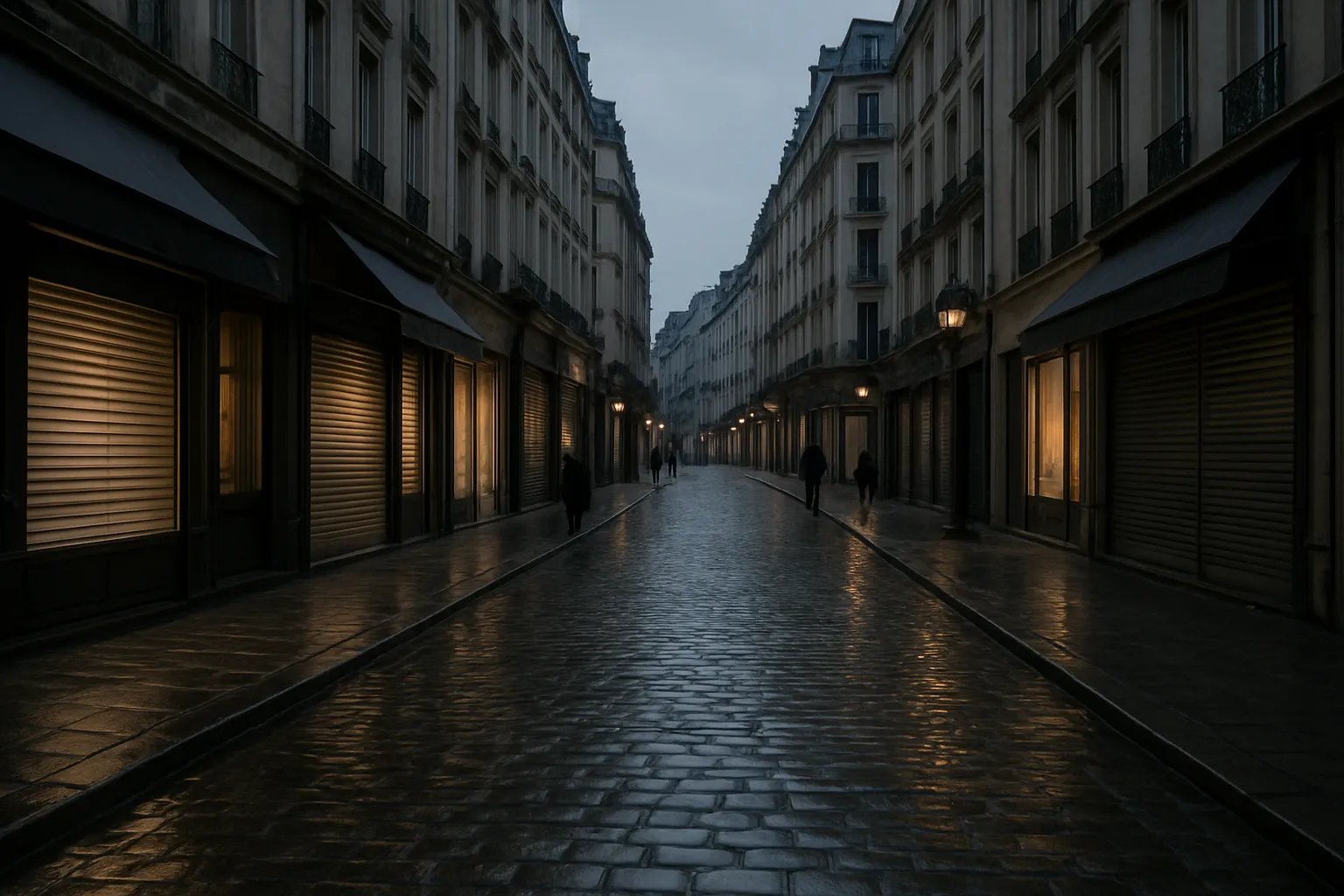
For the boutiques and shopping centres that sit at the centre of urban life, Saturday was not a bad trading day so much as a lost one. Stores in city-centre locations that had already been hit by damage during the demonstrations of 17 October recorded sales collapses of 34 per cent, while shopping centres in the same period were down 40 per cent.
Where the Losses Were Sharpest
Some local economies fared far worse than the national average. In the Rhône-Alpes region, the numbers reach levels that few retailers can absorb for long:
- Clermont-Ferrand: down 84 per cent
- Saint-Étienne: down 79 per cent
- Grenoble: down 77 per cent
- Lyon: down 66 per cent
Western France recorded similarly severe drops, with Brest down 74 per cent, Tours down 68 per cent, Rennes down 67 per cent and Nantes down 66 per cent.
In Paris itself, sales across the city averaged a 27 per cent decline — a figure that masks enormous variation from one district to the next. The areas that hosted the marches bore the brunt. Shops in the République–Grands Boulevards–Haut Marais zone lost 59 per cent of their takings, those along the Champs-Élysées were down 45 per cent, and the Opéra–Madeleine–Haussmann district, home to the big department stores, fell 32 per cent.
For the trade body representing department stores and major clothing retailers, the priority now is clear. It has called for every effort to be made to restore calm and re-establish security for businesses, employees and people in city centres.
Support Measures for Affected Traders
The association also welcomed the introduction of full furlough cover from Tuesday, a measure that allows staff to be stood down without a loss of income while trading recovers.
On the government side, a package of support was announced on Monday for the roughly 3,000 businesses affected by damage and looting. The measures include:
- a dedicated support fund for stores that suffered damage
- access to interest-free cash-flow assistance
- an extension of the deadline for declaring insurance claims, from five days to 30

What This Means for Smaller Retailers
For independents in city centres, the sequence is painfully familiar: a disrupted Saturday, a week of uncertainty, and a slow crawl back to normal trading — if the customers return quickly. The immediate risk is cash flow. A 60 or 80 per cent drop in a single weekend can wipe out the margin a small boutique relies on to cover rent, wages and stock commitments.
The freshly extended claims window is therefore significant. Thirty days gives shopkeepers time to photograph damage, gather invoices and work through their insurers without the scramble of a five-day countdown. The interest-free cash-flow support serves a similar purpose: bridging the gap until takings stabilise.
Full furlough cover from Tuesday offers breathing space for businesses that cannot open their doors or that have too little footfall to justify full staffing. Used well, it keeps trained staff attached to the business rather than scattering them into other sectors.
The broader message from the industry is that city centres need visible order restored. Retail depends on predictability, and a single weekend can reset a quarter’s expectations. For now, the attention turns to whether the calm holds and whether shoppers return to the streets that lost them.
A Fragile Recovery Ahead
The national figures tell a story of disruption, but the local detail is where the real damage sits. A shop in Clermont-Ferrand that lost 84 per cent of a Saturday’s trade has little in reserve for another weekend like it. Department stores in the capital’s busiest districts face a similar arithmetic, though with deeper resources to draw on.
What happens next rests on two things that retailers cannot control: whether public order is maintained, and how quickly confidence returns. The support measures provide a cushion, not a cure. The sector’s message over the coming days is likely to be simple and persistent: secure the streets, and the customers and the revenue will follow.