Fjällräven
Fjällräven Germany: Inside the Brand's Urban Shift
Dean Polic, Fjällräven's German MD, on opening up to younger urban audiences, balancing heritage with lifestyle, and reshaping distribution for growth.
A brand at home in the outdoors
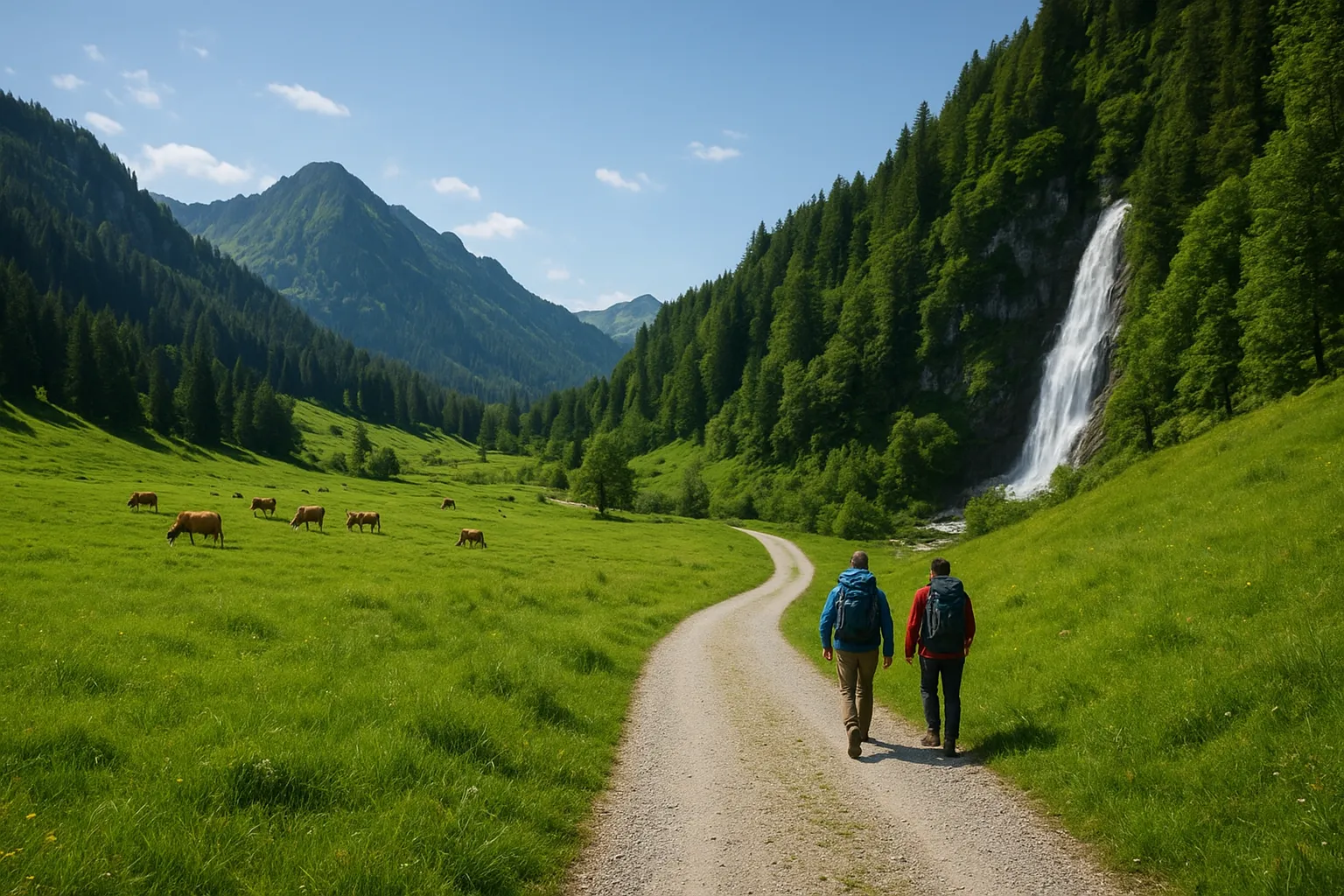
Fjällräven’s roots run deep in the Swedish wilderness, but the brand’s gaze is increasingly turning towards the city. At the three-day Fjällräven Classic Germany trek in the Allgäu, which drew 325 participants from 34 nations, Dean Polic, managing director Germany, shared how the company is navigating a changing outdoor industry while staying true to its heritage.
Polic, who has led the German market since 2019, brings a wealth of experience from the sporting goods sector. After studying sports science, he worked at Adidas before moving into marketing at Mammut, driven by his own passion for the outdoors. “I went climbing and mountaineering with retailers and consumers,” he recalls. “That is still a major asset in my job today.” Privately, he still spends much of his time outdoors with his family in the Allgäu.
The outdoor industry’s authentic core
For Polic, the outdoor industry remains distinctively authentic. “Anyone buying equipment quickly notices which brands are genuinely credible and which are less so,” he says. This authenticity is increasingly valuable as more people from the fashion world enter the sector. “Many of them don’t bring this cultural shift with them,” he notes. “You can have the biggest toolbox in the world, but if you can’t get through the door or don’t find a connection, you can’t put those tools to use.”
This authenticity is also a business advantage. Fjällräven is privately owned, still in the hands of the founding family, now in the second generation and close to the third. “We couldn’t even afford a big TV campaign,” Polic admits. Instead, the brand invests in grassroots work and long-term decision-making. “A deal can help the annual result in the short term but really hurt in the long term, because important partners make you feel it,” he explains. “And if we have a quality issue, we don’t release the product anyway. We would rather discontinue it and take the flak from retailers.”
Balancing heritage with a new generation
The outdoor look has long since moved onto the street, and for many, Fjällräven is synonymous with the Kånken backpack. But Polic is keen to stress that the brand is about more than a single product. “With the Kånken, we served a market that still hasn’t realised that Fjällräven is the brand, not the Kånken,” he says. “But with many people, we managed to build a bridge, and they found their way into the wider collection through the Kånken.”
That bridge is now being widened. The modern adventurer, as Polic describes them, is no longer the techie with dirt under their fingernails. “They want to get outside, but not look as if they’re heading on a mission to Mars. They want their own style.” At the same time, functionality remains non-negotiable. “The products still have to meet a certain functional standard.”
To serve this evolving customer, Fjällräven has reorganised into two business units: Everyday Outdoor and Performance Outdoor. Each has its own teams, covering product development, communications and marketing. “They are all people with an outdoor background, although the Everyday Outdoor team also brings a lot of expertise from the lifestyle sector,” Polic explains.
The price difference between the two ranges reflects their different purposes. Performance Outdoor trousers start at €240, a jacket costs €750, and a backpack around €400. In the Everyday range, trousers are around €150, a rain jacket will hopefully be €350, and a sweater €120. “Anyone who comes into contact with our products during or after their studies also needs to be able to afford them,” Polic says. “These items don’t meet the same functional standard. But they are still water-repellent, breathable and of high quality, with detailed solutions that show someone has really thought things through.”
Learning from the past
The lifestyle-oriented specialist retail segment is still small for Fjällräven, accounting for a low single-digit percentage share. “They also still find it difficult to work with our brand, because lifestyle specialists need capsules, a curated assortment,” Polic admits. “We don’t yet have this tier-one collection. We are in the process of developing it through the business units.”
This isn’t the brand’s first attempt. “With Samlaren, around the time of Covid-19, we created a collection from leftover fabrics that we wanted to distribute very selectively,” Polic recalls. “It didn’t work, because there was no follow-up assortment. Nobody is prepared to take on a curated assortment as a one-off.”
Samlaren was well received, partly because it was marketed through Vogue and horizontal media, and was represented in stores across Europe. “What we learned is that a curated assortment has to be thought through for the long term and developed consistently, both in terms of distribution and with a continuous product story.”
Some products are already finding favour with these retailers. The Vardag line, with its wider silhouettes, comfort and less technical look, works well for a more everyday-oriented audience. “The pieces are cut wider, more comfortable and rather muted in tone,” Polic says. “And where they are functional, it is through details you don’t see, such as drawcords at the leg openings and waistband. Or G-1000 fabric, which can be waxed to repel water but still has that vintage look.” The brand has also introduced oversized T-shirts in heavier cotton with corresponding prints. “It’s taking time, but we’re moving in that direction.”
Reshaping distribution
When Polic took over the German market seven years ago, Fjällräven had achieved very broad distribution, largely thanks to the Kånken’s success. “The Kånken had opened up new target groups far beyond classic specialist outdoor retail and given the brand enormous visibility,” he says. Building on that, the team began to differentiate distribution more strongly, aligning it with specific retail partners and target groups. “That was a bold move, because it meant taking a great deal of volume out of the German market. But the strategy convinced management and the owning family. It was a five-year plan, and we fulfilled it.”
Distribution is no longer managed purely at a national level. “We haven’t had a purely German market for a long time,” Polic explains. “Foreign players are active in Germany, and German retailers are active abroad. That’s why we have a European sales strategy with uniform distribution guidelines.” The company is segmenting its distribution more strongly according to consumer needs and retailer profiles, covering outdoor, hunting, bags and general sports retailers. “To avoid over-distribution and oversupply, we need to be more selective. That also takes the courage to take volume out of the market, so that it can recover somewhat with our products.”
Outdoor remains the biggest area, with around two-thirds of revenue coming from outdoor specialists. Hunting, bags and general sports retailers make up the rest. “General sports retailers are another important distribution channel for us,” Polic notes. “They reach a broader, sports-minded target group and therefore fulfil a different function from specialist outdoor retailers.”
The direct-to-consumer question
Like many brands, Fjällräven is adapting to changes in the retail landscape. “Many small and medium-sized retailers in particular are struggling, either because of a lack of liquidity or unresolved succession,” Polic observes. “If liquidity is lacking, so is the money to invest in their own business model. At some point, those models become outdated and no longer reach the target group.”
Wholesale remains a cornerstone. “We were very wholesale-heavy and still are,” Polic confirms. “But we can’t rely on it exclusively, not least because retailers are increasingly focusing on the brands that perform well for them. There is also a target group that wants to engage with the brand directly.” The direct-to-consumer share currently stands at no more than ten percent, but the plan is to develop it in a targeted way, without undermining wholesale partners.
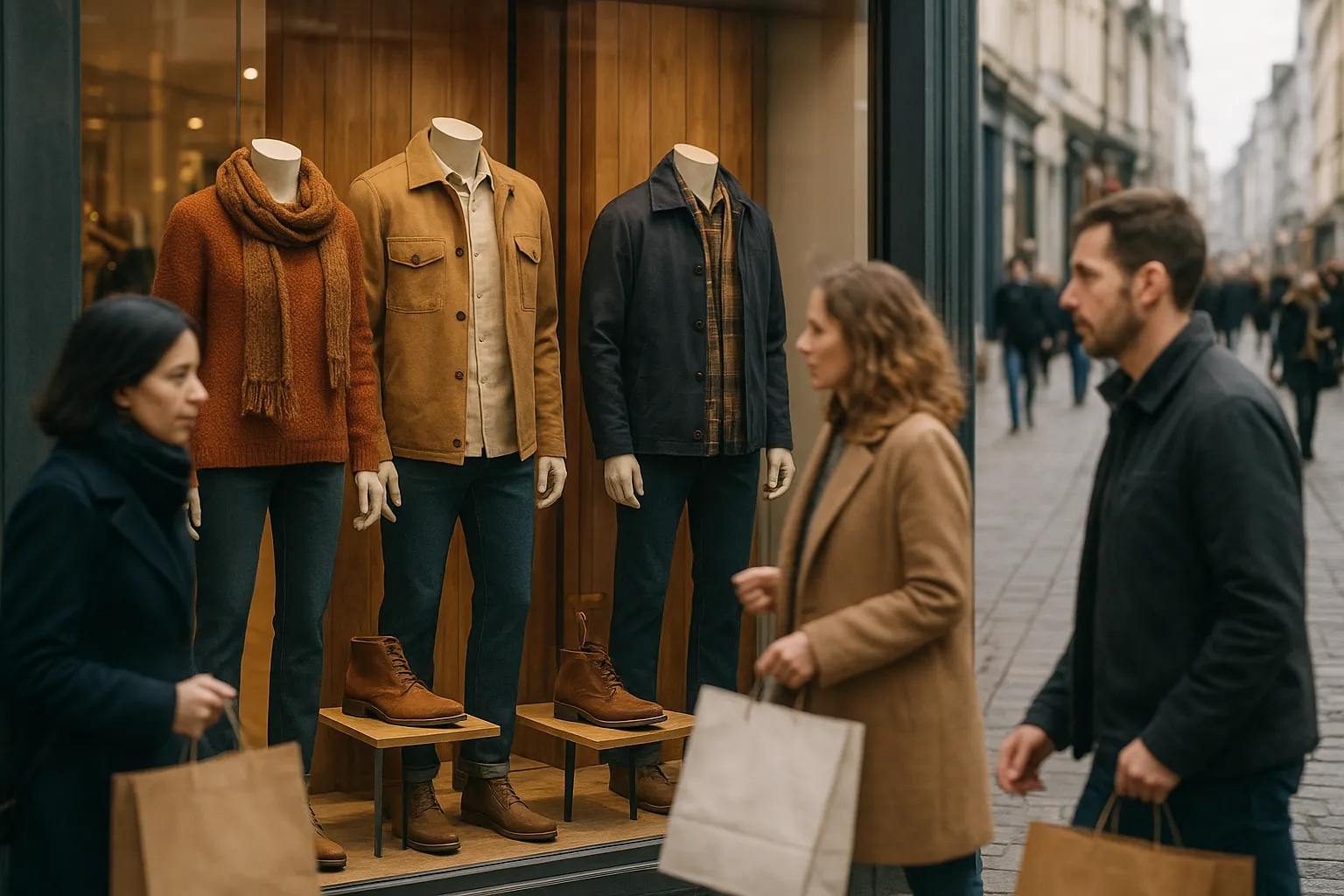
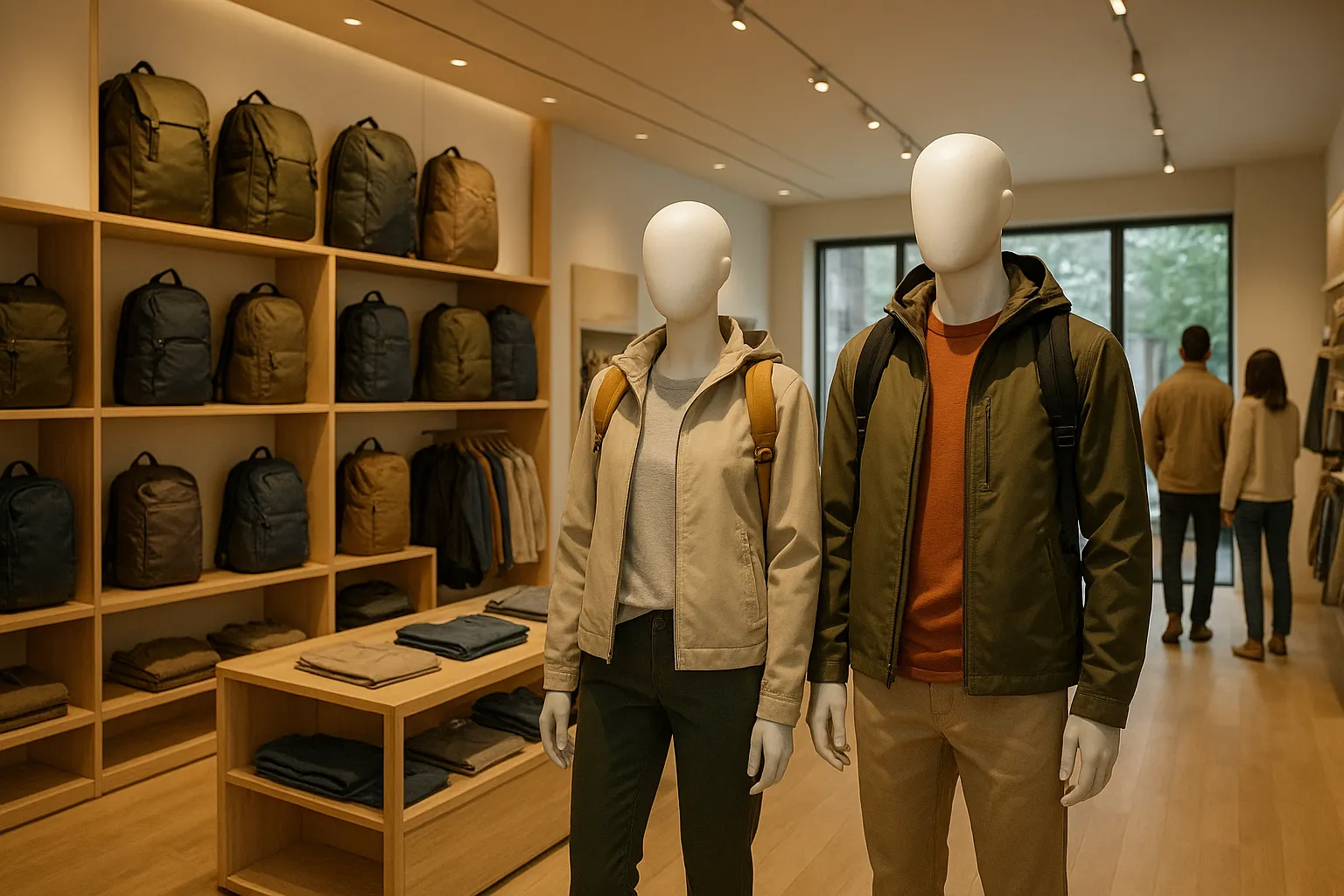
Next year, Fjällräven will open a store in Berlin’s Mitte district, a joint retail concept with Globetrotter. “Fjällräven will present its brand and collection independently there while benefiting from the partner’s outdoor expertise,” Polic says. The store will be much more lifestyle-oriented than a traditional outdoor shop. “In Berlin-Mitte, around the historic Hackesche Höfe courtyards, we serve a specific target group and design our presence differently. It won’t be a techie shop.”
There are no plans for a nationwide rollout of own stores. “Instead, we are focusing on selected locations where a dedicated brand presence makes strategic and economic sense,” Polic explains. “If stores can’t operate profitably, it makes no sense for us.”
Why Berlin matters
Berlin holds a special place in Fjällräven’s German strategy. “I think Berlin has many residents who behave more consciously and think more about their consumption,” Polic says. “The share of alternative scenes is also higher. And those are exactly the people who appreciate what we do.” The brand is perceived as very sustainable, even though it has always marketed itself as offering long-lasting products.
There is also a north-south divide in brand awareness. “In the north and east, people know us much better than in the south, because they are more likely to holiday in Scandinavia,” Polic explains. “People from Bavaria and Baden-Württemberg tend to head to Austria, Switzerland, Italy and southern Europe.”
Marketplaces and customer service
Fjällräven does not currently manage marketplaces actively; they are used by retailers via their seller programmes. “We need to channel that much more strongly, because the presentation is sometimes completely inconsistent, with incomplete images and product texts,” Polic admits. “In the end, customers perceive the brand.”
E-commerce may lack face-to-face advice, but Polic sees room for improvement. “Customer service is one of our strategic priorities, starting with our own website,” he says. “Customers should find much more information there, from videos and user guides to recommendations. How do I pack my backpack properly? What actually belongs in it on a multi-day trek?” The brand is also ensuring it can be reached by phone, email or chat, and is training retail partners’ sales advisers. Repair is part of the strategy too: products are designed so that simple components like a zip or a button placket can be replaced by the owner.
Steady results and a focus on quality
Business in Germany has been stable in recent years. “They’re not exactly going up, but we’re not losing ground either, despite all the changes in the retail landscape,” Polic reports. “We have fewer retail accounts, but we’re doing more business with that smaller number than before.” At the height of the Kånken hype, results were better, but the brand’s presence in more than 60 countries helps balance things out, with business in Asia picking up.
Germany is one of Fjällräven’s most important and largest markets worldwide, and the largest in Europe ahead of Sweden. “Next year we will have been in Germany for 50 years,” Polic notes. “It is a mature market that we no longer need to build but to develop qualitatively.”
The company has invested heavily in a new merchandise management system, IT, and its own logistics operation, which is being further automated. It has also invested in production capacity, including a stake in a production site in Bulgaria, and has fully acquired Devold. “The brand fits very well with our portfolio and in terms of DNA too: Scandinavian, very well established and considerably older than Fjällräven,” Polic says.
Looking ahead
Despite a difficult economic climate, Polic remains optimistic. “As soon as the economy recovers, we will be well positioned. We’re not jumping for joy right now, but we’re not nervous either.” He sees Fjällräven among the five leading brands in Germany, with an assortment that doesn’t really compete with any other brand, except perhaps Patagonia in terms of attitude, lifestyle and target group.
For the lifestyle range, there is a target for 2030. “We want to expand it massively and increase revenue there significantly, by a double-digit percentage,” Polic reveals. “That doesn’t mean the result will rise to the same extent; there will be a shift. But growth is of course planned, at sensible growth rates.”
The European approach will still involve country organisations, but with a focus on markets where purchasing behaviour is similar, such as Germany, Switzerland, Austria, northern Italy and parts of Eastern Europe. “We need to move more into lighter products and not only the extremely robust and warm ones,” Polic says. “For example, we have down jackets that people hardly wear in Germany because they are so warm, but which are iconic items in Scandinavia.”
After Germany, the Scandinavian market, above all Sweden, is the strongest, followed by Benelux, Denmark, the UK and emerging markets. Switzerland and Austria also contribute a solid share. The country organisations serve all brands of the Fenix group, but the German company is a dedicated Fjällräven entity. “My team and I are responsible exclusively for Fjällräven, because the market is so large,” Polic explains.
With a clear strategy, a focus on quality and a willingness to evolve, Fjällräven is positioning itself for the next chapter in Germany and beyond.