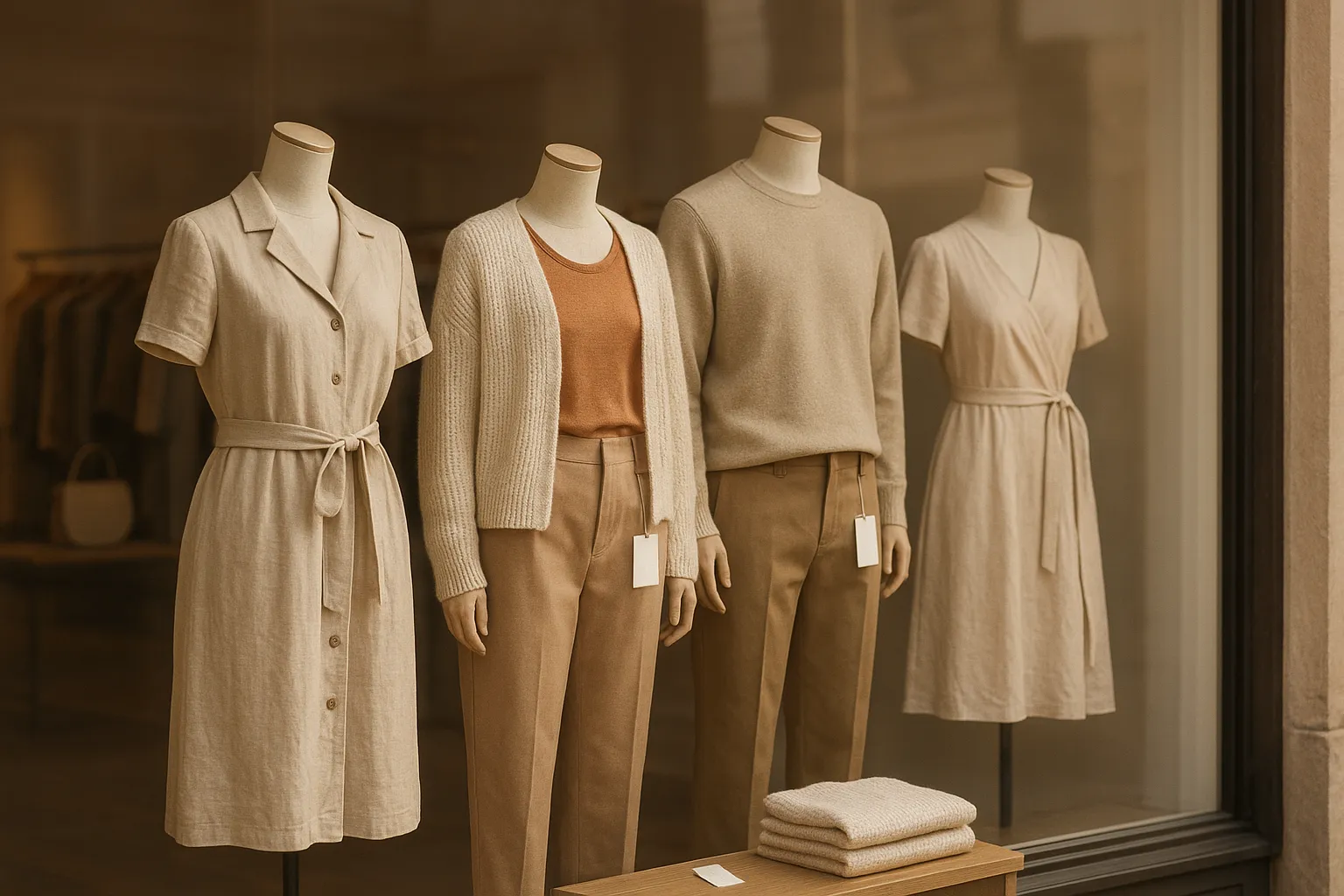
Finland Retail
Finnish Fashion Prices Fall as Shoppers Regain Confidence
Clothing and footwear prices in Finland dropped 1.4% year on year in August, well below headline inflation, while retail volumes rose and consumer confidence improved.

A softer price picture for Finnish wardrobes
Clothing and footwear in Finland became cheaper in year-on-year terms again in August: prices across the category were 1.4 per cent lower than a year earlier, following a 1.6 per cent annual decline in July. With headline consumer price inflation at 2.2 per cent, apparel costs were running 3.6 percentage points beneath the general rate of price growth — one of the clearest gaps between fashion and the wider cost of living seen in recent months.
The headline figure itself nudged up slightly from 2.1 per cent in July to 2.2 per cent, so the divergence is being driven by falling clothing prices rather than by a sudden jump in the cost of everything else. Measured on the harmonised index of consumer prices used for European comparisons, headline inflation stood at 2.4 per cent, with clothing and footwear again down 1.4 per cent year on year.
Where the discounts actually sit
The annual averages hide some sharp differences between product groups. Clothing as a whole fell 1.6 per cent year on year, while footwear slipped only 0.5 per cent. Within clothing, men’s and boys’ garments dropped 3.1 per cent, whereas women’s and girls’ garments edged down just 0.3 per cent. Women’s footwear, by contrast, moved the other way, rising 1.2 per cent.
For retailers, that is an awkward mix. The deepest declines are concentrated in menswear, a category where promotions and end-of-season clearance tend to do the heavy lifting. Womenswear is holding far closer to flat, which suggests less discount pressure in that part of the market.
The monthly picture also offers a reminder that August is a transitional month. Compared with July, clothing and footwear prices actually rose 1.7 per cent, even as overall consumer prices slipped 0.2 per cent. The typical pattern of autumn ranges arriving at fuller prices after summer sales helps explain the movement — the annual comparison is the more meaningful signal for shoppers.
What it means for a household budget
If you are restocking a wardrobe this autumn, the arithmetic is mildly in your favour. A category running below the general inflation rate means clothing is, in real terms, becoming cheaper relative to other spending. The steepest savings remain in menswear; womenswear buyers should expect smaller markdowns than a year ago, and women’s footwear is the one segment where prices have genuinely climbed.
Sales volumes are heading the other way
Price weakness has not translated into weak demand. Preliminary data for the retail group that includes clothing and footwear shops — alongside pharmacies, cosmetics and other specialist retailers — show sales volume up 5.5 per cent year on year in August on a working-day-adjusted basis. That follows a 7.1 per cent annual increase in July, so growth has cooled somewhat but remains firmly positive.
On a seasonally adjusted basis, the same group’s volume dipped 0.5 per cent from July, a modest monthly pullback after a strong run.
Total retail sales volume across the economy rose 3.7 per cent year on year in August, working-day adjusted, and 0.8 per cent from July once seasonal effects are stripped out. The standout channel was retail trade not in stores — the category covering online and mail-order sales — where volume climbed 9.0 per cent year on year. That is more than double the pace of total retail, and a clear signal that digital channels continue to take share from physical stores.
Taken together, the two datasets paint a coherent picture: Finns are buying more clothing and footwear by volume while paying less per item on average. Discounting and channel shift, rather than collapsing demand, are doing the work.
Confidence is recovering from a low base
The consumer confidence indicator compiled by Statistics Finland rose to minus 3.0 in August, up from minus 5.3 in July and clearly better than the minus 7.6 recorded in August 2025. The index remains in negative territory — households are still more pessimistic than optimistic — but the direction of travel is unambiguous.
The most relevant component for fashion retail is the balance for planned spending on durable goods, which compares intentions for the coming twelve months with the past twelve. That measure improved to minus 17.8 from minus 22.4, a meaningful climb, though it remains deeply negative and indicates that big-ticket purchases are still being deferred by many households.
The interest rate backdrop
The European Central Bank’s deposit facility rate held at 2.25 per cent throughout August, a month without a monetary policy meeting. Stable rates give borrowers a little more certainty, but the level is still restrictive compared with the era of near-zero rates, which helps explain why confidence is improving faster than spending intentions on durable goods.
Currency also matters for a sector that imports heavily. The euro averaged 1.1593 dollars in August, up from 1.1417 dollars in July — a 1.5 per cent appreciation over the month. Against August 2025, however, the euro averaged 1.1631 dollars, meaning it was 0.3 per cent weaker year on year. A mildly stronger euro month on month eases the cost of dollar-denominated imports at the margin, though the annual comparison offers little relief.
The takeaway for the season ahead
Finland’s clothing and footwear market is entering autumn with three forces in play. Prices are falling in annual terms, led by menswear, which supports volumes without requiring deep new markdowns. Sales volume is growing solidly, particularly online, so the appetite to buy is there. And consumer confidence is recovering, with spending intentions on durable goods improving steadily from their lows.
The risk is that the improvement in confidence stalls before it reaches the level needed to sustain discretionary spending through the winter. The gap between growing sales volumes and still-negative spending plans is the number to watch. For now, the evidence points to a market where value is being delivered by price, captured by volume, and supported — cautiously — by a household sector that feels a little better than it did a year ago.