Fashion Education
Design Students Interview Couturier B. Michael at Detroit Museum
PLC Detroit students quizzed couturier B. Michael on heritage, identity and the business of fashion at the Charles H. Wright Museum, blending cultural history with hands-on mentorship.
A Living Classroom at the Charles H. Wright Museum
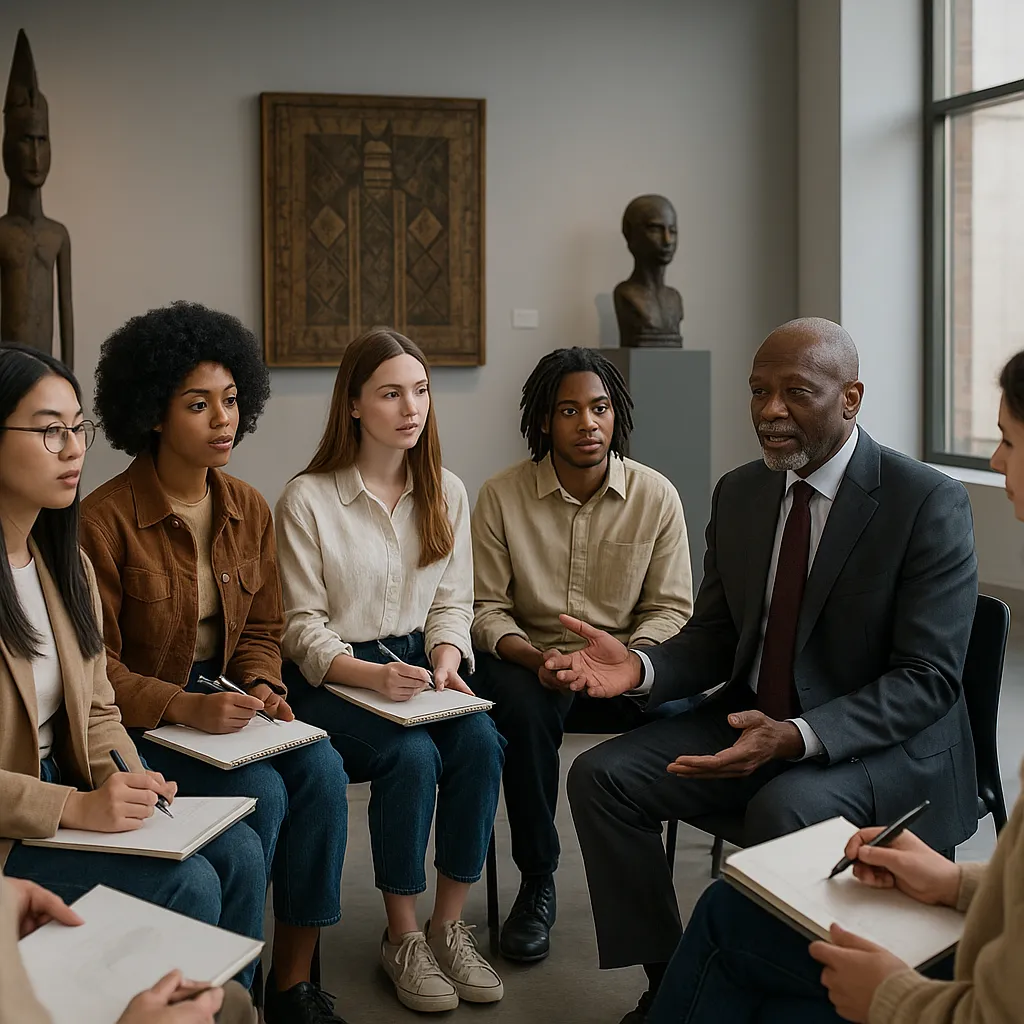
In a setting steeped in African American history, emerging designers from Pensole Lewis College of Business & Design (PLC Detroit) took part in a rare exchange with American couturier and CFDA member B. Michael. The discussion, titled “Stitched in Excellence,” was held at the Charles H. Wright Museum of African American History and placed historical literacy, creative identity and the practical demands of the apparel industry at its heart.
Rather than studying finished garments in isolation, the students questioned a working practitioner directly. In doing so, they probed the commercial and cultural strategies that sustain a long career in fashion, moving beyond textbook theory into the lived reality of a designer’s practice.
From Millinery to Couture: A Career Under the Microscope
The session traced the arc of Michael’s career, which spans millinery, ready-to-wear and couture collections, as well as notable collaborations with figures such as Cicely Tyson. Student interviewers led the conversation, focusing on the research, decision-making and client relationships that underpin commercial design. By framing questions around process rather than just product, the students gained insight into how a designer builds a body of work over time.
Nikki Taylor, director of student services at PLC Detroit, explained that direct engagement with established practitioners allows students to contextualise their foundational coursework. It also helps them understand how individual heritage and market discipline translate into viable design careers. The exchange was not simply a celebrity appearance but a structured learning experience designed to bridge the gap between academic study and industry reality.
Redefining Design Education Through Mentorship
For design education, the initiative signals a shift away from abstract theory toward narrative-driven, hands-on mentorship that addresses persistent representation gaps in the commercial apparel market. By incorporating primary access to working industry veterans within institutional learning, students expand their professional networks and prepare for the rigour of both corporate and independent studios.
The approach recognises that technical skills alone are not enough. Cultural literacy, storytelling and an understanding of one’s own heritage are increasingly seen as vital components of a designer’s toolkit. In a market where differentiation is key, the ability to draw on personal and community narratives can be a powerful creative advantage.
The Role of HBCUs in Fashion
PLC Detroit holds the distinction of being the nation’s only design-focused Historically Black College and University. Its mission is to cultivate talent from underrepresented communities and provide pathways into an industry that has historically lacked diversity in leadership and creative roles. Partnerships that combine cultural history with direct professional critique are central to that mission.
As specialised institutions like PLC Detroit seek to cement their pipelines into the broader industry, such collaborations become more than symbolic. They offer students real-world exposure, build confidence and create connections that can lead to internships, mentorships and employment. The exchange with B. Michael is one example of how museums, educational institutions and industry professionals can work together to nurture the next generation of designers.
Preparing for the Business of Fashion
The conversation also highlighted the operational demands of the apparel industry. Students learned about the importance of research, the need to make informed decisions under pressure, and the value of strong client relationships. These are the skills that turn creative vision into a sustainable business.
By interviewing a veteran designer, the students practised critical thinking and professional communication. They were not passive recipients of knowledge but active participants in a dialogue that shaped their understanding of what it takes to succeed. This hands-on approach to learning is increasingly recognised as effective in preparing students for the realities of the workplace.
A Model for Future Collaboration
The event at the Charles H. Wright Museum of African American History demonstrates the potential of bringing industry veterans into educational spaces. It creates a feedback loop where professionals share their experiences, students ask probing questions and institutions facilitate meaningful connections. Such initiatives can help close the gap between what is taught in the classroom and what is required in the studio or design room.
As the fashion industry continues to evolve, the need for diverse voices and perspectives becomes ever more pressing. Programmes that prioritise mentorship, cultural literacy and practical business skills are well-positioned to produce graduates who are not only talented designers but also savvy professionals. The “Stitched in Excellence” exchange is a promising step in that direction, offering a template for how education and industry can collaborate to develop sustainable talent.
For PLC Detroit, the goal is clear: to cement its pipeline into the broader industry and ensure that its students are ready to thrive. By combining cultural history with direct professional critique, the college is helping to shape a generation of designers who understand both the art and the business of fashion.
Conclusion
The exchange between PLC Detroit students and B. Michael was more than a conversation; it was a living lesson in how heritage, identity and commercial acumen intersect. It reinforced the idea that design education must be grounded in real-world experience and cultural understanding. As more institutions recognise the value of such partnerships, the future of fashion education looks set to become more inclusive, practical and connected to the industry it serves.