Camiel Fortgens
Camiel Fortgens: The Amsterdam Label Rewriting the Rules
How Amsterdam's Camiel Fortgens built a cult label on deconstructed tailoring, small-scale ateliers and a breakout ASICS sneaker collaboration.
A designer who learned the industry from the outside
Camiel Fortgens set up his label in Amsterdam in 2014, shortly after finishing at the Design Academy Eindhoven. That background matters: he never went to fashion school, and the label has carried that outsider’s instinct ever since. Rather than absorbing the conventions of the trade, he approached clothing as a designer first — asking what a coat or a pair of trousers really is before deciding how to make one.
What began as a small Amsterdam project has grown into a unisex brand with an international stockist list, a flagship shop in its home city and a place on the official Paris Fashion Week calendar. In 2024 he received the Cultuurfonds Mode Stipendium, a recognition of the trajectory the label had been building quietly for a decade.
Perfectly imperfect, by design
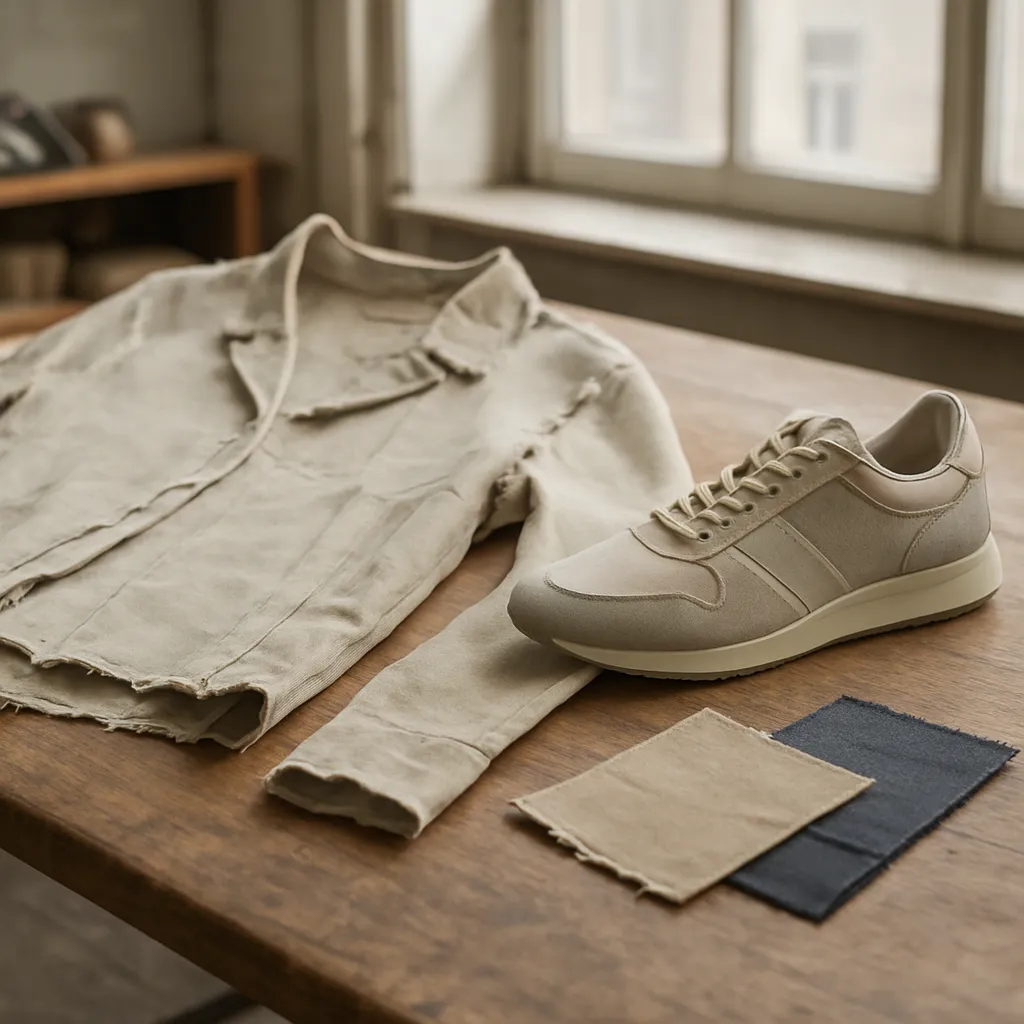
The clothes are best understood as unpolished reinterpretations of familiar wardrobe archetypes. Coats, jackets and trousers are cut from recognisable shapes and then deliberately taken apart — seams left exposed, panels turned outward, construction treated as decoration rather than something to hide. The label calls the result “perfectly imperfect”, and the phrase captures the aesthetic accurately: garments that look unfinished, but are entirely intentional.
Production follows the same logic. Collections are made by hand in small-scale ateliers, principally in Portugal, Ukraine and Bulgaria, with fabrics sourced from mills in Japan, Italy and the United Kingdom. The scale is modest on purpose — limited runs that keep the handmade character intact and make each piece feel closer to a studio object than a mass-produced staple.
The ASICS collaboration and what it signals
This autumn the label released its first sneaker collaboration: a reworked ASICS GEL-CUMULUS 16, created under ASICS SportStyle’s Crafts for Minds programme. The shoe launched on 25 September at Tillatec in Amsterdam, with a second release in October at Dover Street Market London. At 250 euros on the brand’s own webshop, it sits at the most accessible end of the range and introduces the label to a footwear audience well beyond its usual orbit.
Collaborations have become a regular outlet. Last year the brand produced a Cut to Wear T-shirt with the Stedelijk Museum Amsterdam, on sale from November 2025 — a natural partner for a label whose work sits somewhere between art and utility.
Where the brand sits on price
The webshop makes the positioning clear. A painted long-sleeve T-shirt costs 300 euros, Family Pants 400 euros and the Frankenstein merino wool knit 540 euros. At the top end, a shearling coat is priced at 3,900 euros. This is designer territory: closer to a considered, small-run purchase than to everyday wardrobe filling, and consistent with the cost of European atelier production and Japanese, Italian and British fabrics.
Two shows a year, and the shows are not conventional
Camiel Fortgens presents two main collections annually in Paris, alongside its collaborations. The debut on the official calendar came in June 2025 with a street presentation in the French capital, and the label has since shown in locations chosen to avoid the traditional runway format — first inside a Paris apartment, then on a bistro terrace. The stated aim is to blur the boundary between fashion and everyday life by placing the clothes in the settings where they would actually be worn.
That approach reached its most playful expression when the spring/summer 2027 collection was shown again at Amsterdam Fashion Week, this time inside an Albert Heijn supermarket. The brand also presented both its autumn/winter 2026 and spring/summer 2027 collections on the official Paris Fashion Week calendar in 2026.
Where to find it
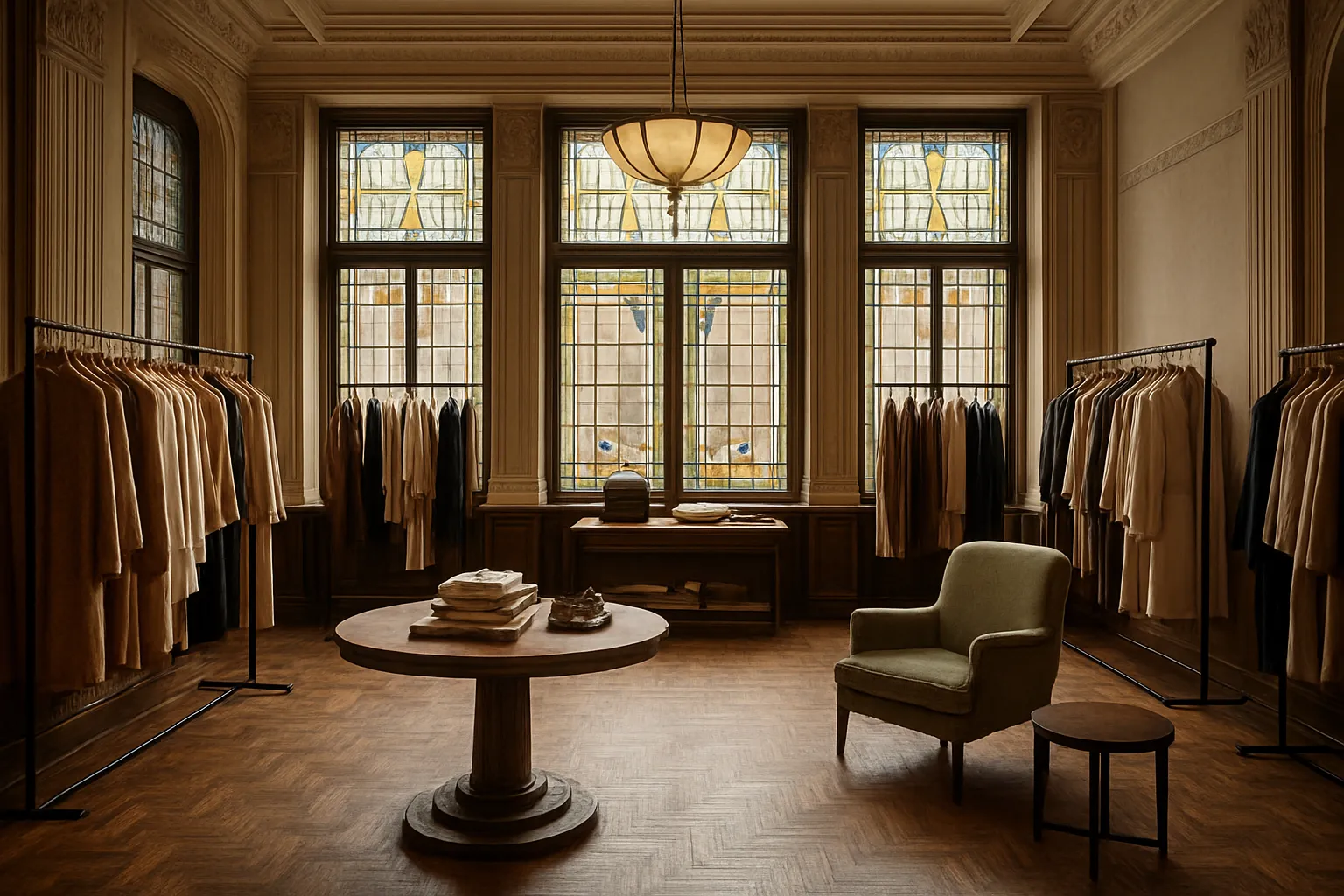
The label sells through its webshop, its own C.F. Store in Amsterdam and a network of stockists across 13 countries. Asia is the largest market by number of doors, with 16 retailers in Japan — among them Isetan and United Arrows — and 10 in South Korea. In Europe it is stocked by Printemps and L’Eclaireur in Paris, Awaykin in London and Afura in Amsterdam; in North America by SSENSE in Canada and 11 US retailers, including H. Lorenzo.
What comes next
No expansion plans have been publicly announced. For now the rhythm is two collections a year in Paris plus collaborations, with production kept small and the distribution carefully controlled. That restraint is part of the appeal: a label that has grown steadily since 2014 without abandoning the studio-scale method that made it distinctive in the first place. For anyone following independent European design, Camiel Fortgens is worth watching precisely because the next move has not been revealed.