Ain Amor
Ain Amor: Sophia Lewis on Slow Fashion and Surplus Fabrics
Sophia Lewis, creative director of Ain Amor, on building a seasonless, unisex label from surplus fabrics and factory-stock yarns, and on why fashion needs less overproduction.
Ain Amor is a young label with an unusual structure and an equally unusual pace. Registered in Romania and financed by the production company Texdata, which also handles manufacturing and employs around 200 people, the brand keeps its design and sales in Hamburg and a further sales presence in London. Its creative director, Sophia Lewis, has moved between those cities since the label was established as a collective project in November 2025.
A collective built on different strengths
Lewis’s route to the brand was unexpected. After arriving in Hamburg in 1998 to work for Jil Sander, she stayed in Germany and spent roughly 24 years overseeing denim, sportswear and outerwear for Closed. What drew her to Ain Amor was the mix of people behind it: product, development, production, business and communication, each represented by someone with a different skill set. For her, that combination felt like a genuine foundation rather than a marketing story.
That background shapes how she works. Years spent alongside highly specialised colleagues at Jil Sander, and later with innovative minds in denim, have become a personal pool of experience she draws on daily. Design, she says, is essentially a sequence of decisions, and those decisions are fed by everything absorbed along the way. Her aim with Ain Amor is not radical reinvention but bringing that experience together and passing it on in a more accessible form.
Hamburg itself played a part. She arrived from London after finishing her studies and found the city almost the opposite of the capital: quiet, green and well organised. The punctuality of the buses, arriving almost to the minute, struck her as remarkable after London’s half-hour waits. It gave her a different rhythm of life, and she never left.
One collection, many weights
The clothing reflects that measured approach. Most of the range is unisex, and many pieces can be worn in more than one way. Lewis describes the thinking simply as “sharing is caring”: the same garment looks fitted on one person and oversized on another, and both readings can be right. She rarely looks at the size label herself, preferring to try something on and react to the silhouette. That freedom is built into the collection.
Seasonality is handled just as loosely. Collections are not named by season but as Season A and Season B, with Season A covering the current autumn/winter range and Season B announced for spring/summer 2027. Rather than a fixed winter or summer offer, the brand builds in different weights. Global temperatures are shifting and retailers sell to customers in widely differing climates, which makes a rigid seasonal split harder to justify. Two main collections anchor the year, and because the label is still small, delivery times can be adapted to individual clients.
Keeping production close to demand
Overproduction is treated as a problem to be designed out rather than managed. Ain Amor works essentially on a pre-order basis, planning production around retailer demand to keep stock low, and there are currently no minimum order quantities. Reorders matter to the model: in August, the brand fulfilled reorders for fabrics held in stock within about a week. Summer qualities are sometimes garment-dyed, which requires longer lead times, and that is an area still being worked on. The longer-term plan is to keep selected fabrics permanently available so the brand can respond quickly during the season.
Wholesale has responded. The first collection was shown in January 2026 during Paris Fashion Week Men’s, drawing orders from ten retailers across Germany, Austria, France and the UK, among them the German luxury retailers Apropos and Bungalow. Because some of those retailers run several stores, the label is present at around 20 points of sale. First deliveries reached shops in July 2026, followed a month later by the brand’s own e-commerce site.
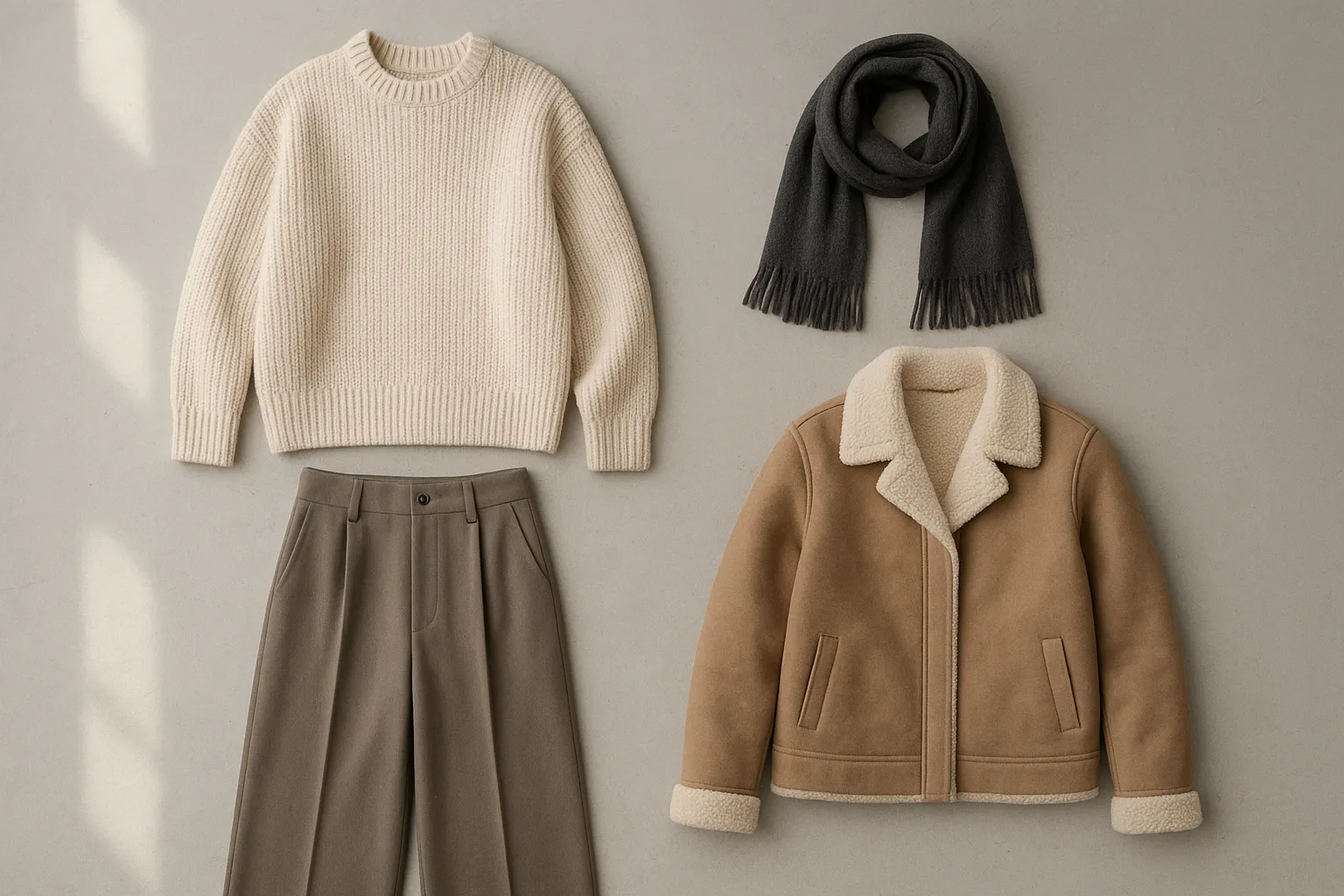
Online, prices currently run from 45 euros for a scarf to 1,200 euros for a shearling jacket. Coats sit between 450 and 550 euros, trousers at 225 euros, and shirts between 250 and 285 euros.
Europe and Japan are the current focus. A distribution partner represents the brand in Japan, and from next season a New York-based sales partner, ICOT, will handle the US, timed to coincide with the launch of an Ain Amor pre-collection. That pre-collection also follows feedback from Japanese and US clients. Order windows still follow the international wholesale calendar, but the brand deliberately handles them with flexibility.
Claims that can be checked
Sustainability, for Lewis, is less a label than an ongoing set of questions: where a fabric comes from, how it is finished, which processes are necessary, whether existing or surplus materials can be used, how much is produced and how quickly the brand can react to real demand. She welcomes stricter EU rules on environmental claims precisely because general statements have become easy to make. Ain Amor does not describe itself as a sustainable or ecological brand; it prefers to say what it actually does and to be open about what is still in progress.
Fixed parameters are difficult, she argues, because materials, technologies and processes keep changing. What seems achievable at the start can look different months later, once the practical limits of design and development become clear. That applies to young labels and large ones alike. Her personal view is that consuming less and wearing what you own for longer is among the most effective responses, which is why the garments are designed to be worn repeatedly, shared, passed on or inherited.
Two recent statements from the brand needed correcting, and Lewis is straightforward about both. The biodegradable hangtag referred to an earlier development that was dropped because the material proved too brittle. Today’s tag is plastic but reusable, for example as a luggage tag or key ring, so it serves a purpose beyond its original one. Nor is the collection made entirely from surplus fabrics. Surplus is used wherever possible, but the claim does not hold for every product.
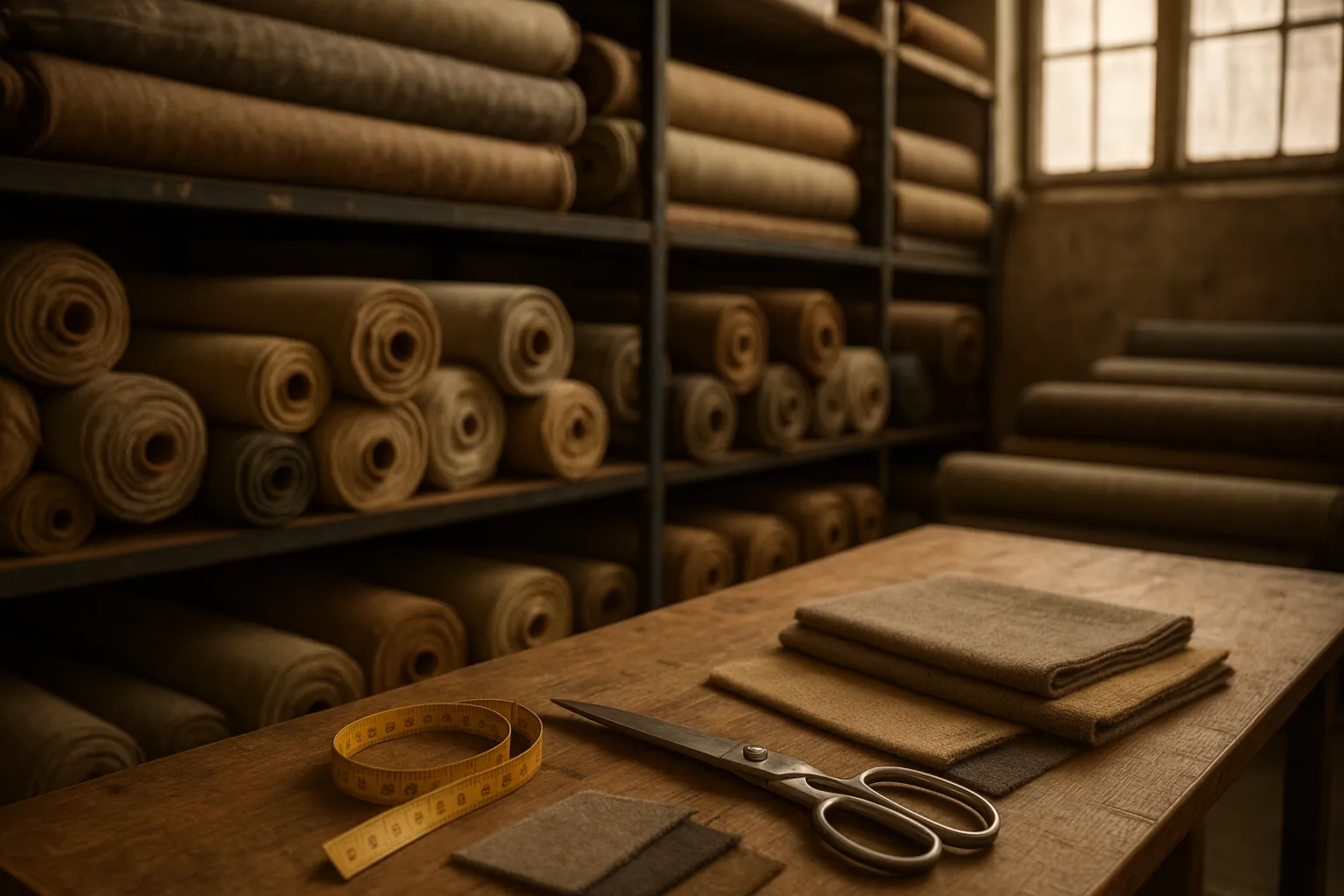
What can be substantiated is more specific. The autumn/winter knitwear uses factory-stock yarn, with wool content certified to the Responsible Wool Standard and a corresponding Transaction Certificate from the wool supplier. In future, the brand wants to source stock-service yarns from suppliers in the Prato region for greater continuity on re-runs. For summer, it works with factory-stock blends of cotton and viscose.
Beyond fashion, Lewis has published a plant-based cookbook, “Dear Doris”. She sees no firm boundary between creative disciplines: a grandmother’s cookbook, an exhibition, a landscape or a colour combination in nature can all spark an idea. The medium changes, the instinct does not.